

Roses are often introduced as romantic flowers, but a healthy rose plant can do much more than decorate a vase. In a home garden, roses can work like living architecture: they define edges, soften fences, guide movement, add seasonal fragrance, and make outdoor spaces feel more cared for. This practical view is especially useful for readers searching for rose plant benefits and information beyond the usual list of flower meanings or basic care tips.
This guide looks at roses as functional flowering shrubs for everyday landscapes. Instead of focusing only on bouquets, edible petals, or symbolic value, it explains how roses can improve privacy, comfort, safety, layout, and long-term garden usefulness. The approach fits the broader idea of manfaat tanaman, or plant benefits, because it treats the rose as a living part of the home environment rather than a single-purpose ornamental plant.
Why Roses Work as Living Landscape Features
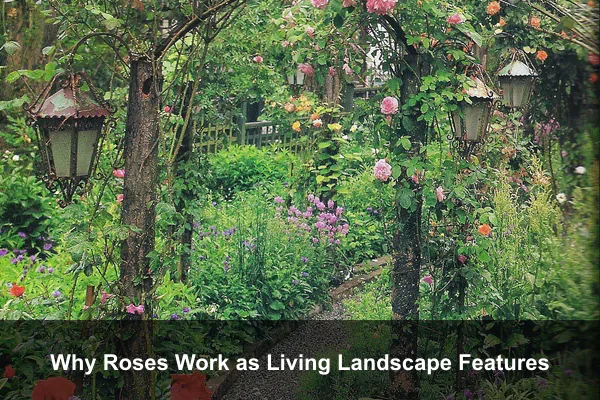
A rose plant is not just a flower stem. Most garden roses are woody shrubs with repeat growth, branching canes, leaves, thorns, buds, flowers, hips, and roots that return year after year when the plant is suited to the location. This combination makes roses useful for gardeners who want beauty and structure in the same plant.
Many flowering plants give color for a short season but disappear into the background later. Roses, especially shrub roses and landscape roses, can hold a visible shape even when they are not blooming. Their stems create a framework, their leaves add texture, and their flowers bring seasonal highlights. This is why roses can be used to mark a pathway, frame an entrance, soften a wall, or build a low flowering boundary.
Structure With Seasonal Interest
The strongest design benefit of a rose plant is the balance between softness and structure. A clipped hedge may look tidy but plain. A loose wildflower bed may look charming but undefined. Roses sit between those two ideas. They can be trained, pruned, tied, shaped, or allowed to grow naturally, depending on the space.
For example, a row of shrub roses along a walkway gives visitors a clear route without making the garden feel closed off. A climbing rose over an arch creates a memorable entry point. A compact patio rose in a container can define the edge of a seating corner. These are practical benefits that make roses valuable in both small and large gardens.
Benefits Beyond Flower Display
The most useful rose plant benefits include:
- Natural boundary making: Roses can separate garden rooms, paths, driveways, and seating areas.
- Outdoor comfort: Flowers, leaves, and fragrance make patios and entrances feel more inviting.
- Visual guidance: Strong rose forms can draw attention toward gates, doors, corners, or focal points.
- Space softening: Roses can reduce the hard look of fences, walls, railings, and masonry.
- Long-term value: A well-placed rose can remain productive and attractive for many years.
Rose Plant Benefits for Privacy, Boundaries, and Movement
One unique way to understand rose plant benefits and information is to think about movement. A garden is not only something to look at; it is something people move through. Roses can influence where people walk, where they pause, where they sit, and which areas feel private.
Living Borders Instead of Hard Barriers
A fence gives a clear line, but it can feel rigid. A rose border gives a line with life. In front yards, roses can create a polite separation between public and private space. Along side yards, they can soften narrow passages. Around patios, they can make seating areas feel more enclosed without blocking air completely.
Thorny varieties can also discourage casual crossing, but roses should not be treated as a complete security solution. Their real value is gentle guidance. They tell people, pets, and guests where the garden edge is while adding color and texture to the boundary.
Guiding the Eye and the Feet
Roses are excellent for wayfinding. A pair of roses near an entrance can make a doorway easier to notice. A climbing rose on a trellis can signal the start of a path. A low line of landscape roses can lead the eye toward a bench or garden gate.
This matters in practical home design. When outdoor areas are easier to read, they feel calmer and more intentional. Visitors understand where to go. Family members use the space more naturally. Even a modest garden can feel organized when roses are placed at important transition points.
Where Roses Work Best as Boundaries
- Along a sunny front path where they can welcome visitors without narrowing the walkway.
- Beside a low fence where they add height, flowers, and seasonal interest.
- Around a seating area where fragrance and partial enclosure improve comfort.
- Near a garden gate where flowers create a strong visual marker.
- Along a driveway edge, if planted far enough away from car doors and foot traffic.
Choosing Rose Types for Functional Garden Roles
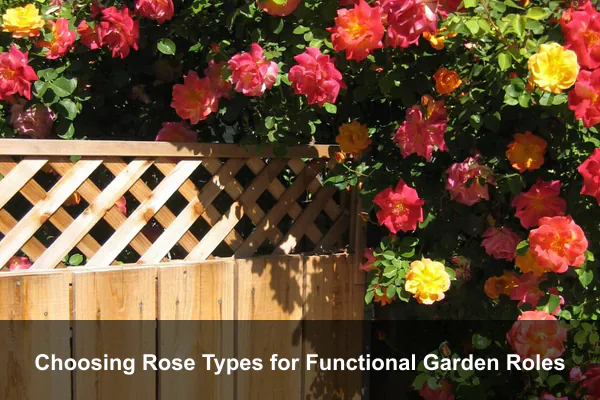
Different roses solve different garden problems. Choosing the right type is more important than choosing the prettiest flower photo. A rose that looks beautiful online may become frustrating if it grows too tall, needs too much spraying, or blocks a path. Good rose selection begins with the role the plant needs to play.
Shrub Roses for Reliable Boundaries
Shrub roses are among the best choices for living borders because they usually have a full, bushy shape. Many modern shrub roses are bred for repeat bloom, disease resistance, and easier care. They work well along fences, around patios, and in mixed borders.
For a practical garden, look for shrub roses with strong disease resistance, a mature size that fits the space, and a growth habit that remains dense from lower stems to upper branches. This helps the plant function as a real boundary rather than only a flowering accent.
Climbing Roses for Vertical Space
Climbing roses are useful when ground space is limited but vertical structure is available. They can be trained over arches, pergolas, trellises, porch posts, and fences. A climbing rose can turn a plain vertical surface into a seasonal feature.
It is important to understand that climbing roses do not climb like vines with tendrils. They need tying and training. Their long canes should be secured to a support, ideally with flexible ties that do not cut into the stems. When trained horizontally or diagonally, many climbing roses produce more flowering side shoots.
Groundcover and Landscape Roses for Low Edges
Groundcover roses and low landscape roses are good choices for slopes, open beds, and edges where a tall plant would feel too heavy. They can reduce bare soil, add repeat color, and create a low visual boundary. They are especially useful near walkways if the chosen variety does not spread aggressively into the path.
Patio and Miniature Roses for Small Spaces
For balconies, terraces, and compact courtyards, patio roses can deliver rose benefits without needing a large bed. Container roses need more attention to watering and soil quality, but they are flexible. You can move them to improve sunlight, protect them from harsh wind, or redesign a small seating area.
Choose a deep pot with drainage holes, use a high-quality potting mix, and avoid letting the container sit in standing water. Small roses in pots still need strong light; they are not true low-light indoor plants.
Practical Rose Care Information for Strong, Useful Plants
A rose used as a living border or garden feature must be healthy enough to hold its shape. Weak roses with sparse leaves, blackened stems, or repeated pest problems cannot perform well in the landscape. The good news is that practical rose care is not mysterious. It depends on light, airflow, soil, water, pruning, and observation.
Light Requirements
Most roses perform best with at least six hours of direct sun each day. Morning sun is especially helpful because it dries dew from leaves and can reduce fungal problems. In very hot climates, light afternoon shade may help protect flowers from scorching, but deep shade usually leads to weak growth and fewer blooms.
Soil and Drainage
Roses prefer fertile, well-drained soil. Heavy clay can be improved with compost and careful bed preparation, while sandy soil may need organic matter to hold moisture. Drainage matters because rose roots dislike sitting in waterlogged soil. If water remains on the surface long after rain, improve the bed before planting.
A practical soil goal is not perfection. The goal is a root zone that holds enough moisture for steady growth but still allows excess water to move away. Mulch can help moderate soil temperature, protect roots, and reduce weeds around the plant.
Watering for Deep Roots
Roses usually benefit from deep, less frequent watering rather than quick daily splashes. Water at the base of the plant when possible. Wetting leaves repeatedly, especially late in the day, can encourage disease in humid conditions.
Newly planted roses need consistent moisture while roots establish. Mature roses can handle short dry periods better, but long drought reduces bloom quality and overall vigor. Container roses dry out faster than roses in the ground, so they need closer monitoring.
Pruning for Shape and Airflow
Pruning is not only about making roses bloom. For functional garden roses, pruning keeps the plant within its role. A border rose should not swallow the path. A climbing rose should not pull away from its support. A patio rose should not become a thorny tangle near a chair.
Remove dead, damaged, crossing, or crowded stems. Open the center of dense plants to improve airflow. Cut with clean, sharp pruners, and dispose of diseased leaves rather than composting them in a small home pile. The exact pruning season depends on climate and rose type, but many gardeners prune heavily near the start of active growth.
Designing Rose Zones Around the Home
One of the best ways to use rose plant benefits and information is to plan by zone. Instead of buying roses first and searching for space later, decide what each part of the garden should do. Then choose rose types that support that job.
Front Entry Rose Zone
At the front entry, roses should welcome without blocking. Avoid placing thorny canes where guests brush past them. Use compact shrub roses, trained climbers, or a matched pair of containers to frame the entrance. Keep mature size in mind so the doorway remains visible.
Pathway Rose Zone
Along paths, roses should be set back from the walking line. This prevents scratches and keeps maintenance easier. Low landscape roses can work well if they are planted with enough room to spread. Taller shrub roses should be placed where their mature width will not crowd movement.
Patio Rose Zone
Near patios, roses add color, scent, and softness. Choose varieties with a pleasant habit and avoid plants that drop large amounts of petals directly onto dining surfaces. If fragrance is important, place scented roses where people naturally pause, such as beside a bench or near a seating corner.
Fence and Wall Rose Zone
Roses can improve plain fences and walls, but they still need airflow. Do not press dense growth flat against a surface with no ventilation. Use trellises, wires, or supports to create a small gap between stems and the wall. This helps reduce disease pressure and makes pruning easier.
Health, Safety, and Realistic Wellness Value
Roses are often associated with relaxation, affection, and beauty. These associations have real lifestyle value, but they should be described realistically. A rose plant is not a medical treatment. It will not purify all outdoor air, cure stress, or replace professional health care. Its benefits are more practical and sensory.
A garden with roses can encourage people to spend more time outdoors, notice seasonal changes, and care for a living plant. The color and fragrance may support a calmer atmosphere, especially in seating areas and entry spaces. For many gardeners, the routine of watering, pruning, and observing roses becomes part of a steady home rhythm.
Thorns and Placement Safety
Rose thorns are useful for boundary planting, but they require smart placement. Keep thorny roses away from narrow walkways, children’s play areas, and places where people need to move quickly. Wear gloves when pruning and use long sleeves for mature plants.
If pets use the garden, avoid planting thorny roses where animals frequently run. Thorns can scratch skin, paws, or eyes. The plant itself can be managed safely, but placement should match household behavior.
Chemical Use and Garden Safety
If you grow roses for general beauty and landscape structure, you may still be tempted to use strong sprays when pests appear. Use caution. Overuse of pesticides can reduce beneficial insects and may create safety concerns near seating areas, children, pets, or edible plants. Start with prevention: resistant varieties, good spacing, healthy soil, and regular inspection.
If you plan to use rose petals or hips in any way, only use plant material from roses that are correctly identified and grown without unsafe chemical treatments. This article focuses on landscape benefits, so treat edible use as a separate topic that requires careful sourcing and safety checks.
Seasonal Rose Maintenance Calendar
Roses become easier to manage when care is tied to the season. A simple calendar keeps the plant healthy without making maintenance feel random.
Spring
- Inspect stems and remove dead or damaged wood.
- Refresh mulch while keeping it away from the crown of the plant.
- Feed according to local soil needs and product instructions.
- Train climbing canes before new growth becomes difficult to handle.
Summer
- Water deeply during dry periods.
- Remove spent flowers if the variety benefits from deadheading.
- Watch for black spot, mildew, aphids, and spider mites.
- Trim canes that block paths or seating areas.
Autumn
- Stop heavy feeding late in the season so tender growth does not develop before cold weather.
- Clean fallen diseased leaves from the base of plants.
- Review which roses performed well and which locations caused problems.
- Prepare supports before winter winds arrive.
Winter
- Protect roses according to climate and variety needs.
- Avoid heavy pruning during severe cold unless local practice recommends it.
- Check containers so roots do not dry out completely.
- Plan new rose zones based on sunlight, access, and mature plant size.
Common Mistakes When Growing Roses as Garden Features
Many rose problems begin with unrealistic placement. A rose chosen only for flower color may be too large, too thorny, too disease-prone, or too demanding for the intended space. When roses are used as living landscape features, size and habit matter as much as bloom shape.
Planting Too Close to Paths
A small nursery rose can look harmless, but mature roses often need much more room. Planting too close to paths leads to scratches, awkward pruning, and constant cutting back. Always check mature width and add extra clearance for comfort.
Ignoring Airflow
Dense planting may look lush at first, but poor airflow can increase disease pressure. Roses need breathing room around leaves and stems. This is especially important in humid regions where fungal diseases spread quickly.
Choosing High-Maintenance Roses for Busy Homes
Some roses are beautiful but demanding. If you want a low-stress living border, choose disease-resistant landscape roses instead of delicate varieties that need frequent spraying or careful grooming. The best rose is the one that fits your actual routine.
Using Roses Where Another Plant Would Be Better
Roses love sun and attention. In deep shade, soggy soil, or extremely tight walkways, another plant may be more suitable. Good garden design does not force roses into every role. It uses them where their strengths make sense.
Conclusion
Rose plant benefits and information become more useful when roses are seen as living parts of the home landscape. Beyond their famous flowers, roses can create boundaries, guide movement, improve outdoor comfort, soften hard surfaces, and make gardens feel more intentional. Their value comes from the mix of beauty, structure, fragrance, seasonal rhythm, and practical placement.
For the best results, choose rose types by function first. Use shrub roses for borders, climbing roses for vertical features, groundcover roses for low edges, and patio roses for small spaces. Give them sun, airflow, well-drained soil, deep watering, and sensible pruning. When planted in the right place, a rose is not just an ornamental flower. It becomes a durable, useful, and meaningful plant that supports a more comfortable garden year after year.
