
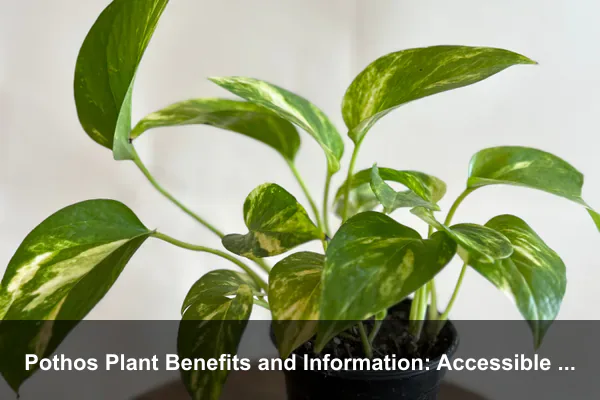
Pothos is one of the most forgiving houseplants, but its real value is bigger than being “easy.” For many homes, it is an accessible way to enjoy indoor greenery without complicated tools, strict timing, or a large gardening space. This guide looks at Pothos plant benefits and information from a practical angle: how this trailing plant can support simple routines, flexible styling, and lower-pressure plant care for beginners, busy people, renters, older adults, and anyone who wants greenery that adapts to real life.
Known botanically as Epipremnum aureum, pothos is a tropical vining plant with heart-shaped leaves, strong nodes, and a natural ability to trail, climb, or be propagated from cuttings. It is not a miracle air purifier, and it should not be treated as a medical solution. Its benefits are more grounded: it softens indoor spaces, offers satisfying visible growth, helps people build a plant-care habit, and tolerates common household conditions better than many fussier ornamentals.
Why Pothos Works Well for Accessible Indoor Gardening
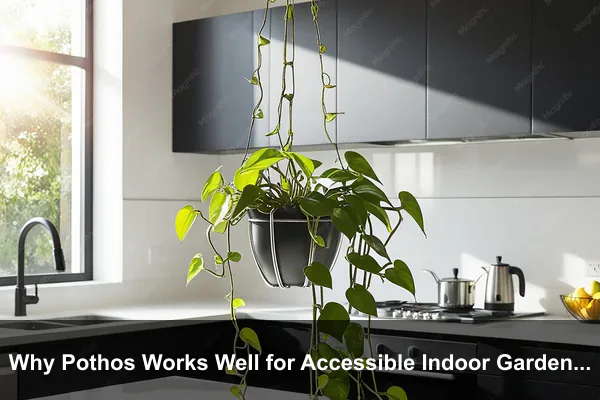
Accessible gardening is about lowering barriers. A plant does not need to be rare, expensive, or difficult to be meaningful. Pothos is useful because it fits many abilities, schedules, and living arrangements. It can grow in a small pot, a hanging planter, a shelf container, or a simple propagation jar. It can be checked visually, watered without precision equipment, and refreshed through pruning when vines become too long.
Forgiving Growth Habits
Pothos tolerates missed watering better than many leafy tropical plants. Its leaves may droop slightly when thirsty, then recover after watering if the roots remain healthy. This visual feedback makes it beginner-friendly because the plant often shows what it needs before serious damage occurs.
Flexible Placement Options
Unlike plants that demand a narrow range of light, pothos adapts to many indoor spots. It prefers bright, indirect light, but it can survive in moderate or lower light with slower growth. This flexibility makes it useful for apartments, offices, shared rooms, and homes where window space is limited.
Pothos Plant Benefits for Everyday Homes
The benefits of pothos are best understood as everyday lifestyle benefits rather than exaggerated health claims. It is a plant that makes indoor gardening easier to start and easier to continue.
- Visual softness: Trailing vines reduce the hard look of shelves, cabinets, desks, and window corners.
- Low-pressure care: Pothos does not require daily attention, making it suitable for busy homes.
- Visible progress: New leaves and longer vines give a clear sense of growth and reward.
- Budget-friendly propagation: Stem cuttings can become new plants with minimal cost.
- Design flexibility: It can trail, climb, hang, or stay compact with regular pruning.
For people exploring the broader idea of manfaat tanaman, or plant benefits, pothos is a good example of a plant whose value comes from daily interaction. It encourages observation, care rhythm, and a calmer-looking space without requiring a full garden.
Basic Pothos Information: Growth, Leaves, and Varieties
Pothos belongs to the aroid family and naturally grows as a climbing vine in tropical environments. Indoors, it is most often grown for its decorative foliage rather than flowers. Each vine has nodes, and those nodes are important because they can produce roots when placed in water or soil.
Common Pothos Varieties
Several popular pothos types are widely available. Golden pothos has green leaves with yellow variegation and is one of the toughest choices. Marble Queen pothos has creamy white and green leaves but usually needs brighter light to keep its color. Neon pothos offers bright chartreuse leaves, while Jade pothos is mostly solid green and often performs well in lower-light spaces.
How Pothos Grows Indoors
Indoors, pothos usually grows as trailing stems. If given a moss pole, trellis, or wall support, it can climb. Climbing growth may produce larger leaves over time, while trailing growth is ideal for shelves and hanging baskets. Regular pruning keeps the plant fuller and prevents long bare vines.
Simple Care Routine for Healthy Pothos
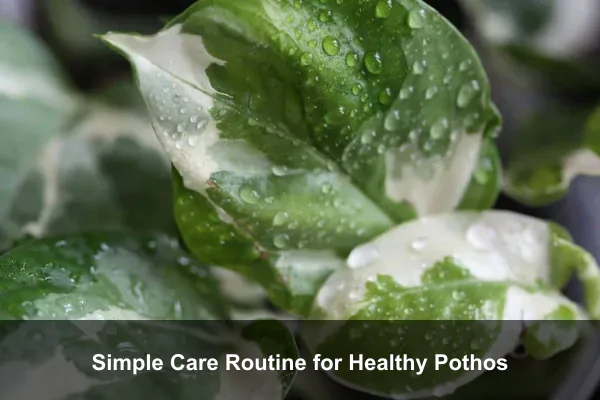
A healthy pothos routine does not need to be complicated. The goal is to provide enough light, avoid soggy soil, and check the plant often enough to notice changes.
Light
Place pothos in bright, indirect light when possible. A few feet from a bright window often works well. Direct harsh sun can scorch leaves, while very low light may reduce variegation and slow growth.
Water
Water when the top layer of soil feels dry. In many homes, this may be every one to two weeks, but the timing changes with pot size, light, season, and humidity. Avoid watering only by calendar. Check the soil first.
Soil and Pot
Use a well-draining potting mix and a container with drainage holes. Pothos roots dislike staying wet for long periods. If the pot has no drainage, watering becomes riskier and root rot is more likely.
Pruning
Trim long vines just above a node. Pruning helps the plant stay tidy and encourages a fuller shape. Healthy cuttings can be propagated, which makes pothos one of the most rewarding plants for low-cost indoor greenery.
Accessible Styling Ideas for Small and Shared Spaces
Pothos is especially useful where space, mobility, or maintenance time is limited. Its vines can bring greenery into vertical areas without taking up much floor space.
- Desk corner: Keep a compact pothos in a stable pot where leaves can trail slightly without blocking work.
- Bookshelf edge: Let vines soften shelves while keeping the pot easy to reach for watering.
- Kitchen window area: Use bright indirect light, but keep leaves away from heat and cooking splatter.
- Hanging planter: Choose this only if you can safely reach the pot for watering and inspection.
- Propagation jar: Place cuttings in clear water to watch root development and learn plant growth visually.
For shared homes, pothos is practical because one plant can be divided into cuttings and placed in several rooms. It is also easy to move when furniture changes, which makes it useful for renters or flexible living spaces.
Safety, Limits, and Responsible Use
Pothos contains calcium oxalate crystals and is considered toxic if chewed or eaten by pets or people. Keep it away from cats, dogs, and children who may bite leaves. If ingestion occurs, contact a medical or veterinary professional.
It is also important to keep expectations realistic. Pothos may contribute to a fresher-looking room, but a few houseplants cannot replace ventilation, cleaning, humidity control, or good indoor air practices. Think of pothos as a supportive decorative plant, not a substitute for health or safety systems.
Common Problems to Watch
- Yellow leaves: Often linked to overwatering, poor drainage, or old leaves naturally aging.
- Brown tips: May come from inconsistent watering, dry air, mineral buildup, or stress.
- Leggy vines: Usually caused by low light or lack of pruning.
- Fading variegation: Often means the plant needs brighter indirect light.
Conclusion
Pothos remains popular because it offers a rare mix of beauty, resilience, and accessibility. When viewed through a practical lens, Pothos plant benefits and information are not about hype. They are about simple routines, flexible placement, visible growth, and an easier path into indoor gardening.
Choose a healthy plant, place it in suitable indirect light, water only when the soil begins to dry, and prune it when vines become too long. With these basics, pothos can become a dependable part of a greener home, whether it lives on a shelf, desk, wall support, or windowsill.
