
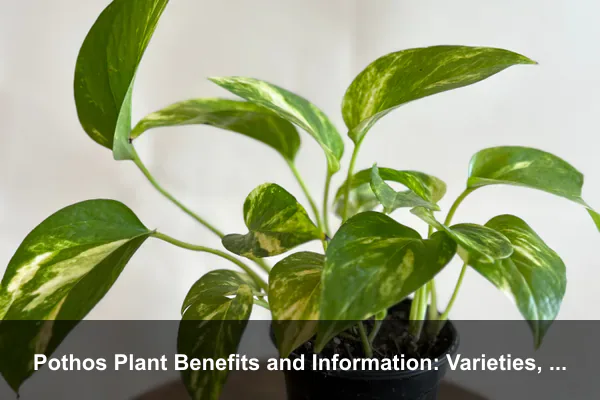
Pothos is one of the most useful houseplants for people who want greenery that looks fresh, grows with minimal fuss, and teaches them how indoor plants respond to light, water, and room conditions. This guide to Pothos plant benefits and information takes a different angle from a basic care checklist: it focuses on how pothos can become a practical, low-waste part of daily home life, from choosing the right variety to reading leaf signals before problems become serious.
Known botanically as Epipremnum aureum, pothos is often called devil’s ivy because it stays resilient even in less-than-perfect settings. Its trailing stems, heart-shaped leaves, and adaptable nature make it popular in homes, apartments, offices, and small urban spaces. For readers interested in Manfaat Tanaman, or the practical benefits of plants, pothos offers more than decoration. It supports calmer rooms, softens hard interiors, helps beginners build plant-care confidence, and provides visible feedback about the indoor environment.
Although pothos is easy to grow, the best results come from understanding what the plant is telling you. Leaf color, spacing between leaves, stem direction, soil moisture, and growth speed all provide clues. When you learn these signals, pothos becomes less of a passive ornament and more of a living indicator for your home.
What Makes Pothos Different From Other Houseplants?
Pothos stands out because it combines visual impact with tolerance. Many indoor plants look beautiful but react quickly to small mistakes. Pothos is more forgiving. It can survive occasional missed watering, imperfect light, and changing indoor humidity, which makes it especially useful for beginners, renters, students, busy households, and office workers.
The plant grows as a vine. In nature, it climbs tree trunks and can develop larger leaves when it has vertical support. Indoors, it usually stays smaller and more manageable. You can let it trail from a shelf, guide it along a wall, or train it upward on a pole. This flexible growth habit is one reason pothos works in different room sizes without demanding a large floor area.
Another strength is its clear visual language. Pale leaves, drooping stems, yellowing foliage, dry brown tips, and stretched vines all point to different conditions. This makes pothos a practical plant for learning indoor gardening because the plant shows what it needs in ways that are easier to read than many more sensitive ornamentals.
Basic Botanical Information
- Botanical name: Epipremnum aureum
- Common names: Pothos, golden pothos, devil’s ivy, money plant in some regions
- Plant type: Tropical evergreen vine
- Typical indoor size: Vines commonly reach 3 to 10 feet indoors, depending on pruning and support
- Best indoor light: Bright indirect light, with tolerance for lower light
- Main appeal: Variegated foliage, easy growth, flexible display options, and beginner-friendly care
Key Pothos Plant Benefits for Modern Indoor Living
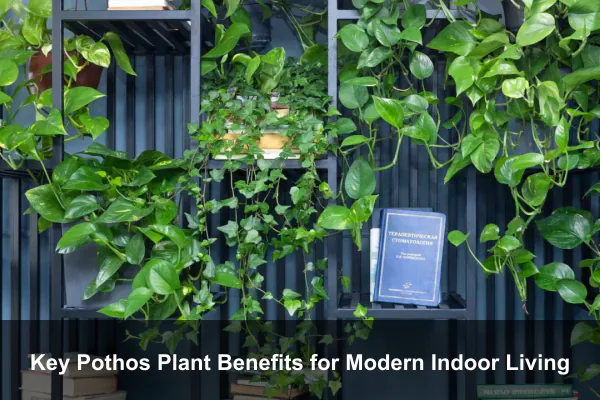
The most valuable pothos plant benefits are practical. This is not a plant that requires a greenhouse setup or constant monitoring. It fits into ordinary routines and rewards basic attention with steady growth. For people who want the advantages of indoor plants without complicated maintenance, pothos is a strong choice.
It Adds Greenery Without Taking Over Floor Space
Many homes need plants that work vertically. Pothos is ideal because it can grow from shelves, bookcases, hanging baskets, wall hooks, or tall cabinets. This is helpful in small apartments where floor space is limited. Instead of adding another pot on the ground, you can use unused vertical areas and still create a softer, more natural room atmosphere.
It Helps Beginners Build Plant Confidence
Pothos is often recommended as a starter houseplant because it does not punish every mistake. If you forget one watering, it usually recovers. If the light is not perfect, it may slow down rather than collapse. This resilience gives new plant owners time to learn. Over time, caring for pothos helps people understand watering rhythm, light direction, pot drainage, and pruning without high risk.
It Can Make Rooms Feel More Restful
Indoor plants can support a calmer visual environment by breaking up hard lines, screens, furniture, and plain walls. Pothos does this especially well because its vines soften edges and add movement. In workspaces, a plant on a shelf or near a desk can make the area feel less sterile. The benefit is not magic; it comes from adding natural texture and a small care ritual to spaces that often feel mechanical.
It Encourages Low-Waste Plant Habits
A healthy pothos can be maintained for years with simple tools: a pot with drainage, suitable potting mix, clean water, occasional trimming, and moderate light. You do not need frequent replacements, excessive fertilizers, or expensive accessories. Trimmings can be used to refresh the plant’s shape or start new plants, making pothos a good fit for people who prefer sustainable home routines.
Popular Pothos Varieties and How to Choose One
One way to make your pothos article, collection, or indoor display more unique is to focus on variety selection. Different pothos types have different leaf colors, growth speeds, and light needs. Choosing the right one helps prevent disappointment, especially if your home has limited natural light.
Golden Pothos
Golden pothos is the classic form, with green leaves splashed with yellow or golden variegation. It is usually one of the most vigorous types and tolerates a wide range of indoor conditions. If you want a reliable first pothos, this is often the best option.
Marble Queen Pothos
Marble Queen has creamy white and green marbled foliage. It is elegant but usually grows more slowly because the lighter parts of the leaves contain less chlorophyll. This variety needs brighter indirect light to keep its pattern strong. In very low light, it may lose contrast or grow weakly.
Neon Pothos
Neon pothos has bright chartreuse leaves that stand out in neutral interiors. It works well when you want a clean, modern look without complex patterns. It can tolerate moderate light, but brighter indirect light keeps the color more vibrant.
Jade Pothos
Jade pothos has solid green leaves and is one of the better choices for lower-light homes. Because it has more green leaf surface, it can handle dimmer rooms better than heavily variegated types. It is a sensible choice for hallways, offices, or rooms with filtered daylight.
N’Joy and Pearls and Jade
These compact variegated types have smaller leaves with white, green, and sometimes gray-green patterning. They are attractive for desks and smaller shelves, but they need good indirect light and more careful watering than Golden or Jade pothos. Their compact growth makes them useful when you want detail rather than long vines.
Reading Pothos Leaf Signals Like a Plant Dashboard
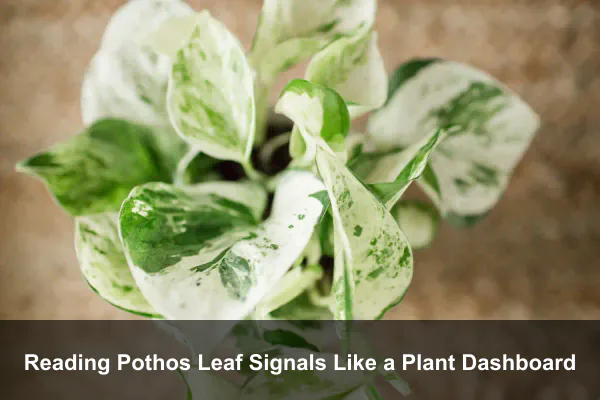
One of the most useful pieces of Pothos plant benefits and information is learning how the leaves communicate. Instead of guessing what went wrong, you can use visible symptoms to adjust care. This approach prevents overreaction and helps you make small corrections before the plant declines.
Yellow Leaves
A single older yellow leaf is normal. Plants naturally shed aging foliage. However, repeated yellowing often points to overwatering, poor drainage, or soil that stays wet too long. Check the pot before adding more water. If the soil is damp several days after watering, the roots may not be getting enough air.
Brown Tips or Crispy Edges
Brown tips can come from dry air, irregular watering, mineral buildup, or too much direct sun. Remove the damaged tips only if they bother you visually, then focus on stabilizing the routine. Water thoroughly when the top part of the soil dries, and avoid placing pothos against hot windows or air-conditioning drafts.
Long Stems With Wide Gaps Between Leaves
This usually means the plant is reaching for more light. The technical term is leggy growth. Move the plant closer to a bright window with indirect light, rotate it regularly, and trim overly long stems to encourage fuller growth. Avoid sudden exposure to harsh direct sunlight, which can scorch the leaves.
Fading Variegation
Variegated pothos may turn greener when light is too low. The plant produces more green tissue to capture energy. If you want stronger patterns, provide brighter indirect light. This is especially important for Marble Queen, N’Joy, and Pearls and Jade.
Drooping Leaves
Drooping can mean the plant is thirsty, but it can also happen when roots are stressed by wet soil. Always check the soil before watering. If the soil is dry and the pot feels light, water deeply. If the soil is wet and the plant droops, improve drainage and let the mix dry before watering again.
Light, Water, and Soil Information That Actually Matters
Pothos care is simple, but simple does not mean careless. The healthiest plants come from matching care to the room rather than following a rigid calendar. A pothos in a bright warm room may need water more often than one in a cool shaded corner.
Best Light for Pothos
Bright indirect light is ideal. This means the plant receives plenty of daylight without intense direct sun hitting the leaves for long periods. Near an east-facing window, a few feet from a bright south or west window, or behind a sheer curtain often works well.
Low light is tolerated, not preferred. In low light, pothos may stay alive but grow slowly, produce smaller leaves, and lose variegation. If your goal is lush growth, give it more filtered brightness.
Watering Rhythm
The best watering method is to check the soil. Let the top inch or two dry before watering again. When you do water, water thoroughly until excess drains out, then empty any saucer that holds standing water. This encourages healthier roots than frequent small splashes.
- Touch the soil before watering.
- Water only when the upper layer feels dry.
- Use a pot with drainage holes.
- Do not leave the pot sitting in collected water.
- Reduce watering during cooler months or slow growth periods.
Soil and Potting Mix
Pothos grows best in a light, well-draining potting mix. A standard indoor potting mix is usually fine, especially if it includes materials that improve airflow. If your mix stays wet for too long, add perlite, orchid bark, or another aerating ingredient. The goal is moisture without sogginess.
Fertilizer
Pothos is not a heavy feeder. A balanced houseplant fertilizer during active growth can help, but more fertilizer does not mean better growth. Too much can cause salt buildup and leaf tip damage. Use a diluted dose and follow the label. If the plant is growing well, there is no need to force extra feeding.
Smart Placement Ideas for Better Growth and Better Rooms
Placement affects both plant health and room function. A pothos should be visible enough to enjoy, accessible enough to water, and positioned where its vines will not become a nuisance. The best location balances design with care practicality.
For Work Desks
Choose a compact variety or keep vines trimmed. Place it where it receives indirect light but does not block your screen, keyboard, or documents. Pothos can make a work area feel less harsh without demanding attention during busy days.
For Shelves and Cabinets
Golden pothos and Jade pothos are excellent for shelves because their vines trail naturally. Check the top of the soil regularly, since plants placed high up are often forgotten. Use a lightweight pot with a drainage plan to avoid water damage to furniture.
For Bathrooms and Kitchens
Pothos can appreciate the slightly higher humidity often found in bathrooms and kitchens, but light still matters. A windowless bathroom is not a good long-term location unless you use a grow light. In kitchens, keep the plant away from heat, oil splatter, and constantly wet surfaces.
For Bedrooms and Rest Corners
A pothos in a bedroom can add a quiet green accent, especially on a dresser or shelf. Keep it out of reach of pets and children because pothos contains calcium oxalate crystals that can irritate the mouth and digestive tract if chewed. This safety note is important, but it does not mean the plant cannot be used responsibly in homes.
Common Mistakes That Reduce Pothos Benefits
Pothos is forgiving, but repeated mistakes can weaken the plant and reduce its value indoors. Most problems are connected to water, light, or neglecting gradual maintenance.
- Watering on a strict calendar: Room temperature, pot size, soil type, and season all change how quickly soil dries.
- Using pots without drainage: Decorative cachepots are fine, but the inner growing pot should drain properly.
- Expecting strong variegation in dark rooms: Variegated pothos needs brighter indirect light to keep its patterns.
- Letting vines grow thin for too long: Occasional trimming keeps the plant fuller and more attractive.
- Ignoring dust: Dusty leaves capture less light and look dull. Wipe them gently with a damp cloth.
- Moving the plant into direct sun too quickly: Sudden harsh sun can scorch leaves, especially on variegated types.
A Low-Waste Pothos Care Routine for Busy Homes
A low-waste pothos routine focuses on keeping the plant healthy with fewer unnecessary products. You do not need complicated gadgets. You need observation, consistency, and a setup that prevents the most common problems.
Weekly Check
Once a week, look at the leaves, touch the soil, and check the vine direction. This takes less than five minutes. If the soil is still moist, wait. If the leaves are dusty, wipe them. If vines are becoming too long or thin, plan a trim.
Monthly Reset
Once a month, rotate the pot so all sides receive light. Check for roots coming out of drainage holes. Inspect the undersides of leaves for pests such as spider mites or mealybugs. Early detection makes treatment much easier.
Seasonal Adjustment
During brighter, warmer months, pothos may grow faster and need more water. During cooler or darker months, growth slows and water needs decrease. Adjust your care based on the plant’s behavior, not just the season name.
Is Pothos Good for Indoor Air Quality?
Pothos is often mentioned in discussions about indoor air quality. Laboratory research has shown that some houseplants can absorb certain volatile compounds under controlled conditions. However, a normal home is much more complex than a sealed test chamber. One pothos plant will not replace ventilation, cleaning, moisture control, or an air purifier when those are needed.
The realistic benefit is more modest but still worthwhile. Pothos adds living foliage, encourages attention to the room environment, and may contribute to a fresher-feeling space when combined with good habits. For best results, think of pothos as one part of a healthier indoor routine rather than a complete air-cleaning solution.
Useful indoor habits include opening windows when outdoor air quality is good, reducing harsh chemical use, controlling dampness, cleaning dust, and maintaining HVAC filters. Pothos fits well into this broader approach because it is easy to keep in the spaces where people spend time every day.
Who Should Choose Pothos?
Pothos is a strong match for many people, but it is especially useful for those who want beauty without complicated maintenance. It is also a good educational plant because it responds visibly to care changes.
- Beginners: The plant is forgiving and easy to understand.
- Apartment dwellers: It works well on shelves, hooks, and compact surfaces.
- Busy professionals: It can handle occasional schedule changes.
- Plant collectors: Different varieties offer color and pattern diversity.
- Low-waste households: It can live for years with simple care and minimal supplies.
- Office spaces: It softens work areas and tolerates moderate indoor conditions.
People with curious pets or small children should place pothos carefully. The plant should not be chewed or eaten. Use high shelves, hanging baskets, or rooms with controlled access if needed.
Conclusion
Pothos earns its reputation because it is adaptable, attractive, and genuinely useful in everyday interiors. The most important Pothos plant benefits and information go beyond the idea that it is simply easy to care for. This plant helps beginners learn, makes small spaces feel greener, offers variety through leaf color and pattern, and provides visible clues about light, water, and indoor conditions.
For the best experience, choose a variety that matches your home, give it bright indirect light when possible, water based on soil dryness, and use its leaves as a guide. With a simple routine and thoughtful placement, pothos can become a long-lasting part of a healthier, more natural indoor environment.
