

Snake Plant plant benefits and information are often discussed in terms of easy care, air quality, or bedroom placement, but one of the most useful and less explored roles of this plant is its value in transitional indoor spaces. Entryways, corridors, stair landings, mudrooms, and dry corners are places where many houseplants struggle because light is inconsistent, air can be dusty, and people frequently brush past the pot. The Snake Plant, also known as Dracaena trifasciata or formerly Sansevieria trifasciata, fits these areas because it grows upright, tolerates missed watering, and keeps a clean architectural shape without needing constant grooming.
This guide takes a practical angle: how to use Snake Plant as a resilient, low-maintenance green element in the parts of the home that connect one room to another. It covers benefits, placement, safety, styling, watering, soil, and long-term care while keeping the focus on real household conditions. If you want a plant that can make a doorway feel calmer, a hallway look more intentional, or a dry corner feel less forgotten, the Snake Plant is one of the most dependable choices.
Why Snake Plant Works Well in Transitional Spaces
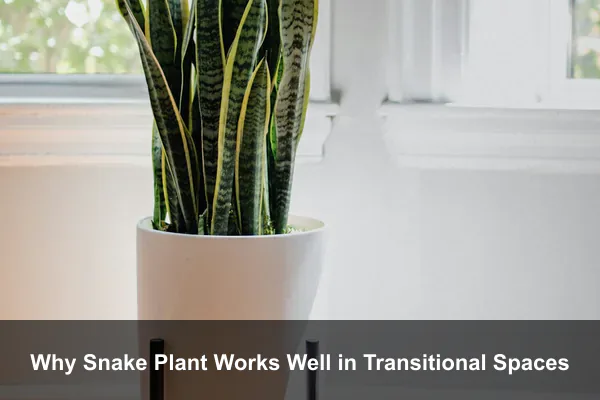
Transitional spaces are not always designed with plants in mind. They may receive indirect light for only part of the day, have narrow floor space, or experience more temperature shifts than living rooms and bedrooms. Many tropical foliage plants respond to these conditions with yellowing leaves, drooping stems, or rapid soil problems. Snake Plant handles these challenges better because it stores water in thick leaves and grows from sturdy underground rhizomes.
The biggest advantage is its vertical form. Rather than spreading outward like many trailing or bushy houseplants, Snake Plant rises upward in sword-like leaves. This makes it useful where floor area is limited but visual height is welcome. A tall Snake Plant beside a console table, shoe cabinet, or hallway bench can add structure without blocking movement.
Upright Growth Saves Floor Space
Snake Plant varieties can create strong visual impact while occupying a small footprint. This is especially useful in apartments, narrow homes, and entry areas where every inch matters. A compact pot can hold several upright leaves, giving the impression of fullness without becoming messy or wide.
Thick Leaves Tolerate Dry Indoor Air
Many transitional areas are affected by door drafts, air conditioning, fans, or heating. Snake Plant leaves are firm and succulent-like, so the plant is less reactive to short periods of dry air than moisture-loving houseplants. This does not mean it should be neglected completely, but it can stay attractive with a simpler care rhythm.
Clean Silhouette Supports Calm Design
The leaf shape of Snake Plant gives it a natural architectural quality. In Indonesian plant-benefit discussions, this kind of plant is often valued not only for function but also for the sense of order and freshness it brings to a room. In entryways and corridors, that ordered look matters because the plant is usually seen in quick passing moments.
Main Snake Plant Benefits for Home Entryways
The benefits of Snake Plant are best understood in everyday terms. It is not a miracle plant, and it should not be treated as a replacement for ventilation, cleaning, or safe home habits. Its value comes from a combination of resilience, appearance, compact growth, and simple maintenance.
- Low maintenance: It can handle longer gaps between watering than many common houseplants.
- Space efficiency: Its vertical leaves suit narrow entryways, corners, and hallways.
- Decor value: It adds greenery without looking cluttered or informal.
- Beginner friendly: It gives clear warning signs when overwatered or placed in poor conditions.
- Long-term value: With proper care, it can live for years and slowly fill its pot.
- Flexible placement: It adapts to bright indirect light and can tolerate lower light for a period.
Another benefit is psychological. A healthy plant near the door can make returning home feel more settled. It creates a small visual pause between the outside world and the private interior. This is a subtle benefit, but it is one reason upright plants are popular in foyers, workspaces, and reception areas.
Choosing the Right Snake Plant for a Hallway or Door Area
Not all Snake Plants look the same, and the best choice depends on the space. Some varieties grow tall and dramatic, while others stay compact and tabletop-friendly. The goal is to match the plant’s mature size with the path of movement around it.
Tall Varieties for Empty Corners
For a bare corner beside a doorway, a tall variety such as Dracaena trifasciata with green banded leaves can create a strong vertical accent. These plants work well in simple ceramic, concrete-look, or matte plastic pots. Choose a pot wide enough to prevent tipping, especially if the plant is placed near a door that opens inward.
Compact Varieties for Shelves and Consoles
Compact types such as bird’s nest Snake Plant are better for shelves, cabinets, or small console tables. They keep the same tough character but remain lower and rounder. These are useful where floor space is limited or where pets and children move through the area often.
Variegated Types for Brighter Spots
Variegated Snake Plants with yellow or pale edges usually need brighter indirect light to keep strong color. In dim hallways, they may survive but lose some contrast over time. If the entryway has a window, glass door, or skylight, variegated forms can be a good visual choice. For darker spaces, plain green varieties are usually more forgiving.
Light, Water, and Soil Basics for Reliable Growth

Snake Plant care becomes easier when the environment is set up correctly from the start. Most problems come from a mismatch between low light, heavy soil, and frequent watering. In transitional areas, the plant may not dry as quickly as it would near a bright window, so watering should follow soil condition rather than a fixed calendar.
Light Requirements
Snake Plant grows best in bright indirect light but can tolerate moderate or low light. For entryways, the key question is whether the plant receives enough ambient light to cast a soft shadow during the day. If the area is dark even at midday, the plant may survive for a while but will grow slowly and become more vulnerable to overwatering.
If your hallway is very dim, rotate the plant every few weeks to a brighter room for recovery. Another practical option is to place the Snake Plant near the brightest end of the corridor rather than deep in the middle. A small adjustment in placement can make a large difference in soil drying and leaf firmness.
Watering Rhythm
Water only when the soil is dry several inches down. In bright rooms this may be every two to three weeks, while in low-light corridors it may be much less often. During cooler months, watering should be reduced because the plant uses less moisture.
- Check the soil with a finger or moisture meter.
- Water thoroughly until excess drains from the bottom.
- Empty the saucer so roots do not sit in water.
- Wait until the potting mix dries before watering again.
Overwatering is more dangerous than underwatering for Snake Plant. Soft leaves, a bad smell from the soil, or blackened leaf bases often indicate root or rhizome trouble. If this happens, stop watering, inspect the roots, and repot into a faster-draining mix if needed.
Best Soil and Pot
A loose, well-draining mix is essential. Cactus or succulent mix can work, especially if improved with extra pumice, perlite, or coarse material. The pot must have drainage holes. Decorative cachepots are fine, but the inner nursery pot should be removable so excess water can be drained after watering.
In entryways, pot stability matters as much as drainage. A tall plant in a narrow lightweight pot can tip if bumped. Choose a heavier pot or place the nursery pot inside a stable outer container. This keeps the display neat while reducing the risk of spills in a busy walking path.
How to Style Snake Plant Without Creating Clutter
Snake Plant is naturally bold, so it does not need complicated styling. In fact, it often looks best when treated as one clear vertical element. The main design mistake is surrounding it with too many small decorative items, which can make an entryway feel crowded.
Use It as a Visual Anchor
Place a medium or tall Snake Plant beside furniture that already belongs in the area: a shoe rack, umbrella stand, bench, mirror, or sideboard. This connects the plant to the function of the space. It should look intentional, not like a leftover plant with nowhere else to go.
Match Pot Shape to Leaf Shape
Because Snake Plant leaves are upright and linear, simple pot shapes usually work best. Cylinders, straight-sided planters, and low bowls for compact varieties all support the plant’s form. Avoid overly ornate containers if the surrounding area is already busy with shoes, bags, keys, and coats.
Leave Walking Space Clear
Before choosing a spot, open doors fully and walk through the area as you normally would. The leaves should not scrape against legs, bags, or door panels. Repeated damage can create brown scars on the leaves and make the plant look worn. A few inches of clearance can prevent long-term problems.
Safety Information for Pets, Children, and High-Traffic Homes
Snake Plant is useful, but it is not edible. The plant contains saponins that can cause irritation, nausea, vomiting, or digestive discomfort if chewed by pets or children. This does not mean every home must avoid it, but placement should be thoughtful.
- Keep the plant away from curious pets that chew leaves.
- Use heavier pots in busy entryways to prevent tipping.
- Avoid placing sharp leaf tips at eye level for small children.
- Clean fallen soil or broken leaf pieces promptly.
- Wear gloves if you have sensitive skin and are dividing or repotting the plant.
If you have cats, dogs, or toddlers, a compact Snake Plant on a high console may be safer than a tall floor plant. You can also place it in a room zone that pets do not access. The best indoor plant choice is always the one that fits the real behavior of the household.
Common Problems in Entryways and How to Fix Them
Because entryways and corridors have unique conditions, Snake Plant problems in these spaces often come from placement rather than the plant itself. Watch the leaves, soil, and pot stability to understand what needs adjusting.
Leaning Leaves
Leaves may lean when the plant is reaching toward light, when the pot is crowded, or when roots are unstable after repotting. Rotate the pot every few weeks so growth stays balanced. If the plant has become top-heavy, move it to a wider container and refresh the mix.
Wrinkled Leaves
Wrinkled leaves can mean the plant has been too dry for too long. Water thoroughly, then let the soil drain. If the soil repels water because it is extremely dry, soak the pot briefly and allow it to drain completely afterward. Do not respond by watering every day; Snake Plant still needs a dry period between watering.
Mushy Leaf Bases
Mushy bases usually point to overwatering or poor drainage. Remove the plant from the pot, cut away soft damaged sections with clean tools, and repot healthy parts into dry, airy mix. Do not reuse sour-smelling soil. After repotting, wait before watering so cut or stressed roots have time to settle.
Dusty Leaves
Hallway plants collect dust from shoes, doors, and airflow. Wipe leaves with a soft damp cloth every few weeks. This improves appearance and helps the leaves receive available light. Avoid heavy leaf shine products because they can leave residue and make the plant look artificial.
A Simple Seasonal Care Plan
A seasonal plan keeps Snake Plant care consistent without making it complicated. The plant does not need constant attention, but it benefits from periodic checks.
Spring
Spring is a good time to inspect roots, refresh the top layer of soil, and move the plant slightly closer to light if it has been in a dark corner all winter. If the pot is packed with rhizomes, consider repotting into a slightly larger container.
Summer
Growth may increase in warm, bright conditions. Water when dry and check for dust more often if doors and windows are open. Keep the plant out of harsh direct afternoon sun, especially if it has been living in lower light.
Autumn
As days shorten, slow the watering rhythm. This is also a good time to check whether the plant’s location still receives enough light. A hallway that seemed bright in summer may become much dimmer in autumn.
Winter
Water sparingly and protect the plant from cold drafts. If the entryway gets chilly at night, move the pot away from the door or place it in a warmer room until temperatures stabilize. Cold, wet soil is one of the worst combinations for Snake Plant roots.
When Snake Plant Is the Right Choice and When It Is Not
Snake Plant is an excellent choice when you need a structured, low-maintenance plant for a dry or narrow indoor space. It suits people who prefer simple routines, renters who need movable decor, and homeowners who want greenery without constant pruning. It is also useful for offices, reception corners, and small apartments where plants must look tidy with minimal care.
However, it is not the right choice for every situation. If you want soft trailing growth, colorful flowers, or a pet-safe chewing option, another plant may be better. If the space is completely dark, artificial lighting or a different decor solution may be more realistic. A Snake Plant can tolerate low light, but it is still a living plant that needs energy to stay healthy.
The smartest approach is to use Snake Plant where its natural strengths match the room: dry air, narrow floor space, occasional neglect, and the need for a clean vertical accent. When those conditions line up, the plant can perform beautifully for many years.
Conclusion
Snake Plant plant benefits and information become more practical when viewed through the needs of real home spaces. In entryways, hallways, and dry indoor corners, this plant offers a rare mix of durability, neat form, and visual calm. It does not demand frequent watering, it fits into narrow areas, and it can turn overlooked transitional spaces into more polished parts of the home.
For best results, give it bright indirect light when possible, use fast-draining soil, choose a stable pot, and water only after the mix has dried. Keep safety in mind around pets and children, and treat the plant as a long-term indoor feature rather than a short-lived decoration. With the right placement and a simple care rhythm, Snake Plant can be one of the most reliable and attractive plants for everyday indoor living.
