
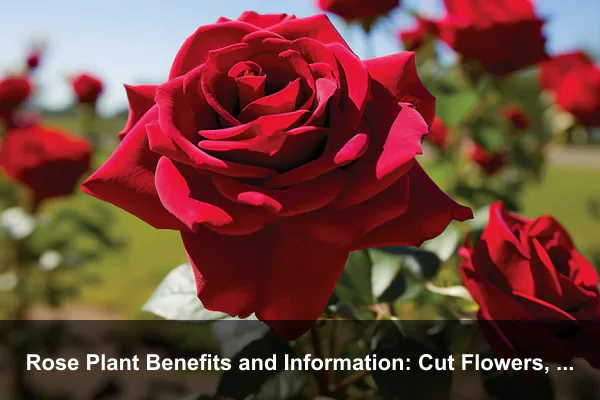
Roses are often described only as romantic flowers, but that narrow view misses one of their most practical home benefits: they can become a reliable source of fresh, locally grown cut flowers. This rose plant benefits and information guide looks at roses through the useful lens of harvesting, conditioning, vase life, and everyday floral care.
In the broader idea of manfaat tanaman, or useful plant value, a rose plant brings beauty, routine, plant knowledge, and seasonal materials into the home. Instead of focusing on privacy hedges, edible petals, vertical displays, or heritage collecting, this article explains how to grow and handle roses so each bloom has stronger stems, cleaner water, and a longer display life after cutting.
What Makes Roses Valuable as Cut Flowers
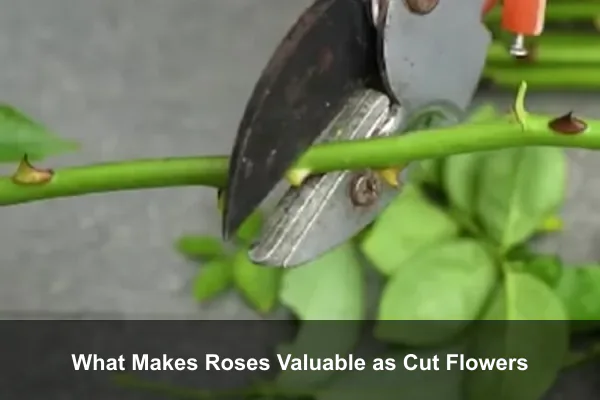
A rose grown for cutting is judged differently from a rose grown only to decorate a garden bed. Stem length, bud stage, repeat blooming, petal firmness, and vase performance all matter. A healthy rose plant can provide small weekly bouquets, single-stem desk flowers, or larger arrangements for family tables without depending on store-bought flowers every time.
Practical Benefits at Home
The most obvious benefit is visual beauty, but the value goes deeper. Cutting roses teaches timing, observation, and gentle handling. It also turns garden care into a practical home routine rather than a purely decorative hobby.
- Fresh seasonal flowers: Homegrown blooms can be cut close to the moment they are needed.
- Better flower awareness: Gardeners learn how bud stage, weather, and water quality affect vase life.
- Reduced floral waste: You can cut only a few stems instead of buying a full bouquet.
- Flexible decorating: One rose stem can brighten a bedside table, work desk, dining room, or entry shelf.
- Skill-building: Regular harvesting improves pruning confidence and plant observation.
Why Vase Life Starts in the Garden
Long-lasting roses are not created only after they enter the vase. Vase life begins with a well-watered plant, clean tools, healthy leaves, and the right cutting time. Stressed roses may open too quickly, droop early, or shed petals sooner. This is why good garden care and good floral care should be treated as one connected process.
Rose Plant Information for Better Harvests
Most roses belong to the genus Rosa, a large group of flowering shrubs known for layered petals, woody stems, prickles, and repeat or seasonal blooming habits. For cut flowers, the best rose is not always the largest or most dramatic one. The best choice is the plant that produces usable stems consistently in your climate and garden conditions.
Growth Habits That Affect Cutting
Hybrid tea roses often produce classic single flowers on longer stems, making them useful for formal arrangements. Floribunda roses usually bloom in clusters, which can create fuller, casual displays. Shrub roses may offer generous flowering and better garden resilience, though stem length can vary. Miniature roses are useful for tiny vases and compact arrangements, especially when space is limited.
When choosing roses for home floral care, look for plants with strong upright canes, repeat flowering, disease resistance, and blooms that hold their shape. Fragrance is pleasant, but it should not be the only deciding factor. A very fragrant rose with weak stems may be less useful in a vase than a moderately scented rose with reliable structure.
Stem Strength and Leaf Health
Strong stems help roses stay upright after cutting. Leaves also matter because they reveal the plant’s general condition. Glossy, firm, evenly colored leaves usually suggest better growing conditions. Leaves with heavy spotting, yellowing, or stress may point to problems that reduce bloom quality. For cutting, choose stems from the healthiest part of the plant whenever possible.
How to Harvest Roses for Longer Vase Life
Cutting roses well is a simple skill, but small details make a noticeable difference. The goal is to harvest the bloom when it has enough stored energy to open indoors while still being firm enough to last.
Best Time to Cut
The best time to cut roses is usually early morning, after the plant has had a cool night and before strong sun increases water loss. Evening can also work if the plant is well hydrated. Avoid cutting during the hottest part of the day because stems may already be under moisture stress.
Ideal Bud Stage
For many roses, the ideal cutting stage is when the outer petals have loosened slightly and the bud is beginning to show its form. A bud that is too tight may fail to open indoors. A fully open bloom may be beautiful immediately but often has a shorter vase life.
- Water the rose plant deeply the day before cutting if the soil is dry.
- Use clean, sharp pruners to avoid crushing the stem.
- Cut above an outward-facing leaf set so the plant can regrow neatly.
- Place stems in clean water immediately after cutting.
- Remove lower leaves that would sit below the waterline.
Cutting Without Weakening the Plant
Do not remove too much foliage when harvesting. Leaves feed the plant and help it recover for future blooms. For young rose plants, take shorter stems and fewer flowers. Mature, vigorous plants can usually handle more cutting, but balance is still important. A productive rose plant is one that keeps enough leaves to rebuild energy after every harvest.
Conditioning, Water Care, and Display Placement
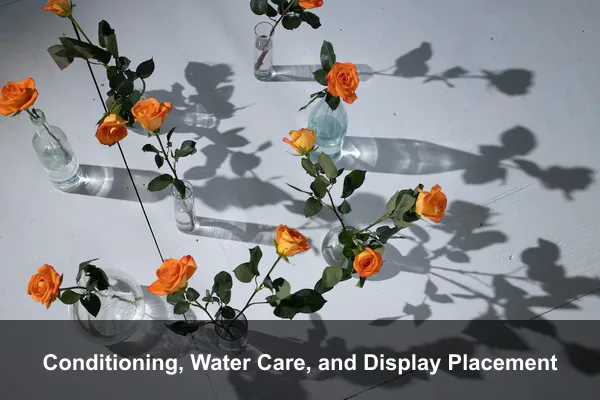
Conditioning is the process of preparing cut stems before arranging them. It may sound technical, but it is mainly about hydration, cleanliness, and reducing bacteria in the vase. Good conditioning can turn an average rose display into one that lasts noticeably longer.
Simple Conditioning Steps
- Recut each stem at an angle before placing it in the vase.
- Use a clean vase, not one with cloudy residue from previous flowers.
- Remove leaves below the waterline to keep the water fresher.
- Use room-temperature water unless the flowers are badly wilted.
- Refresh the water every one to two days, especially in warm rooms.
Commercial flower food can help because it usually combines sugar, an acidifier, and a mild antibacterial ingredient. If you do not use flower food, cleanliness becomes even more important. Plain water can still work well when the vase is washed, leaves are removed, and stems are recut regularly.
Where to Display Cut Roses
Roses last longer in a cool, bright location away from direct sun, heating vents, ripening fruit, and strong drafts. Fruit is worth mentioning because it releases ethylene gas, which can speed flower aging. A dining table, shaded sideboard, or calm work corner is often better than a hot windowsill.
When Roses Begin to Fade
Fading roses can still be useful for learning. Notice whether petals browned at the edges, stems bent near the neck, or water became cloudy quickly. These clues can reveal heat stress, late harvesting, dirty water, or weak stem hydration. Keeping brief notes helps improve the next cutting session.
Benefits Beyond Decoration
The strongest benefit of a rose plant is not only the flower itself, but the habit it creates. A cutting rose encourages regular outdoor observation. You check soil moisture, watch buds mature, remove spent blooms, and notice seasonal changes. This makes the plant part of everyday life rather than a background object.
A Useful Routine for Beginners
For beginners, rose cutting can make plant care more rewarding because the result is immediate. A well-cut stem becomes a small display the same day. That feedback helps gardeners understand why watering, pruning, sunlight, and clean tools matter.
Low-Waste Floral Habits
Homegrown rose arrangements can also support a lower-waste approach to decorating. Use jars, narrow bottles, or simple vases you already own. Cut only the number of stems needed. Compost spent plant material when appropriate. Save long-lasting greenery from the garden to support smaller rose arrangements without needing extra purchased filler.
Common Rose Cutting Mistakes to Avoid
Many vase problems come from preventable handling mistakes. The rose may be healthy in the garden, but poor cutting and display habits can shorten its indoor life.
- Cutting in harsh midday heat: Stems lose moisture faster and may wilt sooner.
- Using dull tools: Crushed stems cannot hydrate as efficiently.
- Leaving leaves underwater: Submerged foliage encourages cloudy, bacteria-rich water.
- Choosing fully open blooms every time: They look impressive but often fade quickly.
- Displaying roses beside fruit: Ethylene exposure can speed aging.
- Forgetting to clean the vase: Old residue can shorten the life of fresh flowers.
Conclusion
Rose plant benefits and information become more practical when roses are seen as living sources of fresh floral material, not just ornamental shrubs. With the right cutting time, clean tools, careful conditioning, and smart display placement, a rose plant can provide longer-lasting flowers and a more meaningful gardening routine.
For gardeners who want beauty with everyday usefulness, growing roses for cut flowers is a rewarding angle. It connects outdoor care with indoor comfort, teaches plant observation, and turns each bloom into a simple, seasonal benefit from the garden.
