
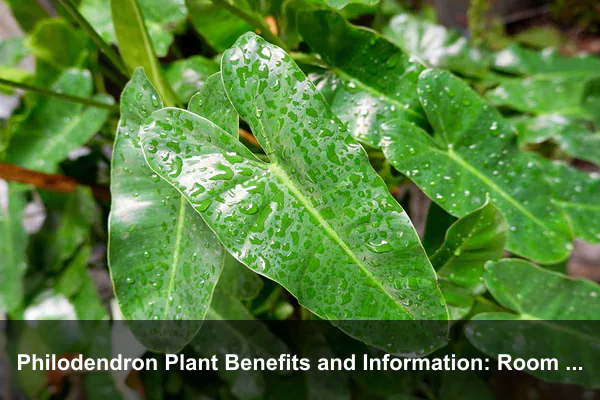
Philodendrons are among the most useful indoor foliage plants because they offer more than attractive leaves. When chosen and placed well, they can soften hard interiors, make small rooms feel calmer, support a simple plant-care routine, and provide long-term greenery without demanding expert-level maintenance. This guide to Philodendron plant benefits and information focuses on a fresh angle: how to use philodendrons as practical, lasting houseplants that fit real homes, not just as trendy decor pieces.
Many people buy a philodendron because it looks lush in a nursery pot, but the real value comes from understanding its growth habit, space needs, safety limits, and renewal potential. A trailing philodendron on a shelf, a climbing plant on a moss pole, and an upright self-heading variety all behave differently indoors. Knowing those differences helps you get the benefits of the plant while avoiding clutter, weak growth, pet risks, and constant repotting.
Philodendron Benefits for Intentional Indoor Living
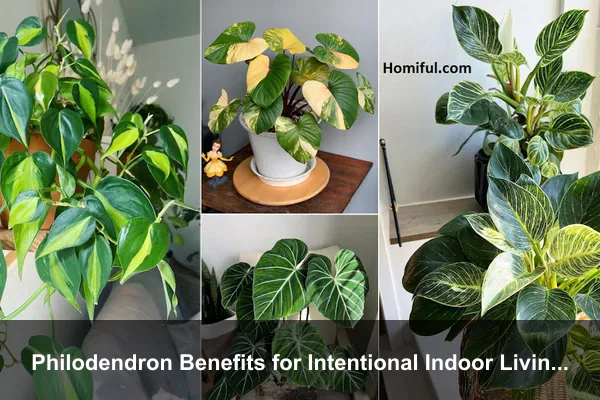
The strongest philodendron benefits are practical and sensory. These plants create a visible connection to nature, which can make rooms feel less sterile and more lived-in. Their foliage adds shape, depth, and movement to spaces that might otherwise rely only on furniture and wall decor. Unlike flowering plants that may have short bloom windows, philodendrons provide year-round leaf interest when their basic needs are met.
A philodendron is also forgiving enough to help beginners build confidence. It usually communicates problems through leaf color, drooping, slow growth, or stretched stems before the whole plant declines. This makes it a good teaching plant for learning light, watering, pruning, and soil balance. The benefit is not just the plant itself, but the low-pressure routine it encourages.
Realistic Air and Wellness Benefits
Philodendrons are often promoted as air-purifying plants, but this claim needs context. Plants can interact with indoor air in controlled studies, yet a single houseplant will not replace ventilation, cleaning, or moisture control in a normal room. A more realistic benefit is that philodendrons encourage healthier indoor habits: opening curtains for light, checking humidity, cleaning dusty leaves, and paying attention to stagnant corners.
For many households, the emotional value is more noticeable than any measurable air-quality change. A healthy philodendron can make a desk, reading chair, entryway, or bedroom corner feel more grounded. This is part of biophilic design, the idea that natural forms can make indoor environments feel more comfortable and human.
Benefits You Can Actually Notice
- Visual softness: Large or trailing leaves reduce the hard look of shelves, walls, and empty corners.
- Flexible display: Many philodendrons work in hanging pots, tabletop planters, plant stands, or support poles.
- Beginner-friendly growth: Most common types recover well from minor care mistakes.
- Long-term value: Pruning and propagation can refresh the plant instead of replacing it.
- Space efficiency: Climbing forms can grow upward, while trailing forms can use vertical shelf space.
Essential Philodendron Information Before You Choose One
Philodendrons belong to the aroid family, a group of plants known for bold foliage and specialized growth habits. In nature, many philodendrons grow in tropical forests, where they may climb trees, trail across the forest floor, or form large upright clumps. Indoors, this means they often prefer bright indirect light, airy soil, stable warmth, and moderate humidity.
Not every plant sold with a philodendron-like appearance is used the same way. Some are trailing, some climb strongly, and some stay more compact. Understanding this before buying prevents one of the most common houseplant problems: choosing a plant for its current size without planning for its future shape.
Climbing, Trailing, and Upright Forms
Trailing philodendrons, such as heartleaf types, are ideal for shelves and hanging baskets. They can look full when pruned regularly, but they may become thin and leggy if kept too far from light. Climbing philodendrons often produce larger, more mature leaves when given a pole, plank, or trellis. Upright or self-heading philodendrons form a denser structure and can work well as floor plants or statement plants in simple pots.
This growth habit matters more than the plant label alone. A beautiful climbing variety placed on a low table may sprawl awkwardly. A trailing type forced to stand upright may never show its best shape. Matching the plant’s natural habit to the room is the easiest way to make it look intentional.
Common Indoor Choices by Use
- For shelves: Heartleaf philodendron, Philodendron Brasil, and micans are useful because they trail attractively.
- For vertical growth: Climbing forms can be trained on poles to save floor space and create height.
- For modern floor displays: Upright varieties such as Imperial Green or Rojo Congo offer a clean, structured look.
- For compact rooms: Slower-growing or easily pruned forms are easier to manage than large, fast climbers.
Room Planning: Matching Philodendron Growth to Your Space
A philodendron should solve a design or comfort problem, not create another maintenance task. Before choosing one, look at the room’s light, traffic flow, furniture height, pets, and available surfaces. This approach makes Philodendron plant benefits and information more useful because it connects plant care to everyday living.
Small Apartments and Shelves
In small apartments, trailing philodendrons are often the most efficient. They use vertical space without taking over the floor. Place them on a bright shelf, cabinet, or wall-mounted plant holder where vines can be trimmed before they tangle with electronics, curtains, or walking paths. Rotate the pot every few weeks so one side does not become noticeably fuller than the other.
If the room has very limited light, avoid relying on distance from a window alone. A plant may survive in low light but grow slowly, lose variegation, or stretch toward the nearest light source. For a compact home, a smaller healthy plant is usually better than a large weak one.
Offices, Desks, and Focus Areas
Philodendrons can work well near desks because their foliage gives the eye a softer place to rest between screen sessions. Choose a controlled size for work areas. A trailing plant near a monitor may look attractive at first, but vines can become distracting if they enter the workspace. A compact upright plant or a pruned trailing plant in a stable pot is usually better for desks.
Office plants also need predictable care. If weekends, air conditioning, or inconsistent watering are part of the environment, choose a common green philodendron rather than a delicate rare variety. The goal is steady greenery, not a plant that needs daily adjustment.
Bathrooms, Kitchens, and Humid Corners
Philodendrons may appreciate the extra humidity found in bathrooms and kitchens, but only if there is enough light and airflow. A windowless bathroom is usually a poor long-term location. Humidity without light can lead to weak growth, while humidity without airflow may encourage fungal problems or stale soil.
In kitchens, place philodendrons away from heat, grease, and direct contact with food-prep surfaces. These plants are ornamental and should not be treated as edible herbs. A bright breakfast nook, high shelf, or plant stand near indirect light is more suitable than a countertop beside the stove.
Care Fundamentals That Keep the Benefits Real
The benefits of a philodendron depend on consistent basic care. A stressed plant with yellowing leaves, pests, or soggy soil does not improve the feeling of a room. Fortunately, care is straightforward when you focus on light, watering, soil structure, and regular observation.
Light Without Leaf Burn
Most indoor philodendrons prefer bright, indirect light. This means a room that is naturally bright, but where harsh midday sun does not hit the leaves for long periods. Morning sun can be acceptable for many types, while intense afternoon sun may scorch tender leaves, especially on variegated varieties.
Low light is not the same as no light. A philodendron kept far from a window may stay alive but grow smaller leaves, longer gaps between leaves, and weaker stems. If you want a full, attractive plant, place it where it can actively grow, not merely survive.
Watering by Feel, Weight, and Season
Water when the top layer of soil has dried and the pot feels lighter, then water thoroughly until excess moisture drains away. Avoid leaving the pot sitting in water. Overwatering is not simply giving too much water at once; it is keeping roots wet for too long without oxygen. This is why drainage holes and airy potting mix matter.
Season also changes watering needs. During warm, bright months, a philodendron may dry faster and grow more actively. In cooler or darker months, the same plant may need water less often. A fixed calendar can be useful as a reminder to check, but the soil should decide the actual timing.
Soil, Pot, and Feeding Basics
A good philodendron mix should hold some moisture while allowing air around the roots. Many growers use a blend that includes potting soil, orchid bark, perlite, coco coir, or similar chunky materials. The exact recipe can vary, but the goal is the same: moisture without compacted mud.
Fertilizer should support growth, not force it. During active growth, a balanced diluted houseplant fertilizer can be used according to label directions. Overfeeding may cause salt buildup, weak growth, or damaged roots. If the plant is not receiving enough light, fertilizer will not solve the real problem.
Long-Term Value: Pruning, Renewal, and Growth Control
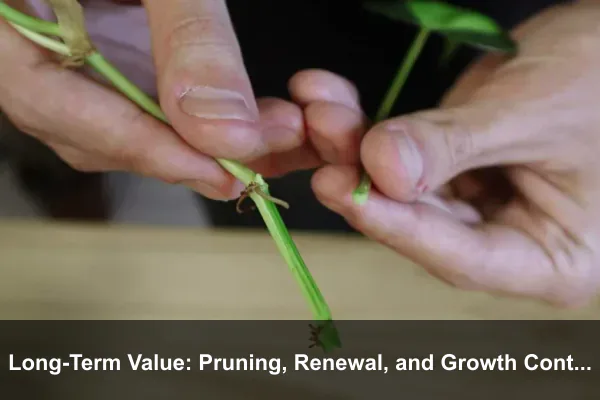
One of the most overlooked philodendron benefits is that the plant can be renewed over time. Instead of replacing an overgrown or leggy plant, you can prune, root cuttings, and rebuild fullness. This makes philodendrons valuable for low-waste indoor gardening and for people who want plants that improve with care.
How Pruning Improves the Plant
Pruning helps control size, encourage branching, remove weak growth, and keep the plant in proportion with the room. For trailing philodendrons, trimming long vines can make the pot look fuller because new growth may emerge near nodes. For climbing types, pruning can redirect energy and prevent the plant from becoming top-heavy.
Use clean scissors or pruners and cut just above a node, which is the point where leaves and roots can emerge. Avoid removing too much growth at once from a stressed plant. A healthy plant can handle shaping, but a plant with root rot, pests, or severe dehydration should be stabilized before major pruning.
Propagation as Low-Waste Renewal
Many philodendrons can be propagated from stem cuttings with nodes. This is useful when a plant becomes uneven or when you want to fill out the original pot. Propagation is also a thoughtful way to share common plants with friends without buying more nursery stock.
- Choose a healthy vine or stem with at least one visible node.
- Cut with clean tools, leaving enough stem for handling.
- Root the cutting in water, moist sphagnum, or a light potting medium depending on your preference.
- Move rooted cuttings into soil once roots are developed enough to support growth.
- Keep new plants in gentle light while they adjust.
Propagation should be done responsibly. Rare or expensive philodendrons may be protected by plant patents, nursery rules, or ethical sourcing concerns. For everyday home use, common varieties are the best choice because they are affordable, adaptable, and widely available.
Safety, Allergies, and Responsible Home Use
Philodendrons are ornamental plants, not edible or medicinal plants. Their tissues contain calcium oxalate crystals that can irritate the mouth, throat, skin, and digestive system if chewed or ingested. This is especially important for homes with cats, dogs, small children, or curious visitors.
Pets, Children, and Placement
If you share your home with pets or young children, place philodendrons out of reach or choose another plant if safe placement is not realistic. Hanging baskets, high shelves, and closed plant rooms can reduce access, but they are not perfect solutions for every household. Some cats climb, some dogs chew fallen leaves, and children may pull trailing vines.
Signs of chewing or irritation should be taken seriously. Contact a veterinarian, pediatrician, or poison control resource if ingestion is suspected. Do not rely on home remedies. The safest approach is prevention through placement and plant choice.
Cleaning and Handling
Dusty leaves reduce light absorption and make the plant look tired. Wipe broad leaves gently with a damp cloth. For smaller trailing leaves, a gentle shower can help remove dust, but allow the plant to drain fully afterward. When pruning or repotting, people with sensitive skin may prefer gloves.
Avoid strong leaf-shine products, harsh sprays, or homemade mixtures that may clog leaf surfaces or damage tissue. Clean water and careful handling are usually enough. If pests appear, identify the pest before applying treatment, because spider mites, mealybugs, fungus gnats, and scale insects require different responses.
Troubleshooting When a Philodendron Stops Thriving
A philodendron can lose its benefits when it becomes messy, weak, or unhealthy. Most problems begin with light, water, soil, or pests. Instead of adding more products, start by reading the symptoms and checking the growing conditions.
Common Problems and Likely Causes
- Yellow leaves: Often linked to overwatering, old leaves, low light, or sudden environmental change.
- Brown crispy edges: May come from underwatering, low humidity, excess fertilizer, or mineral-heavy water.
- Leggy vines: Usually caused by insufficient light or lack of pruning.
- Small new leaves: Can indicate low light, weak roots, lack of support, or nutrient imbalance.
- Soft stems or bad smell: Often a warning sign of root rot or constantly wet soil.
- Sticky leaves or cottony clusters: May indicate pests such as scale or mealybugs.
When diagnosing a problem, change one major factor at a time. Moving a plant, repotting it, fertilizing it, pruning it, and treating pests all in the same week can increase stress. A calm, step-by-step response is usually more effective.
When to Repot
Repot only when the plant needs it. Signs include roots circling heavily, soil drying extremely fast, stunted growth during the growing season, or roots emerging through drainage holes. Choose a pot only slightly larger than the current one. A pot that is too large can hold excess moisture around roots and increase the risk of rot.
After repotting, keep care steady. Do not fertilize immediately if the roots were disturbed heavily. Give the plant time to reestablish before expecting fast new growth. Long-term philodendron care rewards patience more than constant intervention.
Sustainable and Ethical Philodendron Choices
Philodendrons have become highly collectible, especially rare and variegated forms. While collecting can be enjoyable, it is worth separating lasting value from trend pressure. A plant should fit your space, care ability, and budget. The most expensive philodendron is not always the best one for your home.
Avoiding Trend Pressure
Rare plants may require more precise care, stronger light, higher humidity, and closer pest monitoring. Some variegated plants grow more slowly because pale leaf sections contain less chlorophyll. If you want reliable benefits, common green varieties often provide better performance with less stress.
Ethical buying also matters. Choose reputable sellers who propagate plants responsibly and can explain basic care. Be cautious with suspiciously cheap rare plants, unclear sourcing, or listings that encourage impulse buying without care information. A healthy, nursery-grown common philodendron can offer more real indoor value than a fragile plant bought only for status.
Building a Purposeful Collection
A good philodendron collection does not need to be large. It can include one trailing plant for a shelf, one upright plant for structure, and one climber for vertical interest. This gives variety without turning care into a burden. The aim is to create a manageable indoor green system that supports your routine and space.
Before adding another plant, ask whether you have the right light, a safe location, time to water and inspect it, and enough room for mature growth. These questions keep plant ownership practical and prevent waste. They also help every philodendron in your home receive better care.
Conclusion
Philodendrons earn their popularity because they combine beauty, flexibility, and forgiving care. The most useful Philodendron plant benefits and information go beyond simple decoration: these plants can improve how a room feels, teach practical plant-care skills, provide long-term value through pruning and propagation, and support a more thoughtful indoor environment.
The key is choosing the right growth habit for the right place. Match trailing, climbing, or upright philodendrons to your room, give them bright indirect light, water with attention, use airy soil, and respect their safety limits around pets and children. With that approach, a philodendron becomes more than a pretty houseplant. It becomes a durable, renewable part of the home.
