
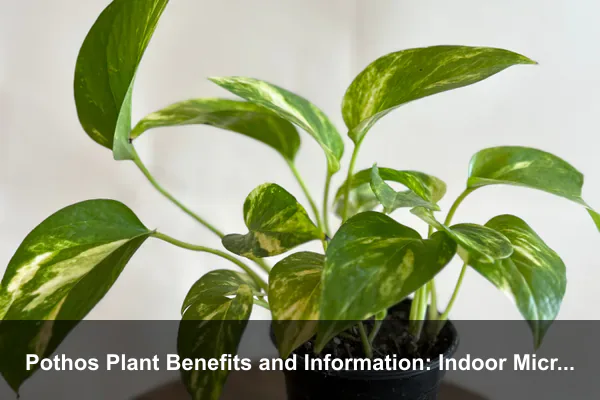
Pothos is often described as an easy houseplant, but its real value goes beyond simple survival. For people who want practical Pothos plant benefits and information, one of the most useful angles is learning how this vine can help you understand the small climate zones inside your home. A single room can have bright shelves, dry corners, warm appliance zones, drafty windows, and darker spots that change with the season. Pothos responds to those conditions in visible ways, making it a helpful plant for observing your indoor environment.
This guide focuses on using pothos as a living microclimate guide. Instead of treating it only as decoration, you can use its growth speed, leaf color, soil drying pattern, vine length, and overall posture to make smarter decisions about placement, watering, light, and long-term indoor plant care. This approach is especially helpful for beginners, renters, small-space gardeners, and anyone who wants houseplants that improve daily routines without adding complicated maintenance.
In the wider context of Manfaat Tanaman, or plant benefits, pothos offers both visual and practical value. It softens indoor spaces, supports a calmer atmosphere, encourages observation, and helps people build a more consistent care rhythm. At the same time, it should be understood realistically: pothos is not a magic air purifier, it is not edible, and it needs thoughtful placement around pets and children. When managed well, however, it becomes one of the most flexible indoor plants for learning how your home actually behaves.
Why Pothos Is Useful for Reading Indoor Conditions
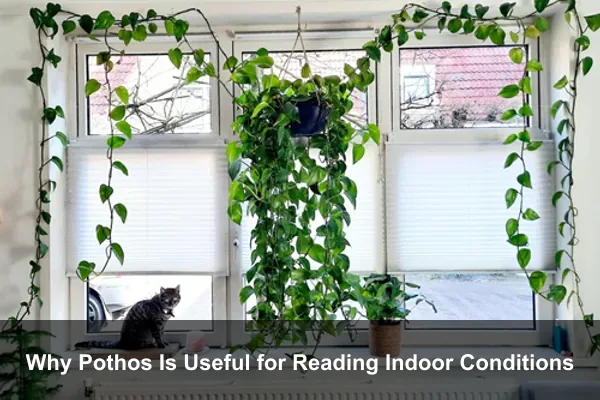
Pothos, commonly sold under names such as golden pothos, marble queen pothos, jade pothos, neon pothos, and manjula pothos, belongs to the aroid family and is known botanically as Epipremnum aureum. It is a climbing or trailing tropical vine with heart-shaped leaves, aerial root nodes, and a forgiving growth habit. These features make it useful not only as a decorative houseplant but also as a simple indicator of indoor growing conditions.
Many indoor plants are sensitive enough to decline quickly when conditions are imperfect. Pothos is different. It usually gives gradual, readable signals before a problem becomes severe. Leaves may become smaller in low light, variegation may fade in dim corners, soil may stay wet longer in cool areas, or vines may stretch toward a brighter window. These small changes help you understand your space before choosing more demanding plants.
The main benefit of this approach is that pothos helps you match plant care to real conditions rather than guessing. A corner that looks bright to human eyes may still be too dim for strong variegation. A sunny shelf may be warm enough to dry soil quickly. A bathroom may offer humidity but poor light. By watching pothos over several weeks, you collect practical information that improves your whole indoor plant setup.
What Makes Pothos a Good Microclimate Plant?
Pothos works well for this purpose because it has a balanced mix of resilience and responsiveness. It can tolerate a range of indoor environments, yet it still shows changes when light, water, airflow, or temperature are not ideal. That makes it more informative than a plant that either thrives silently or collapses suddenly.
- Fast enough growth: New leaves and vine extension make it easy to compare different locations over time.
- Visible leaf changes: Color, size, variegation, and texture can all reflect indoor conditions.
- Flexible placement: Pothos can grow in hanging baskets, shelves, wall clips, tabletop pots, or moss poles.
- Moderate care needs: It does not demand constant attention, making it suitable for everyday households.
- Easy propagation: Cuttings allow you to test multiple areas with related plant material.
Core Pothos Plant Benefits and Information for Everyday Homes
The most important pothos benefits are practical, not exaggerated. A healthy pothos can improve the look and feeling of a room, support better plant-care habits, and bring living texture into places that may otherwise feel hard or static. Its trailing vines are useful for vertical interest, shelf edges, bookcases, kitchen ledges, and home office corners.
From a wellness perspective, pothos can encourage a slower and more observant routine. Checking soil moisture, turning a pot, removing a yellow leaf, or noticing a new node can create small moments of attention during a busy day. This does not mean pothos cures stress, but it can support a calmer relationship with the indoor environment.
Pothos is also useful for people who want a lower-pressure entry into houseplants. It tolerates occasional missed watering better than many tropical foliage plants. It can adapt to moderate indoor light. It can be pruned when vines become too long. It can be refreshed through cuttings. These traits give owners room to learn without losing the plant quickly.
Realistic Benefits You Can Expect
When discussing Pothos plant benefits and information, it is important to separate realistic value from common myths. Pothos has been studied in controlled air-quality contexts, but a few houseplants in a normal home will not replace ventilation, cleaning, filtration, or source control. Its everyday benefit is better understood as visual comfort, habit support, plant-learning value, and flexible indoor greenery.
- Visual softness: The vines help soften shelves, cabinets, workspaces, and plain walls.
- Beginner learning: Pothos teaches light, watering, pruning, and propagation basics.
- Space efficiency: It can grow upward, downward, or across supports without needing much floor space.
- Routine building: Its care rhythm is easy to connect with weekly household habits.
- Adaptable styling: It works in simple pots, hanging planters, high shelves, and grouped plant displays.
Using Pothos to Map Light in Your Home
Light is the most important factor in pothos growth. The plant can tolerate lower light, but tolerance is not the same as strong growth. In brighter indirect light, pothos usually produces fuller vines, stronger color, and more frequent new leaves. In dim conditions, it may survive but grow slowly, produce smaller leaves, or lose some variegation.
To use pothos as a light-mapping plant, place it in a candidate spot for four to six weeks and observe its response. Avoid judging too quickly, because indoor plants need time to adapt. Keep watering consistent and watch how the newest leaves behave. New growth is more useful than older leaves because it reflects the plant’s current environment.
Bright Indirect Light
Bright indirect light is usually ideal for pothos. This may be near an east-facing window, a few feet from a bright south or west window, or beside a filtered window with sheer curtains. In this position, many pothos varieties grow steadily without the risk of harsh leaf scorch.
Signs of good light include firm leaves, balanced spacing between leaves, steady new growth, and maintained variegation in variegated types. If the plant is near a window and the leaves become pale, crispy, or sunburned, the light may be too direct. Move it slightly back or add filtering.
Medium Light
Medium light works well for many standard pothos varieties, especially jade pothos and golden pothos. Growth may be moderate rather than fast, but the plant can still look healthy. This is a good setting for offices, bedrooms, and shelves that receive daylight but not strong window exposure.
If your pothos holds its leaf color, produces new growth slowly but consistently, and does not stay wet for too long after watering, the location is likely acceptable. This kind of position is often the most realistic for everyday indoor living.
Low Light
Pothos can survive in low light, but it should not be treated as a plant that enjoys darkness. In very dim corners, vines may stretch, leaves may become smaller, and variegated types may turn greener. Soil may also dry slowly, increasing the risk of root stress if watering is too frequent.
Low light can still be useful for temporary placement or for hardy green varieties, but it is not the best choice if you want vigorous growth. If a pothos barely changes for months, that is information: the spot may be better suited for artificial light, a rotating plant schedule, or a non-living decorative element.
Watering Clues: What Pothos Reveals About Moisture and Airflow
Watering pothos is often described simply as letting the top layer of soil dry before watering again. That rule is useful, but the timing changes depending on light, pot size, soil mix, temperature, airflow, and season. This is where pothos becomes a helpful indoor climate teacher.
If the same pothos dries quickly in one room and slowly in another, the difference is not random. A brighter, warmer, breezier location will usually use water faster. A darker, cooler, still corner will keep soil moist longer. Instead of watering on a strict calendar, use the plant to understand how each location behaves.
How to Read Soil Drying Speed
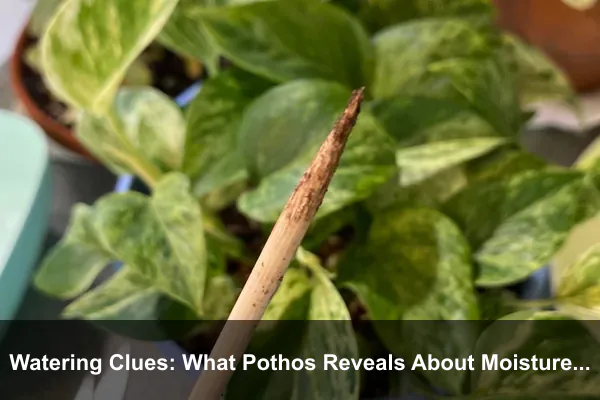
Check the pot every few days at first. Use a finger, wooden skewer, or moisture meter if you prefer a tool. The goal is not to create a complicated system; it is to learn the pattern. A plant in a small terracotta pot near bright light may need water more often than one in a plastic pot on a shaded shelf.
- Soil dries in 3-5 days: The plant may be in bright light, warm air, a small pot, or a fast-draining mix.
- Soil dries in 7-10 days: This is common in many stable indoor conditions.
- Soil stays wet beyond 2 weeks: Light may be too low, the pot may be too large, drainage may be poor, or airflow may be limited.
Long-lasting wet soil is more concerning than occasional dryness. Pothos can often recover from slight underwatering, but roots can suffer when oxygen is limited in soggy soil. If leaves yellow while soil remains wet, reduce watering frequency and check whether the pot drains properly.
Leaf Posture and Moisture Stress
Pothos leaves may droop when the plant is thirsty, especially if the soil is dry throughout the pot. After watering, leaves often regain firmness within a day. However, drooping can also happen when roots are damaged by overwatering, so always check the soil before adding more water.
Yellow leaves at the base of the vine may be normal aging, but several yellow leaves at once can suggest watering imbalance, poor drainage, or a sudden environmental change. Brown crispy edges may point toward inconsistent moisture, mineral buildup, or very dry air. The plant’s signals are useful, but they should always be interpreted with context.
Choosing the Right Pothos Variety for Your Indoor Goal
Different pothos varieties can support different indoor goals. Some are better for low-key green coverage, while others are chosen for bright color or dramatic variegation. When selecting a pothos, think about the light you can provide and the role you want the plant to play.
Golden Pothos
Golden pothos is one of the most common and forgiving choices. Its green leaves with yellow marbling adapt well to average indoor conditions. It is a good starter plant for testing shelves, office corners, and hanging baskets. With brighter indirect light, the yellow markings usually become more noticeable.
Jade Pothos
Jade pothos has solid green leaves and is often more tolerant of lower light than heavily variegated types. It is a strong option for simple, clean indoor greenery where the goal is durability rather than dramatic leaf pattern. Because it has more green tissue for photosynthesis, it can be more forgiving in moderate conditions.
Marble Queen and Highly Variegated Types
Marble queen pothos and other highly variegated forms need brighter indirect light to maintain strong patterning. In dim spaces, new leaves may become greener or growth may slow. These plants are best used as light indicators in bright indoor zones, because their variegation responds clearly to available light.
Neon Pothos
Neon pothos is valued for its bright chartreuse leaves. It can bring energy to neutral interiors without flowers. It usually looks best with steady indirect light, which helps maintain vivid color. Too much direct sun can make leaves look washed or damaged, while too little light can reduce its brightness.
Placement Ideas That Support Healthy Growth
Pothos is flexible, but placement should still respect plant health and household safety. A vine placed too far from light may look sparse. A pot placed above electronics may create risk during watering. A trailing plant near pets may invite chewing. Good placement balances beauty, growth, safety, and convenience.
For small homes and apartments, pothos is especially useful because it can use vertical space. A high shelf, wall-mounted planter, cabinet top, or hanging basket can hold greenery without taking up the floor. However, the plant should remain reachable for watering, pruning, and cleaning.
Best Indoor Spots for Pothos
- Near bright windows: Place it slightly away from harsh direct sun for strong growth without leaf burn.
- Bookshelf edges: Let vines trail while keeping the pot stable and easy to access.
- Kitchen shelves: Use only where light is suitable and the plant is away from heat, grease, and food prep surfaces.
- Home offices: Add greenery near the desk without crowding the work surface.
- Bathrooms with windows: Humidity may help, but light is still essential.
Places to Avoid
Avoid placing pothos directly above heaters, air-conditioner vents, or hot appliances. Constant dry airflow can stress leaves, while heat can dry the pot unevenly. Also avoid dark corners where the plant is used as permanent decoration but receives almost no usable light.
Because pothos contains calcium oxalate crystals, it should be kept away from pets and children who may chew leaves or stems. It is not a food plant. If your household includes curious cats, dogs, toddlers, or school-age children, use high placements, closed rooms, or pet-safe plant alternatives where needed.
Soil, Potting, and Root Health Basics
Pothos does best in a potting mix that holds some moisture but still drains well. A standard indoor potting mix can work, especially if amended with perlite, orchid bark, pumice, or coco chips for better aeration. The roots need both moisture and oxygen. Dense, soggy soil is one of the most common reasons pothos declines indoors.
The pot should have drainage holes. Decorative cachepots are fine as outer covers, but the inner nursery pot should drain freely. After watering, empty excess water from the outer container so the plant is not sitting in a stagnant pool.
When to Repot Pothos
Repotting is usually needed when roots circle heavily around the pot, water runs through too quickly, growth slows despite good light and care, or the plant becomes top-heavy. Most indoor pothos plants do not need frequent repotting. Moving up one pot size is usually enough.
Do not repot into a much larger container just because the vines are long. Vines can be long while the root system remains moderate. A pot that is too large holds extra moisture and can increase root problems, especially in lower light.
Root Signals to Watch
Healthy pothos roots are usually pale, firm, and flexible. Troubled roots may be dark, mushy, sour-smelling, or fragile. If you suspect root stress, remove the plant from the pot and inspect the root ball. Trim damaged roots with clean tools, refresh the mix, and adjust watering habits.
Practical Care Rhythm for Long-Term Success
A simple rhythm is better than overmanagement. Pothos does not need constant attention, but it benefits from regular observation. A weekly check is enough for most homes, with extra attention during seasonal changes, heat waves, air-conditioning periods, or after moving the plant.
Weekly Pothos Check
- Check soil moisture before watering.
- Look for yellowing, drooping, pests, or damaged leaves.
- Rotate the pot if growth is leaning strongly toward one side.
- Make sure vines are not tangled around cords, blinds, or fragile objects.
- Wipe dusty leaves with a soft damp cloth when needed.
Monthly Pothos Check
- Trim leggy vines to encourage a fuller shape.
- Inspect the underside of leaves and stem nodes for pests.
- Review whether the location still receives enough seasonal light.
- Flush the soil occasionally if mineral buildup appears from hard water or fertilizer.
- Update plant notes if you are tracking watering and growth patterns.
Fertilizer can support growth during active seasons, but more is not always better. Use a balanced houseplant fertilizer at a diluted rate according to label directions. Avoid fertilizing a stressed plant, a plant in very low light, or a plant with root problems. Healthy roots and suitable light matter more than frequent feeding.
How Pothos Supports Better Indoor Plant Decisions
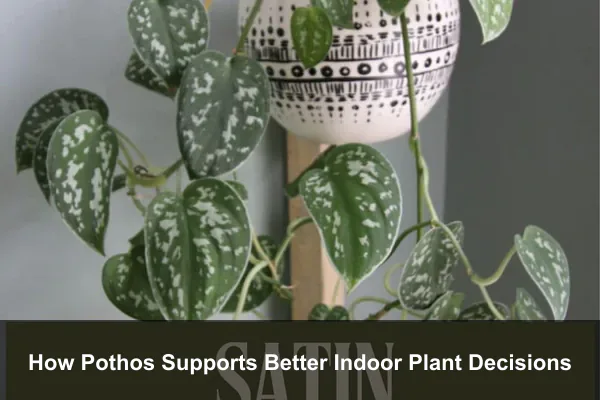
One of the underrated benefits of pothos is that it can help you become a more observant indoor gardener. If a pothos grows well in a location, that spot may also suit other moderate-light foliage plants. If it struggles, the location may need brighter light, better airflow, a smaller pot, or a different plant choice.
You can use pothos cuttings as comparison plants. Place rooted cuttings from the same parent plant in different rooms and observe how they perform over two months. Keep the pot size and soil similar so the main variable is location. This simple experiment reveals more than general care advice because it reflects your actual home.
What to Track
- Watering interval: Note how many days pass before the soil dries.
- New leaf size: Compare whether new leaves are larger, smaller, or similar to older leaves.
- Vine spacing: Long gaps between leaves can suggest the plant is reaching for light.
- Color stability: Watch whether variegation fades or bright leaf color dulls.
- Seasonal shifts: Record changes in winter, rainy periods, or hot dry months.
This kind of tracking does not need to be formal. A few notes in a phone app or notebook are enough. Over time, you will know which windows are strongest, which shelves are too dark, which rooms dry plants quickly, and which pots stay moist longer than expected.
Common Mistakes to Avoid with Pothos
Although pothos is beginner-friendly, it is not indestructible. Most problems come from mismatched placement, overwatering, poor drainage, or unrealistic expectations. The good news is that pothos often gives you time to correct mistakes before the whole plant declines.
Watering on a Fixed Calendar
A strict weekly watering schedule may work in one season and fail in another. During warm bright months, the plant may need water more often. During cooler or darker periods, the same schedule may keep soil too wet. Always check the soil first.
Keeping Variegated Pothos in Dark Corners
Variegated pothos needs enough light to maintain its pattern. If placed in low light for too long, it may produce greener leaves or grow very slowly. Choose jade pothos for lower-light tolerance, or improve the location with brighter indirect light.
Ignoring Safety
Pothos should be treated as a decorative houseplant, not an edible or medicinal plant. Keep it away from chewing pets and children. Wear gloves if you have sensitive skin and wash hands after pruning, especially if sap touches your skin.
Letting Vines Become Unmanageable
Long vines can look beautiful, but they can also collect dust, tangle, or become sparse near the pot. Pruning helps maintain a fuller plant. Cut just above a node, and use healthy cuttings for propagation if desired.
Conclusion: A Simple Plant with Smart Indoor Value
Pothos earns its popularity because it is adaptable, attractive, and easy to live with. But the deeper value of this plant is its ability to teach. By observing how pothos responds to light, moisture, airflow, potting mix, and placement, you gain practical knowledge about your indoor environment. That knowledge helps you care for pothos better and makes you more confident with other houseplants.
For anyone searching for reliable Pothos plant benefits and information, the best takeaway is this: use pothos as both greenery and guidance. Let its leaves, vines, roots, and growth rhythm show you what your home can support. With bright indirect light, careful watering, safe placement, and occasional pruning, pothos becomes more than a trailing plant. It becomes a low-stress way to build a healthier, more observant indoor gardening routine.
