
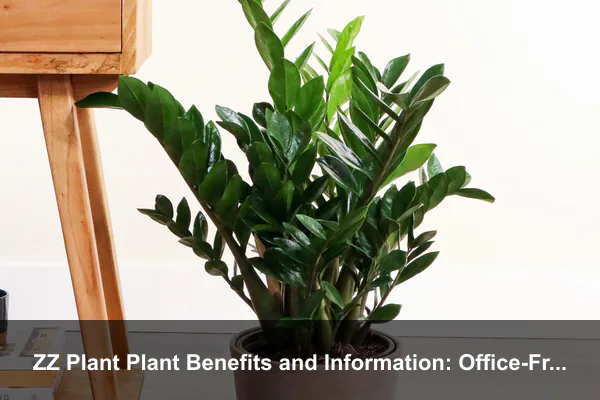
The ZZ plant, known botanically as Zamioculcas zamiifolia, has earned its reputation as one of the most forgiving indoor plants for people who want greenery without a demanding care routine. Its glossy upright leaves, thick water-storing rhizomes, and calm architectural shape make it useful in homes, offices, rental rooms, reception corners, and other places where plants are often forgotten for a week or two.
This guide takes a fresh angle on ZZ Plant plant benefits and information by focusing on busy people, shared spaces, and travel-friendly routines. Instead of treating the ZZ plant as a miracle air purifier or a decorative afterthought, we will look at what it realistically offers: dependable indoor greenery, low-maintenance care, sensible safety practices, and a simple system that helps the plant survive inconsistent human schedules.
Why the ZZ Plant Fits Low-Time Homes and Offices
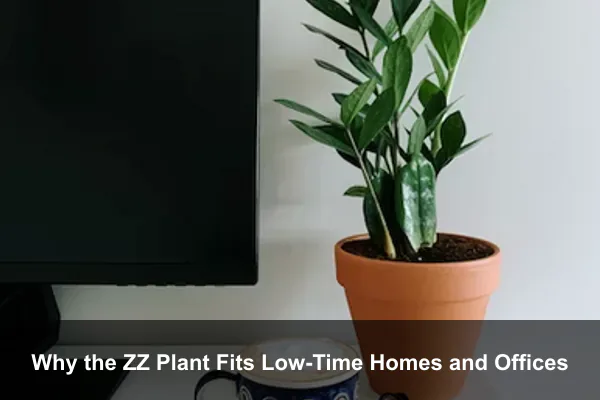
The greatest benefit of the ZZ plant is not that it needs no care. It is that it can handle imperfect care better than many popular houseplants. Its underground rhizomes store water and nutrients, allowing the plant to remain firm and attractive even when watering is delayed. For office workers, travelers, students, and people managing shared households, that resilience is more useful than a plant that grows quickly but collapses after one missed routine.
ZZ plants also bring strong visual value. Their leaflets grow in neat rows along upright stems, giving the plant a polished look even when it is small. This makes it suitable for desks, bookcases, lobby corners, and simple modern interiors where a plant needs to look tidy without constant pruning.
Practical Benefits for Shared Spaces
In a shared apartment, coworking area, or family room, the biggest plant problem is often unclear responsibility. One person waters too much, another never waters, and the plant suffers from good intentions. The ZZ plant handles shared-space uncertainty well because its care routine can be reduced to a simple rule: check the soil first, then water only when it is dry deep down.
- Low watering demand: It prefers drying out between waterings, which reduces the risk of daily overcare.
- Neat growth: Upright stems stay contained, so it does not trail across walkways or work surfaces.
- Low pollen impact: It is grown mainly for foliage, not showy blooms, which suits many indoor comfort needs.
- Slow growth: It does not require constant repotting, trimming, or staking.
- Durable leaves: The waxy leaf surface tolerates occasional dusting and handling better than delicate foliage.
What the ZZ Plant Does Not Promise
A realistic guide should separate benefits from exaggerated claims. A ZZ plant can support a more pleasant room by adding natural texture, softening hard interiors, and encouraging better care habits. However, one houseplant will not clean indoor air at a level comparable to ventilation, filtration, source control, or regular cleaning. Treat the plant as a helpful part of a healthier room, not as a substitute for fresh air or proper building maintenance.
Key ZZ Plant Information at a Glance
Before building a care routine, it helps to understand what the ZZ plant is and how it naturally behaves. Many watering mistakes happen because people treat it like a fern, pothos, or tropical plant that wants constant moisture. The ZZ plant is tropical in origin, but its structure is built for periods of dryness.
- Botanical name: Zamioculcas zamiifolia.
- Plant family: Araceae, the same broad family that includes many familiar aroids.
- Native range: Eastern Africa, where it is adapted to seasonal moisture changes.
- Growth habit: Upright stems with glossy leaflets rising from underground rhizomes.
- Indoor size: Commonly 1 to 3 feet tall indoors, depending on age, pot size, and light.
- Light preference: Bright indirect light is ideal, but it can tolerate lower light.
- Watering style: Deep but infrequent watering after the mix has dried well.
- Safety note: Not edible; keep away from pets and children who chew plants.
The Role of Rhizomes
The thick structures under the soil are one of the most important pieces of ZZ Plant plant benefits and information. These rhizomes store water, which is why the plant can stay alive during dry periods. They are also the reason overwatering is dangerous. When soil stays wet for too long, the rhizomes can rot before the leaves show obvious distress.
Because of this storage system, the ZZ plant rewards patience. A person who waters less often but checks more thoughtfully usually grows a healthier plant than someone who waters on a rigid weekly schedule.
Popular ZZ Plant Types
The classic green ZZ plant is the easiest to find and usually the most affordable. There are also darker and more compact forms that may suit specific design goals. Raven ZZ is known for new growth that matures into deep, nearly black foliage. Zenzi ZZ has a smaller, denser form that can work well on tabletops. Variegated ZZ plants exist, but they are less common and often require more careful light management to maintain their pattern.
A Practical Care System for Busy Owners
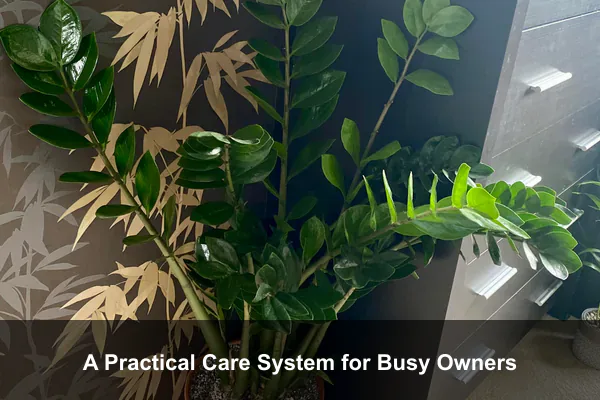
The most successful ZZ plant routine is built around observation, not constant attention. Busy owners need a method that is simple enough to follow but specific enough to prevent root rot. A good system uses light, pot weight, soil dryness, and leaf condition as signals.
Light: Choose Stability Over Extremes
ZZ plants can tolerate low light, but tolerate does not mean thrive. In very dark corners, growth will slow dramatically and stems may stretch toward the nearest window. Bright indirect light gives the best balance of strong growth and rich leaf color. A few feet from an east-facing window, near a bright north-facing window, or across the room from filtered southern or western light can work well.
Avoid harsh direct afternoon sun on the leaves, especially through hot glass. Too much direct light may scorch the foliage, leaving pale or brown patches. If the plant is in an office with fluorescent or LED lighting, place it where lights remain on for most of the workday rather than in a storage corner that is dark all week.
Watering: Use the Dry-Down Rule
The most common ZZ plant mistake is watering because the calendar says so. A better rule is to water when the potting mix has dried thoroughly. For a small plant in bright light, that might be every two to three weeks. For a large plant in lower light, it might be once a month or even less often.
- Push a finger or wooden stick deep into the mix to check moisture below the surface.
- Lift the pot when dry and after watering so you learn the difference in weight.
- Water slowly until excess drains from the bottom.
- Empty the saucer so the pot is not sitting in standing water.
- Wait for the mix to dry again before repeating.
If several people share responsibility, place a small care note near the plant with the last watering date. This prevents the classic office problem of three people watering the same plant in one week.
Soil and Pot: Drainage Matters More Than Fancy Mixes
A ZZ plant does not need exotic soil, but it does need drainage. A standard indoor potting mix can work if it is amended with perlite, pumice, orchid bark, or coarse material that keeps air around the roots. Heavy garden soil is not ideal for containers because it compacts and stays wet too long.
Choose a pot with drainage holes. Decorative cachepots are fine if the plant remains in a nursery pot inside them, but always check that water is not collecting at the bottom. The goal is simple: moisture should pass through the soil, not sit around the rhizomes.
Temperature and Humidity
Average indoor conditions suit the ZZ plant well. It prefers comfortable room temperatures and should be protected from cold drafts, air-conditioning blasts, and heat vents. Unlike many humidity-loving foliage plants, it does not demand a humidifier. This makes it especially useful in offices, bedrooms, and apartments where humidity swings are hard to control.
Office, Travel, and Shared-Space Placement Ideas
A ZZ plant becomes more valuable when it is placed according to how people actually use a room. Its upright shape and low watering needs allow it to work in locations where more delicate plants would become messy, thirsty, or hard to manage.
For Desks and Workstations
A small ZZ plant can make a desk feel more grounded without taking over valuable workspace. Place it where it receives ambient light but does not block monitors, paperwork, or task lighting. For office desks, a heavier ceramic pot can reduce tipping, while a removable nursery pot makes watering easier at a sink.
For Reception Areas and Waiting Rooms
In public-facing spaces, the ZZ plant offers a professional look with limited upkeep. Its glossy leaves photograph well, remain tidy between cleanings, and suit neutral interiors. Use a medium or large plant in a simple container near seating areas, but keep it away from tight walkways where bags or shoes may snap stems.
For Travelers and Frequently Empty Homes
People who travel often need plants that do not punish absence. A healthy ZZ plant can usually handle a short trip if it is watered properly before leaving and placed in steady indirect light. Do not compensate by soaking it repeatedly before travel. Overwatering before an absence is more dangerous than letting it go slightly dry.
For trips longer than a few weeks, ask a plant sitter to check soil dryness rather than water automatically. The instruction should be clear: if the soil is still damp, do nothing.
For Shared Homes
In family homes, dorms, and shared rentals, choose a visible but protected location. A plant stand, sideboard, or shelf near indirect light works better than a floor corner where the plant may be bumped. If pets live in the home, use elevated placement and watch for chewing behavior.
Safety, Pets, and Responsible Use
ZZ Plant plant benefits and information should always include safety. The plant is not considered edible and contains calcium oxalate crystals, which can irritate the mouth, lips, throat, or stomach if chewed or swallowed. Sap may also bother sensitive skin. For most adults, normal handling and occasional repotting are manageable, but sensible precautions matter.
- Keep the plant away from pets that chew leaves.
- Place it out of reach of small children.
- Wear gloves if you have sensitive skin or are dividing rhizomes.
- Wash hands after pruning, cleaning, or repotting.
- Do not use leaves, stems, or roots for food, tea, herbal remedies, or topical home treatments.
If a child or pet eats part of the plant, contact a medical professional, veterinarian, or poison guidance service for advice. Do not rely on internet plant articles to diagnose or treat exposure.
Troubleshooting Common Routine Mistakes
The ZZ plant is resilient, but it still communicates stress. The key is to read symptoms in context. A yellow leaf after years of growth may simply be old foliage. Several yellowing stems in wet soil suggest a watering problem. Wrinkled stems in bone-dry soil point in a different direction.
Yellow Leaves
Yellowing is often linked to overwatering, especially when the soil smells sour, the pot feels heavy, or stems become mushy at the base. Remove damaged leaves, stop watering until the soil dries, and check the roots if decline continues. Healthy roots and rhizomes should feel firm, not soft or slimy.
Wrinkled or Leaning Stems
Wrinkled stems can happen when the plant has used stored moisture and stayed dry too long. Water thoroughly, then observe over the next week. Leaning may also come from one-sided light. Rotate the pot every few weeks so growth remains balanced.
Brown Tips and Dry Edges
Brown tips may result from irregular watering, salt buildup, physical damage, or very dry air near vents. Trim only the dead portion if appearance bothers you, and review the plant’s location. Avoid placing it directly under heating or cooling airflow.
Pests and Dust
ZZ plants are not especially pest-prone, but scale, mealybugs, or spider mites can appear, especially on stressed plants. Inspect stems and leaf joints when you dust the plant. Wipe leaves with a damp cloth instead of using heavy leaf-shine products, which can leave residue and attract more dust.
Propagation and Long-Term Value
One quiet benefit of the ZZ plant is its long-term value. It grows slowly, but a well-kept plant can remain attractive for years. Over time, it may produce enough rhizomes to divide, creating new plants without buying more.
Division
Division is the fastest propagation method. During repotting, gently separate a section with healthy rhizomes and stems, then pot it in a well-draining mix. Avoid dividing a weak or recently stressed plant. Each division needs roots, stored energy, and time to recover.
Leaf and Stem Cuttings
Leaf cuttings can root, but they are slow. A single leaflet may take months to form a small rhizome, and visible new growth can take even longer. Stem cuttings may be more satisfying, but patience is still required. This slow pace is normal and should not be mistaken for failure.
Repotting Without Overdoing It
ZZ plants do not need frequent repotting. Move up only one pot size when the plant is truly crowded, the pot dries unusually fast, or rhizomes press hard against the container. Oversized pots hold extra wet soil, which increases rot risk. For most indoor owners, repotting every two to three years is enough.
Buying Checklist and First 30 Days
A strong start prevents many future problems. When buying a ZZ plant, choose one with firm stems, glossy leaves, and no sour smell from the pot. Avoid plants with mushy bases, widespread yellowing, or soil that is soaked and compacted. A few cosmetic marks are not serious, but structural health matters.
What to Check Before Buying
- Leaves should be firm, not limp or translucent.
- Stems should stand upright without soft dark areas near the soil.
- The pot should have drainage holes or be easy to remove from a decorative sleeve.
- Soil should feel slightly dry to moderately moist, not swampy.
- Inspect leaf joints and undersides for sticky residue or pests.
The First Month at Home
Do not repot immediately unless the plant is in poor soil or a pot with no drainage. Give it time to adjust to the new light and temperature. Place it in bright indirect light, keep it away from vents, and wait before watering unless the soil is already dry. A calm first month is better than a dramatic makeover.
Use the first 30 days to learn the plant’s rhythm. Note how long the pot takes to dry, whether stems lean toward light, and whether any old leaves yellow after relocation. Once you understand that rhythm, ZZ plant care becomes predictable.
Conclusion
The ZZ plant is valuable because it matches real indoor life. It is attractive, structured, slow-growing, and tolerant of missed watering, making it especially useful for offices, travelers, shared homes, and people who prefer low-maintenance plants. Its benefits are practical rather than magical: it improves the feel of a room, reduces the stress of plant care, and offers long-lasting greenery with a simple routine.
For the best results, give it bright indirect light when possible, water only after the soil dries well, use a draining potting mix, and respect its safety limits around pets and children. With those basics in place, this guide to ZZ Plant plant benefits and information can help you grow a plant that looks polished without demanding constant attention.
