

Roses are often described as classic flowering plants, but their value is not limited to bouquets or traditional garden beds. When grown on arches, trellises, pergolas, fences, and wall supports, roses become living vertical features that add height, shade, seasonal color, structure, and a stronger sense of place to the garden. This unique angle on Rose plant benefits and information focuses on how roses can improve outdoor spaces when they are planned as climbing or trained plants rather than only as freestanding shrubs.
For readers interested in Manfaat Tanaman, or the practical benefits of plants, roses offer a useful example of beauty and function working together. A well-placed rose can frame an entrance, soften a plain wall, guide movement through a path, support pollinators, and create a memorable focal point without requiring a large garden. The key is choosing the right rose, giving it a strong support, and training its stems with patience instead of forcing the plant to behave like a vine.
Why Roses Work So Well in Vertical Garden Design
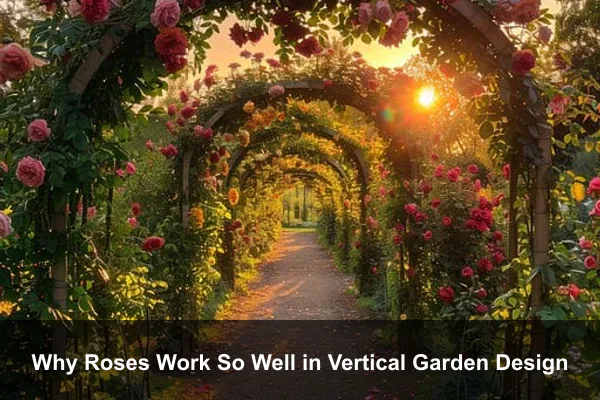
Roses are not true climbing vines in the way that beans, ivy, or passionflower climb. They do not twine naturally around a structure, and most do not cling to walls by themselves. Instead, climbing roses and rambling roses produce long canes that can be tied, guided, and shaped over a support. This makes them especially valuable for gardeners who want beauty with control. You decide where the stems go, how much space they cover, and how formal or natural the finished shape looks.
The main benefit of vertical roses is that they use height instead of only ground area. A narrow side yard, a fence line, a gateway, or a small courtyard can hold a rose display that would feel too crowded if the same plant were allowed to sprawl. This is especially helpful in modern homes where garden space is limited but people still want flowering plants with strong visual impact.
Vertical roses also create a more layered garden. Low plants cover the soil, medium shrubs fill the middle, and trained roses bring color and foliage upward. This layered effect makes a garden feel more mature and balanced. It also helps the rose become part of the architecture of the space rather than a separate decorative object.
Functional Benefits Beyond Beauty
The benefits of vertical roses include more than attractive flowers. A trained rose can soften the visual hardness of fences, metal gates, brick walls, and concrete edges. It can provide light seasonal shade over a bench or pathway. It can create a living threshold between two parts of a garden. In some spaces, it can even help direct foot traffic by making an entrance or walkway feel intentional.
Here are practical rose plant benefits that are especially relevant to vertical growing:
- Space efficiency: roses can grow upward where horizontal planting space is limited.
- Seasonal interest: foliage, buds, flowers, and sometimes hips add changing details through the year.
- Design structure: arches and trellises give the garden a clear shape even when roses are not in full bloom.
- Pollinator support: open-centered and less heavily doubled flowers can offer access to pollen for visiting insects.
- Outdoor comfort: trained roses can add soft shade and a cooler visual feeling to exposed areas.
- Long-term value: with good support and care, many roses can remain productive for years.
Climbing Roses, Rambling Roses, and Trained Shrub Roses
Understanding rose growth types is essential before buying a plant. Climbing roses usually produce long, sturdy canes and repeat flowering varieties are widely available. They are excellent for arches, trellises, pillars, and fences. Rambling roses often grow more vigorously and may bloom heavily once in a season. They are useful for large pergolas, old sheds, tall fences, and spacious informal gardens. Shrub roses are not sold as climbers, but some vigorous types can be lightly trained against a fence or obelisk if their stems are flexible enough.
For most home gardens, a repeat-blooming climbing rose is the easiest choice because it offers structure without becoming too aggressive. Ramblers are beautiful but need more room and stronger support. If space is tight, a compact climber with a mature height that matches the structure is usually better than a giant rose that must be constantly restrained.
Best Places to Use Roses on Arches, Trellises, Walls, and Pergolas
The best position for a vertical rose is one where the plant can receive good sun, the gardener can reach it for care, and the structure is strong enough for mature growth. Roses often fail in vertical designs not because the plant is weak, but because the location was chosen only for appearance. A rose over a doorway may look beautiful in a photo, but if it catches clothing, blocks airflow, or cannot be pruned safely, it becomes a maintenance problem.
Arches are ideal for creating a sense of entry. They work well at the beginning of a garden path, between two outdoor rooms, or near a gate. A rose-covered arch should be wide enough for people to pass through without brushing against thorny stems. It should also be tall enough to allow mature canes to curve overhead without creating a low, tangled ceiling.
Trellises are useful against fences, blank walls, and narrow beds. They help turn a plain vertical surface into a flowering backdrop. However, the rose should not be pressed flat against a wall with no air movement. A small gap between the wall and the support allows airflow behind the plant, reducing humidity around the leaves and making disease problems less likely.
Pergolas suit stronger roses and larger gardens. A rose on a pergola can create filtered shade and a romantic overhead canopy, but the structure must be durable. Mature roses become heavy after rain and wind, especially when covered with foliage and flowers. Weak decorative supports may bend or break once the rose reaches full size.
Sunlight and Airflow Are Non-Negotiable
Most roses need at least six hours of direct sun for strong flowering. In very hot climates, morning sun with some protection from harsh afternoon heat can be helpful, but deep shade usually leads to fewer blooms, weaker stems, and more disease pressure. If the goal is a healthy vertical rose display, do not place the plant where it will spend most of the day in shadow.
Airflow matters just as much as light. Roses trained tightly into corners or against dense walls may hold moisture on their leaves after rain or watering. This can encourage black spot, powdery mildew, and other fungal problems. Good spacing, careful pruning, and open training reduce this risk. A vertical rose should look full, but it should not become a solid green mat with no air moving through it.
Match the Support to the Mature Plant
A common mistake is buying a small trellis for a rose that will eventually grow three to five meters tall. The plant may look harmless in its nursery pot, but a healthy climbing rose can become a strong woody plant. The support should be installed before or at planting time, not after the rose is already leaning or sprawling.
Choose metal, hardwood, strong bamboo, or weather-resistant materials for permanent structures. Light plastic trellises may work for annual vines, but they are rarely suitable for long-lived roses. For wall training, use horizontal wires or a sturdy frame fixed securely to the surface. For arches, anchor the legs well so wind and plant weight do not pull the structure out of alignment.
Practical Rose Plant Benefits for Home Landscapes
A vertical rose adds benefits that are different from a rose planted in a regular bed. It changes how people move through a garden, how they view a wall or fence, and how much seasonal interest appears at eye level. This is why Rose plant benefits and information should include design function, not only flower color, scent, or general care.
One valuable benefit is visual framing. A rose arch can frame a gate, a view, a seating area, or the transition from a patio to a lawn. This creates a stronger garden experience because the plant helps organize space. Instead of seeing everything at once, visitors pass through a living frame and discover the next area gradually.
Another benefit is vertical softness. Many outdoor spaces have hard surfaces such as concrete paths, brick walls, metal fences, and plain exterior walls. Roses bring foliage and flowers to those surfaces without taking over the whole ground plane. This is useful for urban homes, courtyards, and small gardens where every square meter matters.
Roses also support a deeper relationship with seasonal change. Buds, new leaves, flower flushes, pruning time, and rest periods all teach the gardener to observe patterns. This is one reason roses remain popular among both experienced gardeners and beginners who want to build plant care skills. A rose trained on a visible support becomes easy to watch, making it a living calendar in the garden.
Benefits for Pollinators and Garden Life
Not every rose is equally useful for pollinators. Very dense, heavily doubled flowers may hide pollen and make access difficult. Single, semi-double, and open-centered roses are usually better for bees and other beneficial insects. If pollinator value is important, choose varieties with accessible flower centers and avoid spraying insecticides when flowers are open.
Vertical roses can also provide perching and shelter opportunities for small garden life, especially when combined with diverse companion planting below. Low herbs, native flowers, ornamental grasses, and mulch-friendly groundcovers can make the base of the rose more ecologically useful. The goal is not to let the rose become wild and tangled, but to include it in a layered planting that supports more than visual beauty.
Benefits for Small and Narrow Gardens
Roses trained upward are helpful when the garden is narrow, but they still need root space. A rose planted beside a path, fence, or wall should have enough soil volume and should not compete too heavily with large tree roots. If the bed is extremely narrow, improve the soil deeply and keep the base mulched. A vertical display will only be as strong as the root system below it.
For small gardens, choose compact climbers or roses described as suitable for pillars and short trellises. Avoid vigorous ramblers unless you have enough room for regular pruning and strong support. Smaller roses are not less beautiful; they are often more successful because they match the scale of the space.
How to Plant and Train Roses for Strong Vertical Growth
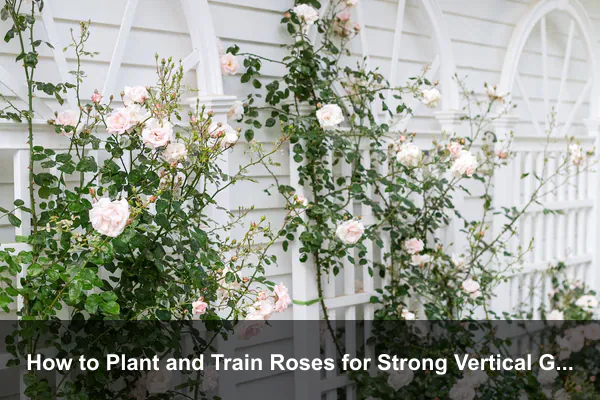
Planting and training determine whether a vertical rose becomes elegant or frustrating. A rose cannot be fixed into good shape in one afternoon. It is guided over time. The first goal is root establishment, then strong cane growth, then careful positioning of canes along the support. Flowering improves when the plant is healthy and when canes are trained to encourage side shoots.
Before planting, prepare the soil with compost or other well-rotted organic matter. Roses prefer soil that drains well but does not dry out immediately. Heavy clay can be improved with organic matter and raised planting areas. Sandy soil benefits from compost and mulch to hold moisture. Avoid planting roses in stale, compacted soil where an old rose has recently struggled unless the soil has been refreshed.
Plant the rose at an appropriate distance from the support, often about 30 to 45 centimeters away, depending on the structure and local conditions. Angle the canes gently toward the trellis or arch. Water deeply after planting and apply mulch around the base while keeping mulch away from direct contact with the stems.
Basic Training Steps
- Install the support first: make sure the trellis, arch, wires, or pergola is stable before the rose begins active growth.
- Choose the strongest canes: keep healthy main canes and remove weak, damaged, or crossing growth as needed.
- Guide canes outward: tie long canes in a fan shape, gentle curve, or horizontal direction when possible.
- Use soft ties: secure stems with flexible plant ties that will not cut into the bark.
- Check ties regularly: loosen or adjust them as the canes thicken.
- Encourage side shoots: trained main canes often produce flowering laterals along their length.
Why Horizontal Training Helps Flowering
If a climbing rose cane is allowed to grow straight upward, flowering may concentrate near the top. When canes are trained more horizontally or in a gentle arch, the plant often produces more side shoots along the cane, which can mean more flowering points. This is one of the most useful pieces of rose plant information for gardeners who want a fuller display.
Do not force stiff canes into sharp bends. Young canes are usually more flexible than old woody ones. Train gradually while stems can still move. If a cane resists strongly, use a wider curve or choose another direction. Broken canes invite disease and reduce the plant’s energy.
First-Year Expectations
Many gardeners expect a newly planted climbing rose to cover an arch immediately. In reality, the first year is often about roots and framework. Some flowers may appear, but the main task is establishment. The second and third years usually bring stronger canes and a more convincing display. Patience is part of successful rose growing.
During the first season, water consistently, protect the plant from severe stress, and avoid heavy pruning unless stems are damaged or poorly placed. Focus on guiding the main canes and building the shape you want for later years.
Care Routine for Healthy Vertical Roses
Vertical roses need the same basic care as other garden roses, but their height and structure change how that care is done. Water must reach the root zone, not just wet the leaves. Pruning must keep the plant open and attached to its support. Feeding should encourage healthy growth without creating soft, weak stems that are more vulnerable to pests and weather damage.
Watering and Mulching
Water deeply rather than lightly sprinkling the surface. Deep watering encourages roots to grow downward, which helps the rose handle heat and dry periods. In warm weather, check soil moisture below the mulch rather than judging only by the surface. The top may look dry while the root zone is still moist, or the surface may look damp after light rain while deeper soil remains dry.
Mulch helps regulate soil temperature, reduce evaporation, and limit weeds. Organic mulch such as composted bark, leaf mold, or mature compost can also improve soil structure over time. Keep mulch a little away from the crown or base of the stems to reduce rot risk.
Feeding Without Overdoing It
Roses are productive flowering plants, so they benefit from balanced nutrition. Use compost, slow-release rose fertilizer, or a balanced feeding plan suited to your soil and climate. Too much nitrogen can produce lush foliage with fewer flowers and more soft growth. A moderate, consistent approach is better than pushing the plant aggressively.
If the rose has pale leaves, weak growth, or poor flowering, do not automatically add fertilizer. First check sunlight, watering, soil drainage, root competition, and disease. Feeding a stressed plant without solving the underlying problem may not help.
Pruning for Shape and Airflow
Pruning vertical roses has two main goals: maintaining a healthy framework and encouraging flowering wood. Remove dead, diseased, damaged, and badly crossing stems. Keep the main trained canes where they are useful, and shorten side shoots according to the rose type and local pruning practice.
Repeat-blooming climbers are often pruned during the dormant season or after major flowering flushes, depending on climate. Once-blooming ramblers are commonly pruned after flowering because they may bloom on older wood. Always learn the habit of your specific rose before cutting heavily. A wrong pruning time can reduce the next bloom cycle.
Common Problems and Smart Fixes
Vertical rose problems usually come from one of four causes: poor placement, weak support, crowding, or inconsistent care. The good news is that many issues can be corrected if they are noticed early. A rose on a trellis is easy to inspect because much of the plant is at eye level.
Poor Flowering
If a climbing rose produces leaves but few flowers, check sunlight first. Too much shade is one of the most common reasons roses do not bloom well. Next, check pruning. If flowering wood was removed at the wrong time, the plant may need another season to recover. Also look at feeding habits. Excess nitrogen can encourage leaves instead of blooms.
Loose or Failing Supports
A rose may outgrow a weak support faster than expected. If the trellis shakes in wind or leans under plant weight, strengthen it before the rose becomes larger. It is much easier to repair a structure early than to untangle a mature rose from a broken frame. For heavy climbers and ramblers, use permanent supports that can handle wet foliage and strong wind.
Disease Pressure
Black spot, powdery mildew, and rust are common rose concerns in many climates. Vertical training can reduce disease when it improves airflow, but crowding can make problems worse. Remove fallen diseased leaves, avoid overhead watering late in the day, prune for openness, and choose resilient varieties when possible. If disease is persistent, local garden centers or extension services can advise on regionally appropriate controls.
Thorn Hazards
Thorns are part of many roses, and they matter in design. Do not train thorny canes where people must squeeze past them, where children run, or where pets frequently brush against the plant. Keep arches wide, prune path-facing growth, and wear gloves when tying or pruning. A beautiful rose should not make daily movement uncomfortable.
Choosing the Right Rose for a Vertical Project
The right rose is the one that fits the support, climate, maintenance level, and design goal. Color is important, but it should not be the first or only decision. A rose that is too vigorous for its location will create years of extra work. A rose that is too small for a pergola may never create the desired effect. Mature size is one of the most important details on the plant label.
Look for these traits when selecting a rose for vertical use:
- Mature height and spread that match the arch, trellis, fence, or pergola.
- Flexible canes that can be trained without snapping.
- Repeat flowering if you want several bloom cycles through the growing season.
- Disease resistance suited to your local humidity and climate.
- Appropriate thorn level for paths, gates, and family areas.
- Flower form that supports your goal, whether decorative impact or pollinator access.
Color and Placement
Color should support the surrounding space. Pale roses can brighten shaded-looking corners even when they still receive enough sun. Deep red, coral, and magenta roses create strong focal points but may feel heavy in very small spaces if overused. Soft pink, white, apricot, and yellow roses often blend more easily into mixed plantings. The best color is not only the one you like in a photo, but the one that works with your wall, fence, paving, and nearby plants.
Fragrance and Human Comfort
Fragrance can make a rose arch memorable, especially near seating areas or entries. However, very fragrant roses near narrow paths may be too intense for some people, and heavily scented flowers can attract more insects close to doorways. Use fragrance thoughtfully. Place strongly scented roses where people can enjoy them without being forced into close contact every time they pass.
Design and Accessibility Details People Often Miss
Good rose design includes maintenance access. Leave enough room behind or beside the plant to prune, tie, inspect, and clean fallen leaves. If the rose is planted against a fence, make sure you can reach the back or at least manage the plant from one side. If it is over an arch, use a stable ladder and avoid designs that require dangerous stretching to prune overhead growth.
Accessibility also means keeping paths clear. A rose arch should not narrow a walkway below comfortable use. For wheelchair access, strollers, garden carts, or people carrying tools, generous clearance matters. Train canes upward and outward, and remove inward-facing growth that catches clothing or blocks movement.
Lighting can improve the effect of vertical roses in evening gardens, but fixtures should not heat or damage the plant. Use garden lighting to highlight the structure, not to bake the foliage. Keep electrical components accessible and safely separated from irrigation.
Companion planting at the base should be attractive but not competitive. Avoid dense plants that smother the rose crown or make it hard to water. Low-growing herbs, seasonal flowers, or neat groundcovers can hide bare lower stems while still allowing air and access. Keep the immediate base clean enough to inspect for pests, disease, and suckers.
Conclusion: Roses as Living Architecture
When roses are grown vertically, they become more than flowering shrubs. They act as living architecture, shaping entrances, softening walls, framing views, and adding seasonal movement to the garden. This approach gives a fresh perspective on Rose plant benefits and information because it shows how roses can provide structure, beauty, habitat value, and practical space-saving design at the same time.
The best results come from matching the rose to the support, giving it enough sun and airflow, training canes patiently, and designing with real daily use in mind. A rose-covered arch or trellis should be beautiful, but it should also be safe, reachable, and sustainable to maintain. With thoughtful planning, roses can turn plain vertical surfaces into long-lasting garden features that reward observation, care, and seasonal anticipation.
