
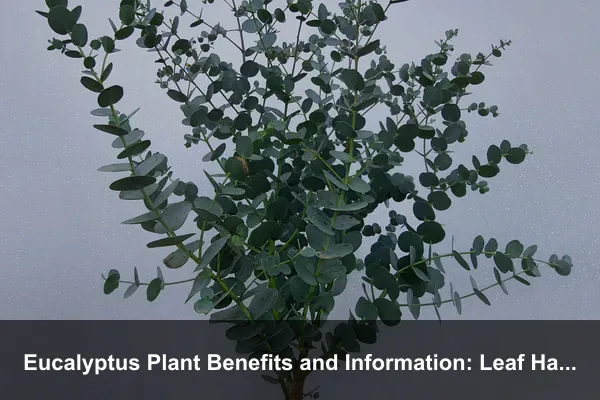
Eucalyptus plant benefits and information often focus on its refreshing scent, but this fast-growing evergreen offers much more than fragrance. Depending on the species, eucalyptus can be grown as a landscape tree, a container plant, a cut-foliage crop, or a seasonal patio specimen. Its silvery leaves, strong aromatic oils, and drought-tolerant habits make it valuable for gardeners who want beauty, function, and practical plant knowledge in one plant.
This guide takes a unique angle by focusing on leaf quality, home harvesting, plant selection, and responsible everyday use. Instead of treating eucalyptus as only an essential oil plant, we will look at how real gardeners can grow it, cut it, dry it, and enjoy it safely while respecting its natural growth habits.
What Is the Eucalyptus Plant?
Eucalyptus is a large group of evergreen trees and shrubs, mostly native to Australia and nearby regions. There are hundreds of species, and they vary widely in size, leaf shape, bark texture, cold tolerance, and fragrance strength. Some become massive trees in warm climates, while others stay smaller and are better suited for containers or managed garden spaces.
The plant is best known for its aromatic leaves. When the foliage is crushed, it releases a clean, camphor-like scent caused by natural volatile compounds. These compounds help explain why eucalyptus has become popular in herbal traditions, floral design, wellness routines, and household products.
Common Features
- Leaves: Juvenile leaves are often round, blue-green, or silver; mature leaves may become longer and lance-shaped.
- Growth habit: Many species grow quickly when given sun, drainage, and space.
- Fragrance: Leaves release a strong herbal aroma, especially when bruised, warmed, or dried.
- Flowers: Mature plants can produce nectar-rich blooms that support pollinators in suitable climates.
Best Eucalyptus Types for Home Gardeners
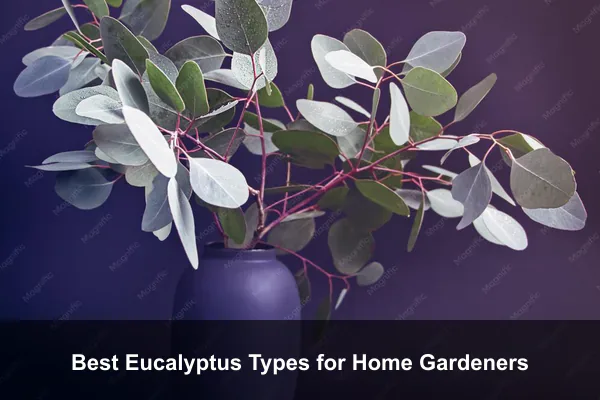
Choosing the right type matters because eucalyptus plants do not all behave the same way. A species that looks charming in a pot when young may become too large for a small yard if planted in the ground. For practical home use, focus on manageable forms, attractive juvenile foliage, and climate suitability.
Eucalyptus gunnii
Eucalyptus gunnii, often called cider gum, is one of the most popular choices for decorative foliage. Its rounded silver-blue young leaves are excellent for arrangements, wreaths, and drying. In mild climates it can grow into a tree, but regular pruning helps maintain bushier juvenile foliage.
Eucalyptus cinerea
Eucalyptus cinerea, commonly called silver dollar eucalyptus, is valued for its round leaves and strong ornamental appeal. It is widely used in floral work and looks striking in borders or large containers. It needs full sun and sharply drained soil to perform well.
Eucalyptus pulverulenta
This species is prized for silvery foliage and long stems used in cut arrangements. It is often grown where the goal is leaf harvesting rather than shade. It benefits from thoughtful pruning to encourage straight, usable shoots.
Main Benefits of Eucalyptus Plants
The benefits of eucalyptus plants are most useful when understood realistically. The plant can support home comfort, garden design, and low-water landscaping, but it should not be treated as a cure-all. Its value comes from combining beauty, aroma, structure, and practical harvesting.
Aromatic Home Value
Fresh eucalyptus stems can make rooms feel cleaner and more refreshing because the leaves release a crisp scent. Many people hang a small bundle in a shower or place stems in a vase, where steam or warmth helps release aroma. This is a sensory benefit, not a medical treatment, but it can make daily routines feel more pleasant.
Decorative Foliage
Eucalyptus leaves are long-lasting compared with many soft herbs. Their muted blue, gray, and green tones pair well with roses, lavender, dried grasses, and seasonal flowers. Dried eucalyptus can keep its shape for months, making it useful for low-waste home decoration.
Garden Structure
In the right climate and space, eucalyptus adds height, movement, and evergreen color. Young foliage softens garden edges, while mature plants can create privacy or wind filtering. Because many types grow quickly, they are useful where fast structure is needed, but they require planning to avoid overcrowding.
Pollinator Interest
Mature eucalyptus flowers can attract bees and other nectar-feeding insects. This is especially useful in warm-climate gardens where the chosen species blooms reliably. Gardeners should select region-appropriate species and avoid invasive behavior in sensitive ecosystems.
How to Grow Eucalyptus for Better Leaf Quality
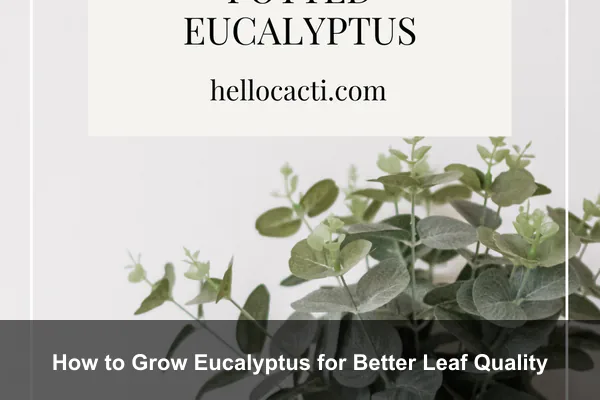
If your goal is attractive foliage, growing conditions should encourage sturdy stems, healthy color, and compact branching. Eucalyptus usually prefers bright light and dislikes soggy roots, so the basics matter more than frequent feeding.
Light
Most eucalyptus plants need full sun, ideally six or more hours of direct light per day. Indoors, eucalyptus often struggles unless placed near the brightest window or grown temporarily as a decorative plant. Weak light can cause stretched stems, pale leaves, and leaf drop.
Soil
Use free-draining soil. In containers, a quality potting mix improved with coarse material such as perlite or fine bark can help prevent waterlogging. In garden beds, avoid heavy clay pockets unless drainage is improved before planting.
Watering
Young plants need regular watering while establishing roots. Once mature, many eucalyptus species tolerate dry periods, but container plants still dry out faster than garden plants. Water deeply, then allow the top layer of soil to dry before watering again.
Pruning
Pruning is key if you want rounded juvenile leaves for cutting. Light trimming encourages bushier growth, while coppicing or hard pruning is sometimes used by experienced growers to produce fresh shoots. Always research the species first, because not every eucalyptus responds the same way.
Harvesting and Drying Eucalyptus Leaves
Harvesting eucalyptus is simple, but timing and technique affect the final quality. Cut stems when leaves are mature enough to hold their color but before they look tired, spotted, or insect-damaged.
- Use clean, sharp pruners to reduce stem damage.
- Harvest in the morning after dew has dried.
- Remove damaged lower leaves before arranging or drying.
- Bundle small groups with twine and hang them upside down in a dry, shaded, airy place.
- Keep dried stems away from damp bathrooms unless you are using them temporarily.
For fresh indoor arrangements, place stems in clean water and change the water every few days. Dried stems should be kept out of reach of children and pets, especially if leaves begin to shed.
Safe and Responsible Uses at Home
Eucalyptus has a strong reputation in herbal and wellness spaces, but safe use is essential. The leaves and oil contain concentrated compounds that are not suitable for careless internal use. This is especially important for homes with children, pets, pregnant people, or anyone with respiratory sensitivity.
What You Can Do
- Use fresh stems in a vase for natural scent and texture.
- Hang a small shower bundle where it gets steam but does not stay soaked.
- Add dried stems to wreaths, swags, and seasonal decorations.
- Grow potted eucalyptus outdoors for patio fragrance and foliage.
What to Avoid
- Do not ingest eucalyptus oil or leaves unless guided by a qualified professional.
- Do not apply essential oil directly to skin without proper dilution and expert guidance.
- Keep leaves and oils away from pets, especially cats and dogs.
- Avoid placing strong eucalyptus bundles near babies, small children, or people with fragrance sensitivity.
Container Growing Tips for Small Spaces
Many gardeners are interested in eucalyptus but do not have room for a full tree. A container can work, especially if you treat the plant as a managed foliage specimen rather than expecting it to live indoors forever.
Choose a large pot with drainage holes, use a gritty mix, and place the plant in the sunniest outdoor location available. Rotate the pot occasionally so growth stays balanced. Prune regularly to manage size and encourage fresh side shoots. In cold regions, some gardeners grow eucalyptus as a seasonal annual for foliage rather than trying to overwinter it indoors.
Common Problems and Simple Fixes
Eucalyptus is resilient when planted correctly, but stress shows quickly in the leaves. Yellowing, browning, and dropping foliage usually point to water, light, or root problems.
Yellow Leaves
Yellow leaves often come from overwatering, poor drainage, or weak light. Check the soil before adding more water and make sure the pot is not sitting in a saucer of stagnant moisture.
Crispy Leaf Edges
Crispy leaves may appear when a container dries out completely, when wind exposure is too strong, or when the plant is moved suddenly into harsher sun. Adjust gradually and water deeply when needed.
Leggy Growth
Long, weak stems usually mean the plant is reaching for light. Move it to a brighter location and prune lightly to encourage denser branching.
Conclusion
Eucalyptus plant benefits and information become most useful when the plant is viewed as a living foliage crop, not just a source of scent. With the right species, full sun, sharp drainage, and thoughtful pruning, eucalyptus can provide beautiful leaves, refreshing aroma, garden structure, and long-lasting decorative stems.
For home gardeners, the best approach is practical and safety-aware: grow eucalyptus for its foliage, harvest modestly, dry it carefully, and use it responsibly around people and pets. When matched to the right space and climate, eucalyptus becomes a distinctive plant that brings both function and quiet beauty to the home garden.
