

A Boston Fern is often described as a classic houseplant, but its value goes beyond nostalgia. With arching, feathered fronds and a naturally soft silhouette, this fern can make a work corner, reading nook, studio shelf, or quiet apartment space feel calmer without relying on fragrance, bright flowers, or bold color. For people who want greenery that looks alive, textured, and restorative, Boston Fern plant benefits and information are especially useful because this plant rewards steady routines rather than complicated gardening skills.
This guide takes a distinct angle: how to use Boston Fern as a comfort-focused indoor plant for spaces where you read, think, work, and rest your eyes from screens. You will still learn the essential care facts, but the emphasis is practical. Instead of treating the fern as only decoration, we will look at how its texture, humidity preferences, placement needs, safety profile, and daily signals can help you build a more pleasant indoor environment.
Why Boston Fern Fits Quiet Indoor Spaces
The Boston Fern, botanically linked to Nephrolepis exaltata, is loved for its long, finely divided fronds. Each frond is made of many small leaflets, giving the plant a light, layered appearance. This detail matters in interior spaces because the plant adds visual movement without feeling heavy. In a home office or reading area, a Boston Fern can soften hard lines from desks, bookshelves, electronics, windows, and wall corners.
One of the most overlooked Boston Fern plant benefits and information points is that this plant has a quiet visual presence. It does not dominate a room like a large fiddle leaf fig or a broad-leaf monstera. Instead, it creates a gentle green texture that works well where concentration matters. The fronds curve outward and downward, making the plant feel relaxed rather than rigid.
A Plant That Supports Visual Rest
After long periods of screen use, many people instinctively look toward windows, plants, or softer surfaces. A Boston Fern gives the eye something detailed but not harsh to focus on. Its fronds create small repeating patterns, and those patterns can make a desk corner or reading chair feel less sterile. This is not a medical treatment for eye strain, but it is a practical design benefit: the plant offers a natural focal point away from screens.
Fragrance-Free Greenery for Sensitive Rooms
Many indoor plants are chosen for scent, flowers, or dramatic color. Boston Fern is different. It is primarily a foliage plant, which makes it useful for people who prefer low-scent rooms. In shared homes, bedrooms, reading rooms, and workspaces, fragrance-free greenery can be easier to live with than heavily scented flowers or herbal plants.
Boston Fern Information at a Glance
Before choosing a Boston Fern, it helps to understand its basic growing profile. This plant is not difficult when its needs are matched, but it can decline quickly if placed in dry air, harsh sun, or neglected soil. The best results come from consistency.
- Common name: Boston Fern
- Botanical background: A popular cultivated form associated with Nephrolepis exaltata
- Plant type: Evergreen fern grown mainly as an indoor ornamental plant
- Best indoor use: Reading corners, desk-adjacent shelves, bright bathrooms, shaded porches, plant stands, and humid rooms
- Light preference: Bright indirect light or gentle filtered light
- Water preference: Evenly moist soil, never constantly soggy
- Humidity preference: Moderate to high humidity
- Growth habit: Arching fronds that can spill over the pot edge
- Safety note: Generally considered pet-friendly, but it should not be treated as a snack for pets or children
Boston Ferns are often seen as old-fashioned plants, yet their care needs fit modern homes surprisingly well when placed thoughtfully. They suit rooms where you already spend time, notice small changes, and can water before the plant dries out completely.
Main Benefits for Home Offices and Reading Nooks
The most useful Boston Fern plant benefits and information depend on the space where the plant lives. In a home office or reading nook, the fern can contribute to comfort, appearance, and routine. It is not a miracle air purifier or a substitute for ventilation, but it can support a more pleasant indoor atmosphere when combined with good room habits.
Soft Texture Without Visual Clutter
A Boston Fern adds fullness while keeping a light look. Plants with thick, glossy leaves may feel bold or sculptural, while Boston Fern feels airy. This is helpful in compact rooms because the plant fills vertical or corner space without making the room feel visually crowded. When placed on a stand, shelf, or low cabinet, the fronds can create a gentle frame around a workspace.
Humidity Awareness in Daily Life
Boston Ferns prefer more humidity than many dry-room houseplants. This makes them useful as living reminders of indoor dryness. If the tips brown quickly, fronds crisp, or the plant sheds small leaflets, the room may be too dry, the plant may be underwatered, or air may be moving too strongly from a fan or air conditioner. This does not make the fern a scientific humidity meter, but it can encourage better awareness of indoor conditions.
A Calm Habit Anchor
Some plant benefits are practical rather than dramatic. Checking soil moisture, rotating the pot, trimming tired fronds, and wiping fallen leaflets can become a small routine that breaks up long work sessions. For people who enjoy quiet maintenance, Boston Fern care can create a natural pause in the day.
Better Atmosphere With Realistic Air Quality Expectations
Boston Ferns are often discussed in relation to air quality. Like many plants, they can participate in normal plant processes such as transpiration and gas exchange. However, one houseplant will not replace open windows, filtration, cleaning, or ventilation. The realistic benefit is that a healthy Boston Fern can contribute to a fresher-feeling, more biophilic room while also encouraging habits such as proper humidity, dust control, and better placement away from stale corners.
Designing a Boston Fern Corner for Focus and Comfort
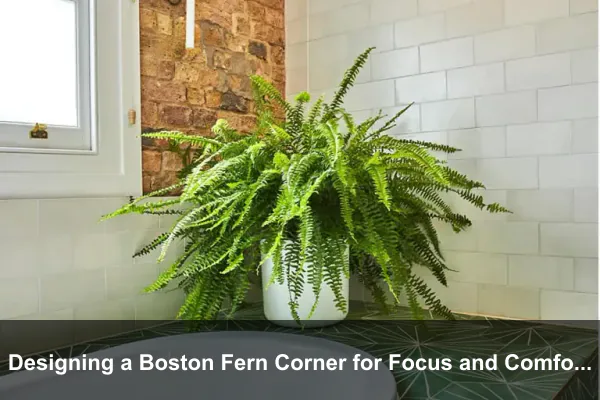
A good Boston Fern corner starts with the plant’s needs, not just the empty spot you want to fill. The ideal place is close enough to enjoy, bright enough to support growth, and far enough from direct stress. In a home office, place the fern where you can see it from your desk but where the fronds do not brush your keyboard, papers, or monitor.
Best Placement Near Work Areas
Choose a position with bright indirect light. A north-facing window, an east-facing window with soft morning light, or a spot a few feet back from a brighter window can work well. Avoid hot afternoon sun on the fronds because it can scorch the delicate leaflets. Also avoid placing the fern directly under air-conditioning vents, heaters, or fans, because moving dry air can make the plant crisp even when you water regularly.
For a reading nook, the fern works beautifully beside a chair, on a plant stand near filtered light, or on a low table where the fronds can cascade. The goal is to let the plant soften the edge of the area without blocking light or becoming hard to water.
Keep Ferns Away From Electronics
Because Boston Fern likes moisture, it should not sit directly above laptops, power strips, speakers, printers, or chargers. Watering, misting, and natural leaf drop can create problems around electronics. Keep a saucer under the pot, empty excess water after watering, and use a stable planter that cannot tip easily.
Display Ideas That Match the Plant
- Plant stand beside a desk: Keeps fronds visible while protecting the work surface.
- Open shelf near filtered light: Works if the shelf allows enough airflow and watering access.
- Corner pedestal: Turns an unused corner into a soft green focal point.
- Wide ceramic pot: Gives the fern a grounded look and balances its airy fronds.
- Desk-adjacent grouping: Pair with simpler upright plants so the fern remains the main texture.
When styling Boston Fern, restraint often looks best. Its fronds are already detailed, so avoid surrounding it with too many busy objects. A plain pot, simple stand, and clean background let the fern’s texture do the work.
Simple Care Rhythm for Healthy, Feathered Fronds

Boston Fern care becomes easier when you think in rhythms rather than strict calendar rules. The plant’s needs change with light, temperature, pot size, soil mix, and season. Instead of watering every exact number of days, check the soil and fronds regularly.
Light: Bright but Gentle
Boston Ferns need enough light to keep producing strong fronds, but direct sun can be too intense indoors, especially through hot glass. If the fronds look pale, thin, or sparse, the plant may need brighter indirect light. If the leaflets look scorched or bleached, the light may be too strong. Rotate the pot every week or two so growth remains balanced.
Watering: Even Moisture Without Soggy Roots
The soil should stay lightly and evenly moist. Letting the root ball dry out completely can cause browning and shedding, but keeping the pot waterlogged can lead to root problems. Water thoroughly until water drains from the bottom, then empty the saucer. If the top layer feels slightly dry but the root zone still has moisture, wait a little longer.
A useful method is to lift the pot after watering and again when it feels ready for water. Over time, the weight difference teaches you how quickly the fern uses moisture. This is more reliable than guessing from the surface alone.
Humidity: Helpful, But Do Not Create Damp Problems
Boston Ferns appreciate humidity, but care should still be clean and balanced. A pebble tray, nearby grouping with other plants, or a room humidifier can help. Misting can temporarily freshen the fronds, but it is not a full humidity solution in very dry air. If you mist, do it lightly and avoid soaking walls, wood furniture, or electronics.
Soil and Potting: Airy Moisture Retention
Use a potting mix that holds some moisture but drains well. A standard indoor potting mix amended with ingredients that improve aeration can work. The pot must have drainage holes. Boston Fern roots do not like sitting in stagnant water, even though the plant dislikes drying out.
Feeding: Light and Seasonal
During active growth, a diluted balanced houseplant fertilizer can support new fronds. Avoid overfeeding, because ferns can be sensitive to excess salts. If the plant is not actively growing, or if it is stressed from dryness or poor light, correct the growing conditions first before adding fertilizer.
Reading the Fronds: What Your Boston Fern Is Telling You
One reason Boston Fern is rewarding is that it communicates clearly. The fronds respond quickly to dryness, light stress, and inconsistent care. Instead of seeing every brown tip as failure, treat the plant as a source of information about its environment.
Common Signals and Likely Causes
- Crispy brown tips: Often linked to dry air, underwatering, direct sun, or drafts.
- Yellowing fronds: May come from overwatering, poor drainage, low light, or natural aging.
- Leaflet shedding: Often happens when the plant dries out, experiences sudden changes, or sits in very dry air.
- Pale growth: Can indicate insufficient light or depleted nutrients during active growth.
- Limp fronds: May signal thirst, root stress, or heat exposure.
Older fronds naturally decline over time. Remove them at the base with clean scissors so the plant looks fresh and can direct energy into new growth. Do not remove too much healthy foliage at once; a Boston Fern looks best when trimmed gradually.
When Browning Is Normal
Boston Ferns are not plastic-perfect plants. A few brown tips or older fronds are normal, especially in air-conditioned homes, during seasonal changes, or after moving the plant. The goal is not flawless foliage every day. The goal is steady new growth, firm fronds, and a plant that recovers well after small adjustments.
Safety, Allergies, and Realistic Wellness Claims
Boston Fern is widely valued as a pet-friendly houseplant choice. This is one reason it remains popular in family homes and shared indoor spaces. Still, pet-friendly does not mean edible or problem-free. Pets that chew plants may still experience stomach upset from eating leaves, soil, or potting materials. Keep the plant where curious pets cannot destroy it, and clean up dropped leaflets regularly.
For allergy-conscious rooms, Boston Fern offers a useful advantage: it is grown for foliage, not scented blooms. However, damp soil can become a problem if the plant is overwatered or poorly ventilated. To keep the plant healthy and the room pleasant, avoid standing water, remove dead plant material, and use clean pots with drainage.
It is also important to keep wellness claims realistic. Boston Fern can make a room feel greener, softer, and more comfortable. It may contribute modestly to humidity around its immediate area through transpiration. It can encourage routines that support a healthier indoor environment. But it should not be marketed as a cure for dry skin, allergies, asthma, anxiety, or poor air quality. The strongest benefits are practical, sensory, and environmental.
Building a Fern-Friendly Routine Around Work and Reading
A Boston Fern fits best when care is attached to existing habits. If you work from home, check the soil before you start the day or during a mid-morning break. If the plant is near a reading chair, inspect it when you tidy the area. These small cues keep the fern from being ignored until it is already dry and shedding.
A Weekly Routine That Works
- Check soil moisture: Feel the top layer and lift the pot to judge weight.
- Inspect fronds: Look for browning, pests, yellowing, or dry patches.
- Rotate the pot: Turn it slightly for even growth.
- Clean the area: Remove fallen leaflets from shelves, floors, and saucers.
- Trim only what is tired: Cut dead or badly browned fronds at the base.
This routine takes only a few minutes, but it helps prevent the most common Boston Fern problems. It also turns the plant into part of the room’s rhythm rather than another task you forget.
Care During Busy Weeks
If you travel or get busy, move the fern away from drying vents and strong sun before leaving. Water it thoroughly if the soil is approaching dryness, but do not leave it sitting in a full saucer. In very dry homes, grouping it near other plants can help create a slightly more stable microclimate. For longer trips, ask someone to check soil moisture instead of giving a fixed amount of water.
Space-Smart Ways to Use Boston Fern Indoors
Boston Ferns can become full and wide, so placement matters in small homes. They are excellent for softening vertical edges, but they can feel messy if squeezed into narrow walkways. Give the fronds room to arch naturally. A cramped fern is harder to water, easier to damage, and more likely to drop leaflets where they become annoying.
Small Apartment Placement
In apartments, a Boston Fern can work near a bright window with a sheer curtain, on a plant stand beside a bookcase, or in a corner that receives reflected light. If floor space is limited, choose a compact young plant and increase pot size gradually. Avoid placing it where people brush against the fronds daily.
Shared Rooms and Calm Zones
In shared living spaces, Boston Fern can visually mark a quiet zone. Place it near a reading lamp, meditation cushion, craft table, or writing desk. The plant creates a subtle boundary without needing a divider. Its soft texture helps the area feel intentional while still blending into the larger room.
Color Pairings and Materials
Because Boston Fern is rich green and finely textured, it pairs well with natural wood, matte ceramic, woven baskets with inner drainage protection, white shelves, and muted wall colors. Avoid overly ornate pots that compete with the fronds. A clean container usually makes the plant look healthier and more refined.
Buying a Boston Fern: What to Check First
A strong start makes care easier. When buying a Boston Fern, inspect it carefully before bringing it home. Choose a plant with full fronds, flexible growth, and no sour smell from the soil. A few imperfect tips are normal, but widespread crisping, heavy shedding, or mushy soil may indicate stress.
Healthy Plant Checklist
- Fronds: Look for fresh green growth and avoid plants with large dead sections.
- Soil: It should be moist but not swampy or foul-smelling.
- Undersides: Check for pests, webbing, sticky residue, or unusual spots.
- Pot fit: Avoid severely root-bound plants unless you are ready to repot soon.
- Shape: Choose a plant with balanced growth if it will be displayed in a visible corner.
After purchase, give the fern time to adapt. Many Boston Ferns shed a little after moving because light, humidity, and watering conditions have changed. Keep care steady and avoid moving it repeatedly during the first few weeks.
Common Mistakes to Avoid
Most Boston Fern problems come from mismatch: too dry, too dark, too sunny, too wet, or too exposed to moving air. The plant is not demanding in a complicated way, but it does expect consistency.
- Using a pot without drainage: This increases the risk of soggy roots.
- Letting the root ball fully dry: Severe dryness can cause heavy shedding.
- Placing it in harsh direct sun: Delicate fronds can scorch.
- Putting it beside a vent: Dry moving air can brown the tips quickly.
- Over-fertilizing: Too much fertilizer can stress fern roots and leaflets.
- Misting near electronics: Moisture and devices are a poor combination.
Correcting these mistakes early usually improves the plant’s appearance. New fronds are the best sign that the Boston Fern has settled into the space.
Frequently Asked Questions About Boston Fern Plant Benefits and Information
Is Boston Fern good for a home office?
Yes, Boston Fern can be a good home office plant if the room has bright indirect light and enough humidity. Its soft fronds add visual comfort, and its care routine can create a useful pause during the workday. Keep it away from electronics and vents.
Does Boston Fern clean indoor air?
Boston Fern participates in normal plant processes, but it should not be treated as a replacement for ventilation, cleaning, or air filtration. Its more realistic value is improving the feel of a room, adding greenery, and encouraging better humidity and care habits.
How often should I water a Boston Fern?
Water when the soil is starting to dry at the surface but before the root ball becomes completely dry. The schedule depends on pot size, light, temperature, and humidity. Always use a pot with drainage and empty excess water from the saucer.
Why is my Boston Fern dropping leaves?
Leaflet drop often happens when the plant dries out, experiences low humidity, receives sudden environmental changes, or sits near dry moving air. Check soil moisture, light, and airflow before adding fertilizer or repotting.
Can Boston Fern live in low light?
It can tolerate moderate indoor light for a while, but it grows best in bright indirect light. Very low light usually leads to thin growth, yellowing, and decline over time.
Conclusion: A Calm, Useful Fern When You Match Its Needs
Boston Fern plant benefits and information are most valuable when they are applied to real rooms, not idealized plant displays. This fern can soften a home office, refresh a reading nook, add fragrance-free greenery, and help you notice indoor dryness before the space feels uncomfortable. Its benefits are practical and sensory: texture, calm presence, humidity awareness, and a steady care rhythm.
If you can provide bright indirect light, consistent moisture, drainage, and protection from dry drafts, Boston Fern can become one of the most rewarding indoor plants for quiet corners. It is not the easiest neglect-proof houseplant, but it is one of the best choices for people who enjoy attentive, peaceful plant care and want a room that feels more alive.
