
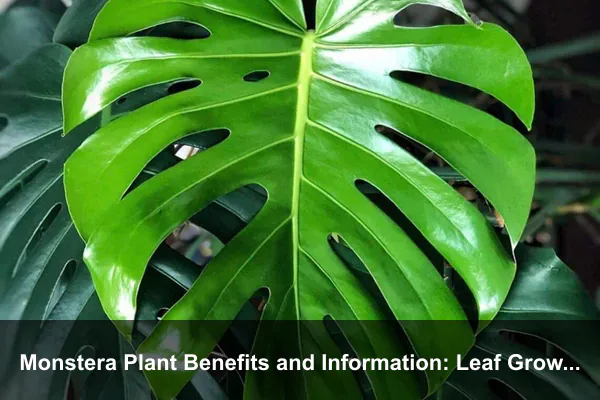
Monstera is one of the most recognizable indoor plants in the world, but its value goes beyond dramatic split leaves. A healthy Monstera can become a long-term living feature in the home, offering visual calm, flexible interior structure, and an easy way to learn how tropical climbing plants grow. For anyone searching for Monstera plant benefits and information, the most useful approach is to understand the plant as a living system: leaves, aerial roots, light, support, potting mix, and room conditions all work together.
This guide takes a distinct angle by focusing on Monstera leaf development, climbing behavior, practical indoor benefits, and smarter long-term maintenance. Instead of treating Monstera only as a decorative plant, it explains how to read its growth signals, encourage mature foliage, and use it responsibly in real homes. Whether you own a young Monstera deliciosa, a compact Monstera adansonii, or another related variety, the principles below will help you grow a stronger, more attractive plant with fewer surprises.
Why Monstera Is More Than a Trendy Houseplant

Monstera became popular because of its bold tropical look, but the plant has remained popular because it is adaptable, expressive, and rewarding to grow. Its leaves change over time, so it gives owners a visible sense of progress. A juvenile plant may begin with simple heart-shaped leaves, then slowly produce larger foliage with cuts, splits, or holes as it receives better light and support.
The main Monstera plant benefits and information that matter for indoor growers include its ability to soften hard room edges, create a natural focal point, and help people build consistent plant-care habits. It is not a miracle air purifier, and it should not be described as a medical solution. Its real benefits are practical, sensory, and environmental: it adds greenery, improves the feeling of a room, encourages routine, and can make a home feel more alive.
A Plant With Visible Growth Feedback
Many houseplants grow quietly, but Monstera gives clear feedback. New leaves emerge tightly rolled, then open and harden over several days. If the plant is getting enough light, water, nutrition, and structure, new leaves often become bigger and more divided over time. If conditions are weak, leaves may stay small, pale, or unfenestrated.
This feedback makes Monstera useful for beginners who want to understand plant behavior. The plant shows when it is stretching toward light, when it is drying too quickly, and when it needs a stronger climbing surface. In this sense, one of the best Monstera benefits is educational: it teaches observation.
Visual Comfort and Indoor Atmosphere
Large green leaves can make a space feel calmer and less sterile. Monstera works especially well in living rooms, home offices, reading corners, and bright bedrooms because its shape has both softness and structure. The leaf pattern breaks up blank walls and adds movement without needing bright flowers or complicated seasonal care.
For people interested in the broader idea of manfaat tanaman, or plant benefits, Monstera fits the category of ornamental plants that support mood and interior comfort. Its contribution is not about herbal use or edible harvest; it is about visual relief, connection to nature, and daily enjoyment.
Understanding Monstera Leaf Splits and Fenestration
The most famous Monstera feature is fenestration, the natural splitting or perforation of leaves. These openings are not damage. They are part of the plant’s mature growth pattern. In nature, Monstera climbs trees in tropical forests, where large leaves must handle filtered light, rain, and wind. Indoors, fenestration usually appears when the plant has enough maturity, brightness, and stability.
Young plants may not split for months or even years, especially if they are small cuttings. This does not mean the plant is unhealthy. A Monstera needs time to build roots, stems, and energy before producing its most dramatic leaves. Patience is part of growing it well.
Why Some Monstera Leaves Stay Whole
If your Monstera produces plain leaves without splits, check the growing environment before assuming something is wrong. The most common reasons include weak light, lack of climbing support, immature age, small root system, or inconsistent watering. A plant that sits far from a bright window may survive but not have enough energy to make large divided leaves.
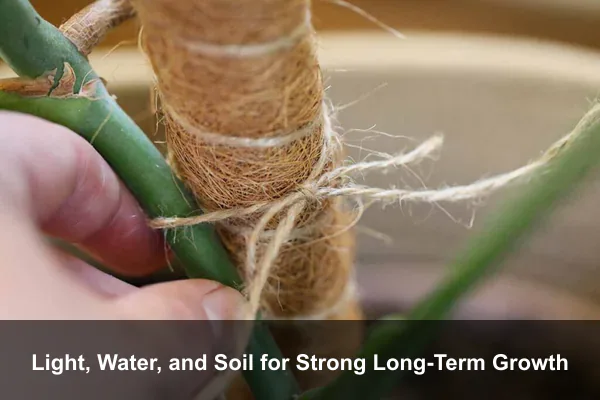
Support also matters. Monstera is a climbing aroid, not a natural bush. When its stem can attach to a moss pole, plank, coir pole, or trellis, it often grows more confidently. A supported stem usually produces stronger upward growth than a vine allowed to sprawl across the floor or hang without direction.
How to Encourage Bigger, Healthier Leaves
To encourage mature leaves, focus on steady improvements rather than quick tricks. Fenestration depends on overall plant health, not one secret product. Use the following steps as a practical checklist:
- Place the plant in bright indirect light near an east-facing window, filtered south window, or bright west window with protection from harsh afternoon sun.
- Give the stem a climbing structure so aerial roots can grip and the plant can grow upward.
- Water thoroughly but not constantly, allowing the upper layer of soil to dry before watering again.
- Use a chunky potting mix that holds some moisture while letting oxygen reach the roots.
- Feed lightly during active growth with a balanced fertilizer, following the label rather than overfeeding.
- Rotate the pot occasionally so growth stays balanced and the plant does not lean too strongly toward one light source.
These habits support the plant’s natural development. They also reduce stress, which helps new leaves open cleanly instead of tearing, browning, or emerging smaller than expected.
Practical Monstera Benefits for Indoor Living
Monstera is often praised for beauty, but its practical indoor benefits deserve a closer look. The plant can change how a room feels, how people interact with a space, and how plant owners build routines. These benefits are strongest when expectations are realistic.
A Natural Focal Point Without Flowers
Some ornamental plants rely on blooms for attention. Monstera does not need flowers to make an impact. Its foliage is the main feature, and that makes it reliable as a year-round design element. A well-grown plant can anchor a room corner, soften shelving, frame a window, or add height beside low furniture.
This is especially helpful in modern homes with neutral walls, hard floors, and simple furniture. Monstera adds organic shape without visual clutter. One plant can often do the work of several smaller decorations.
A Helpful Routine Builder
Monstera care works best with observation rather than daily interference. You check the soil, watch leaf posture, inspect new growth, and adjust light as seasons change. This creates a simple plant-care rhythm that can be grounding for many people. The benefit comes from the routine itself: a few minutes of slow attention to a living thing.
Unlike plants that need constant misting, frequent pruning, or strict blooming cycles, Monstera is forgiving when its basic needs are met. This makes it suitable for busy people who still want a meaningful indoor plant.
A Living Lesson in Tropical Growth
Monstera shows several botanical ideas in a visible way. Its aerial roots search for support, its leaves change shape as it matures, and its stems reveal how climbing plants use vertical surfaces. For families, students, or curious plant owners, this makes Monstera more than decor. It becomes a small indoor example of rainforest adaptation.
This educational benefit is one reason Monstera remains interesting after the first purchase. As the plant grows, owners learn to make decisions about poles, pruning, propagation, pot size, and light. Each choice affects the next stage of growth.
Choosing the Right Monstera for Your Space
Not every Monstera fits every home. Before buying one, think about available light, floor space, ceiling height, and your willingness to provide support. A plant that looks small in a nursery pot can become much larger after a few years of steady care.
Monstera Deliciosa
Monstera deliciosa is the classic large-leaf type. It can become a statement plant with broad, deeply split foliage. It is best for rooms with good light and enough space for a pot, support pole, and expanding leaves. This type is ideal if you want a strong architectural plant and are ready to manage its size.
Monstera Adansonii
Monstera adansonii, often called the Swiss cheese vine, has smaller leaves with oval holes. It is usually easier to place on shelves, small stands, or compact trellises. It still appreciates support, but it is more flexible for apartments and smaller rooms.
Variegated Monstera
Variegated Monsteras are beautiful but require more careful placement. White or cream leaf sections contain less chlorophyll, so these plants often grow more slowly and need bright indirect light. They may also be more expensive and less forgiving. Choose one only if you are comfortable monitoring light, watering, and leaf condition closely.
Light, Water, and Soil for Strong Long-Term Growth
Healthy Monstera growth starts with the relationship between light, water, and roots. If one factor is wrong, the others become harder to manage. For example, a plant in low light uses water slowly, so the soil stays wet longer and root problems become more likely. A plant in very bright warmth may dry faster and need more frequent watering.
Best Light Conditions
Monstera prefers bright indirect light. It can tolerate medium light, but growth may be slower and leaves may be smaller. Direct morning sun is often fine, while harsh afternoon sun can scorch leaves, especially if the plant was not gradually acclimated. If leaves lean strongly toward a window, rotate the pot or move the plant slightly closer to the light source.
Signs of insufficient light include long gaps between leaves, small new leaves, weak stems, and little or no fenestration on a mature plant. Signs of too much direct sun include dry brown patches, bleached areas, or crispy leaf edges facing the window.
Watering Without Guesswork
Watering should be based on soil moisture, pot size, season, and room conditions. A simple rule is to water when the top few centimeters of the potting mix feel dry. Then water thoroughly until excess drains from the bottom. Empty any standing water from saucers so the roots do not sit in stale moisture.
Avoid watering on a fixed calendar without checking the plant. In cooler months, Monstera may need water less often. In warmer months with active growth, it may dry faster. The goal is evenly managed moisture, not constant wet soil.
Soil and Potting Mix
Monstera roots need oxygen. A dense, muddy potting mix can hold too much water and cause root stress. A better mix is chunky and airy, often combining indoor potting soil with orchid bark, perlite, pumice, coco chips, or similar materials. The exact recipe can vary, but the result should drain well while holding enough moisture for steady growth.
Choose a pot with drainage holes. Decorative cachepots are fine if the inner nursery pot can drain fully before being returned. Repot only when necessary, such as when roots circle tightly, water runs through too quickly, or growth stalls despite good care.
Support Systems: The Missing Key to Mature Monstera Growth
Many indoor Monsteras become messy because they are treated like self-standing plants. In reality, Monstera wants to climb. Without support, stems lean, twist, and spread outward. This can make the plant harder to manage and reduce the chance of large mature leaves.
Moss Pole, Coir Pole, Plank, or Trellis?
Different supports work for different goals. A moss pole can hold moisture and give aerial roots something to enter. A coir pole is sturdy and widely available, though roots may not grip as deeply unless humidity is good. A wooden plank creates a natural climbing surface and can look clean in modern interiors. A trellis is useful for guiding shape but may not encourage the same root attachment as a textured pole.
The best support is stable, tall enough for future growth, and installed close to the main stem. Add support early if possible. Retrofitting a large leaning Monstera is possible, but it is more difficult than training a young plant gradually.
Training the Stem Gently
Use soft plant ties, fabric strips, or flexible clips to attach the main stem to the support. Do not tie leaves or petioles tightly. The goal is to guide the stem, not force it. Aerial roots can be directed toward the pole or left alone if they are not causing problems.
As the plant grows, adjust ties and add new attachment points. Check older ties so they do not cut into thickening stems. This small maintenance habit can keep the plant upright and attractive for years.
Common Growth Problems and What They Mean
Monstera problems are usually signals. Instead of reacting with random fixes, read the symptom and connect it to recent changes. New location, season shift, repotting, underwatering, overwatering, and pest exposure can all affect leaf condition.
Yellow Leaves
One occasional yellow lower leaf can be normal aging. Several yellow leaves at once may suggest overwatering, poor drainage, low light, or root stress. Check soil moisture and drainage first. If the potting mix stays wet for many days, improve light, reduce watering frequency, or consider repotting into a better mix if roots are unhealthy.
Brown Leaf Edges
Brown edges can come from underwatering, dry air, fertilizer buildup, inconsistent watering, or old damage. Trim only the dead brown tissue if appearance bothers you, but focus on fixing the cause. Flush the soil occasionally if fertilizer salts may have accumulated, and avoid placing the plant near hot vents or strong drafts.
Small New Leaves
Small new leaves usually point to limited energy. The plant may need brighter light, stronger support, nutrition during the growing season, or more time to recover from stress. Do not expect every new leaf to be larger than the last, but a long-term trend of shrinking leaves means something in the environment is holding the plant back.
Pests
Monsteras can attract common houseplant pests such as spider mites, scale, mealybugs, and thrips. Inspect the undersides of leaves, leaf joints, and new growth. Early detection matters. Isolate affected plants, wipe leaves, and use an appropriate treatment such as insecticidal soap or horticultural oil according to product directions.
Propagation and Pruning for a Better-Shaped Plant
Propagation is one of the most satisfying parts of Monstera care, but it should be done with the plant’s structure in mind. Cutting randomly can leave the mother plant awkward or weak. Plan cuts around nodes, growth direction, and future shape.
Where to Cut
A Monstera cutting needs a node, because the node is where new roots and shoots can develop. A leaf without a node may stay green for a while but will not become a full new plant. Look for the slightly raised area on the stem where a leaf and aerial root connect. Cut below that point with clean, sharp pruners.
Water or Soil Propagation
Water propagation lets you watch root growth, which is helpful for beginners. Change the water regularly and keep the cutting in bright indirect light. Soil or moss propagation can reduce transplant shock because roots form in a more solid medium. Both methods can work if the cutting has a healthy node and receives stable warmth and light.
Pruning for Shape
Prune to remove damaged leaves, control size, or encourage a tidier form. Avoid removing too much foliage at once, because leaves produce the energy the plant needs to recover. If your Monstera has become too wide, combine pruning with better support rather than simply cutting every outward stem.
Safety, Placement, and Responsible Indoor Use
Monstera is valued as an ornamental plant, not an edible or medicinal plant. Its tissues contain calcium oxalate crystals that can irritate the mouth and digestive system if chewed. For homes with curious pets or small children, placement matters. Keep the plant out of reach, use stable pots, and clean fallen leaves promptly.
Responsible placement also means considering traffic flow. Large leaves can be damaged in narrow hallways, and heavy pots can be difficult to move. Put Monstera where it has room to expand without blocking doors, vents, or frequently used furniture.
Best Rooms for Monstera
- Living room: Good for larger plants that can serve as a natural focal point.
- Home office: Useful for visual calm and a more pleasant work environment.
- Bedroom: Suitable if there is enough light and the plant is placed safely away from pets or children.
- Dining area: Works well in bright corners where leaves will not brush against chairs.
- Covered balcony or sunroom: Good if protected from direct harsh sun, wind, and temperature extremes.
Conclusion: The Real Value of Monstera Plant Benefits and Information
Monstera earns its place indoors because it combines beauty, learning, and long-term growth potential. Its benefits are not based on exaggerated claims, but on practical everyday value: bold foliage, a calmer room atmosphere, visible growth feedback, and the satisfaction of guiding a climbing tropical plant toward maturity.
The most important Monstera plant benefits and information come from understanding how the plant naturally grows. Give it bright indirect light, an airy potting mix, thoughtful watering, and a reliable support system. Watch how the leaves respond, adjust care with the seasons, and treat fenestration as a sign of maturity rather than a feature you can force overnight. With patient care, Monstera can become more than a fashionable houseplant; it can be a lasting green companion that brings structure, freshness, and quiet interest to your indoor space.
