
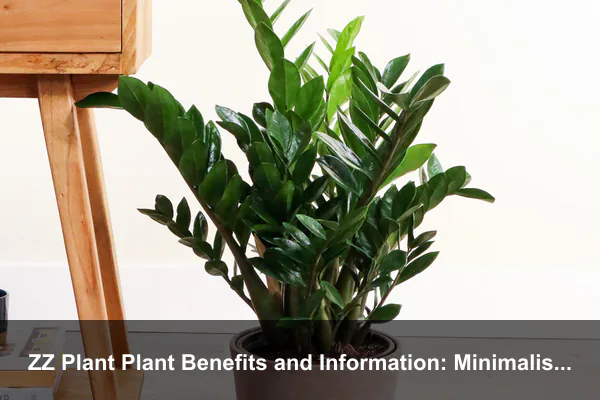
The ZZ Plant, botanically known as Zamioculcas zamiifolia, is one of the most dependable houseplants for people who want greenery without turning plant care into a complicated routine. Its upright stems, glossy leaflets, and slow-growing habit make it especially useful in modern homes where visual order, clean surfaces, and low-maintenance decor matter.
This guide looks at ZZ Plant plant benefits and information from a fresh angle: how this plant supports calm, uncluttered indoor spaces. Instead of focusing only on low light or survival, we will explore its design value, care rhythm, placement strategy, and realistic everyday benefits for beginners, apartment dwellers, and anyone who prefers a tidy indoor plant that does not constantly demand attention.
Why the ZZ Plant Fits Minimalist Homes
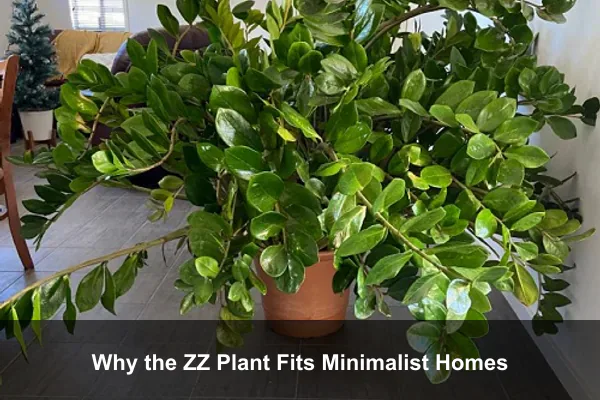
A good minimalist plant should add life without adding visual noise. The ZZ Plant does that well because its growth pattern is simple: thick stems rise from the soil, each carrying neat rows of oval leaflets with a polished green surface. It does not vine across furniture, shed petals, or need frequent trimming to keep its shape.
Slow Growth Keeps the Display Tidy
One of the most useful ZZ Plant benefits is its slow, controlled growth. Fast-growing plants can be exciting, but they often need regular pruning, repotting, tying, or rotating. A ZZ Plant usually changes gradually, which helps it stay proportional to shelves, sideboards, console tables, and small corners for a long time.
This slow-growth habit makes it a strong choice for people who want a plant that looks intentional rather than messy. It can become a permanent part of a room layout instead of a temporary decoration that quickly outgrows its place.
Glossy Leaves Add Natural Contrast
The ZZ Plant has naturally shiny leaves that reflect soft indoor light. This gives it a polished look without needing colorful flowers or complex patterns. In rooms with wood, stone, white walls, metal accents, or neutral fabrics, the plant adds contrast while still feeling calm and organized.
Key ZZ Plant Benefits Without the Hype
Many houseplants are promoted with exaggerated wellness claims. A more practical way to understand ZZ Plant plant benefits and information is to focus on what the plant genuinely does well in everyday life.
- Low visual clutter: Its upright form looks structured and clean.
- Low maintenance: It tolerates missed watering better than many leafy plants.
- Long display life: Slow growth means fewer layout changes and less frequent repotting.
- Flexible styling: It works in bedrooms, living rooms, entry corners, and workspaces.
- Beginner confidence: It gives new plant owners room to learn without punishing small mistakes.
The ZZ Plant can support a more pleasant indoor atmosphere because it brings natural texture into the home. However, it should not be treated as a medical solution for air quality, stress, sleep, or allergies. Its strongest value is practical: it is attractive, resilient, and easy to live with.
Essential ZZ Plant Information at a Glance
The ZZ Plant is a tropical perennial native to parts of eastern Africa. It stores water in thick underground rhizomes, which helps explain why it can handle dry periods. Those rhizomes are also the reason overwatering is the main care mistake to avoid.
Basic Plant Profile
- Botanical name: Zamioculcas zamiifolia
- Common name: ZZ Plant, Zanzibar Gem
- Plant type: Tropical indoor foliage plant
- Growth habit: Upright, clumping, slow to moderate growth
- Best indoor size: Small tabletop plants to floor plants around 2 to 4 feet tall
- Main appeal: Glossy leaves, strong structure, low-care routine
Popular Types for Different Interiors
The classic green ZZ Plant is the most common and usually the easiest to find. Raven ZZ has dramatic dark foliage that suits modern rooms and high-contrast interiors. Compact forms are useful for desks, narrow shelves, and bedside tables. Choose the type based on the room first, then the pot size and care needs.
How to Care for a ZZ Plant With a Simple Routine
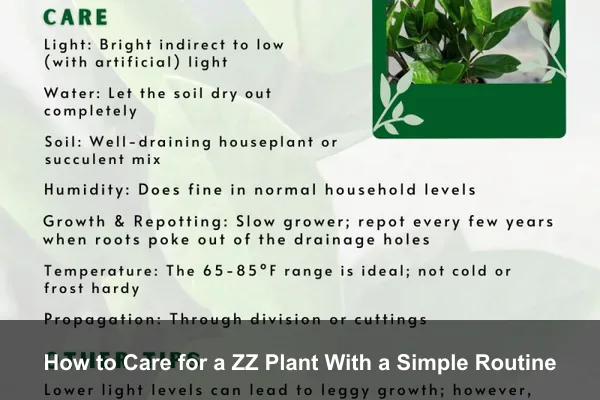
ZZ Plant care is easiest when you avoid over-managing it. This plant prefers a steady routine, good drainage, and patience. It is not a plant that needs constant misting, daily checking, or frequent feeding.
Light: Bright Indirect Is Best
A ZZ Plant can adapt to lower indoor light, but it usually looks fullest in bright, indirect light. Place it near a window with filtered sun, a few feet from a bright window, or in a well-lit room away from harsh afternoon rays. Very dark corners may keep it alive, but growth will be slower and stems may stretch.
Watering: Let the Soil Dry
Water only when the potting mix has dried well below the surface. In many homes, this may mean watering every two to four weeks, but timing changes with pot size, temperature, light, and season. Always check the soil instead of following a fixed calendar.
- Touch the soil and check that the top few inches are dry.
- Water thoroughly until excess drains from the pot.
- Empty the saucer so the roots do not sit in water.
- Wait until the soil dries again before the next watering.
Soil and Pot: Drainage Matters
Use a loose, well-draining indoor potting mix. A blend made for houseplants can work well, especially if improved with perlite, pumice, or orchid bark for airflow. The pot should have drainage holes. Decorative cachepots are fine, but the nursery pot inside should never remain in standing water.
Cleaning: Keep the Shine Natural
Dust can dull the leaves and reduce the plant’s clean appearance. Wipe the leaflets gently with a damp cloth every few weeks. Avoid heavy leaf-shine products because they can leave residue. Clean leaves help the plant look fresh and make the room feel more cared for.
Styling Ideas for Shelves, Corners, and Small Rooms
The ZZ Plant works best when its shape is allowed to stand out. Because the leaves already have shine and structure, the pot and placement should support the plant rather than compete with it.
For Shelves and Side Tables
Choose a small or medium ZZ Plant in a simple ceramic, concrete, or matte pot. Place it beside books, a lamp, or a small tray, leaving enough empty space around the stems. This negative space helps the plant look intentional.
For Floor Corners
A larger ZZ Plant can soften a bare corner without making the room feel crowded. Use a raised plant stand if the pot looks too low, or choose a narrow planter for tight spaces. Since the plant grows upright, it gives height without spreading too wide.
For Work and Study Areas
On a desk or nearby shelf, a compact ZZ Plant adds greenery without dropping leaves or needing constant rearrangement. Its calm form makes it suitable for focus-oriented spaces where busy foliage might feel distracting.
Common Problems and Simple Fixes
Most ZZ Plant problems come from too much water, poor drainage, or sudden environmental changes. The good news is that symptoms are usually easy to read if you know what to look for.
- Yellow leaves: Often caused by overwatering. Let the soil dry and check the roots if the pot stays wet.
- Soft stems: A warning sign of rot. Reduce watering and improve drainage immediately.
- Wrinkled stems: Usually linked to long dryness, especially in bright or warm rooms.
- Leaning growth: Rotate the pot occasionally so all sides receive balanced light.
- Dusty leaves: Wipe gently with water and a soft cloth.
ZZ Plants are also considered toxic if chewed or eaten because they contain calcium oxalate crystals. Keep them away from curious pets and young children, and wash your hands after pruning or repotting if your skin is sensitive.
Best Rooms for ZZ Plant Placement
The best location is one where the ZZ Plant receives stable light, has space for upright growth, and is easy to check before watering. Living rooms are ideal for larger plants, while bedrooms and entryways work well for compact specimens. In bathrooms, only use a ZZ Plant if the room has enough natural light and the pot can drain properly.
Avoid placing it directly beside heaters, air-conditioning vents, or doors that create frequent cold drafts. Like many tropical houseplants, it prefers consistency over dramatic changes.
Conclusion: A Calm Plant With Long-Term Value
The ZZ Plant is not just a tough houseplant. It is a practical design plant for people who want indoor greenery that stays neat, grows slowly, and fits into a simple routine. Its glossy leaves, upright shape, and forgiving nature make it especially useful for minimalist homes, small rooms, and anyone building confidence with indoor plants.
When you understand the most important ZZ Plant plant benefits and information, the care becomes straightforward: give it indirect light, let the soil dry, use a draining pot, and clean the leaves occasionally. In return, the ZZ Plant offers lasting structure, quiet beauty, and dependable greenery without adding stress to your space.
