

The snake plant is often described as almost impossible to kill, but that simple label does not explain why it fits so well into modern homes. Many people now live and work around laptops, phones, monitors, charging cables, small rooms, and irregular schedules. In that setting, Snake Plant plant benefits and information become especially useful because this upright, resilient houseplant adds greenery without demanding the constant attention that some indoor plants require.
Known botanically as Dracaena trifasciata and still commonly sold under its older name, Sansevieria trifasciata, the snake plant has stiff sword-like leaves, slow growth, and a clean architectural shape. It works on office shelves, beside desks, near reading chairs, in apartment corners, and in shared family rooms. This guide takes a unique angle: how to use snake plant benefits for calmer screen-heavy spaces while keeping care realistic, safe, and low waste.
Why Snake Plant Works in Screen-Heavy Homes
A screen-heavy home needs plants that can tolerate imperfect conditions. Desk corners may receive indirect light for only part of the day. Shelves can be dry because of air conditioning. Busy owners may forget watering for a week or two. Snake plant handles those conditions better than many tropical foliage plants because its thick leaves store water, its roots prefer drying between waterings, and its upright form needs little floor space.
The main value is not magic air cleaning or instant wellness. The real benefit is steadier: a living visual anchor that softens rooms dominated by hard surfaces, glowing screens, and equipment. When placed well, a snake plant adds a natural line to the room without adding clutter. It can make a desk look more intentional, create a small visual pause near a monitor, and bring the feeling of manfaat tanaman, or everyday plant benefits, into a practical indoor routine.
A Plant That Does Not Compete With Your Workflow
Some plants are beautiful but demanding. They trail into keyboards, need frequent misting, shed petals, or droop visibly when the room is too dry. Snake plant is different. Its vertical leaves stay contained, its growth is slow, and it does not need daily interaction. That makes it suitable for people who want indoor greenery but do not want a plant care hobby to become another task on the calendar.
Quiet Shape, Strong Presence
Snake plant leaves are narrow, upright, and patterned with greens, grays, and sometimes yellow margins. This shape gives the plant enough presence for minimal rooms, but it does not dominate the way a large indoor tree can. In a workspace, the plant can act like a natural divider between a desk and the rest of the room. In a studio apartment, it can mark a transition from work mode to rest mode without needing bulky furniture.
Key Snake Plant Benefits Without the Hype
Any helpful article about Snake Plant plant benefits and information should separate realistic benefits from exaggerated claims. Snake plant is valuable, but it is not a medical device, air purifier replacement, or cure for indoor stress. Its strongest benefits come from resilience, visual calm, flexible placement, and simple care.
Low-Maintenance Indoor Greenery
The most practical benefit is low maintenance. Snake plant can tolerate missed watering, average indoor humidity, and a range of light conditions. It grows best in bright indirect light, but many varieties can remain attractive in medium or lower light if watering is reduced. This makes it useful for people who travel, rent small apartments, work long hours, or are still learning plant care basics.
Visual Rest for Busy Rooms
Modern rooms often contain straight edges: screens, shelves, desks, keyboards, routers, lamps, and storage boxes. Snake plant introduces organic texture while still looking orderly. The vertical leaves pull the eye upward and can reduce the harshness of a work area. A glance at living greenery can become a small reset between tasks, especially when the plant is placed within sight but not blocking the screen.
Low Fragrance and Low Pollen Presence
Snake plants are appreciated by many indoor gardeners because they are not strongly fragrant and are grown mainly for foliage. They may flower indoors in rare conditions, but this is not the reason most people keep them. For offices, bedrooms, and shared homes where strong scents can bother people, this quiet foliage quality is a practical benefit.
Realistic Air Quality Value
Snake plant is often linked with indoor air cleaning because of older chamber studies on plants and volatile organic compounds. The important detail is scale. A plant may interact with air in a small test chamber, but one or two houseplants will not clean an entire room as effectively as ventilation, source control, and a quality air purifier. The realistic benefit is that snake plant can be part of a healthier room design, alongside dust control, fresh air when available, and mindful product choices.
- Helpful: adds living foliage, texture, and a cleaner visual environment.
- Realistic: may contribute modestly to indoor comfort but does not replace ventilation.
- Practical: needs less frequent care than many common houseplants.
- Flexible: fits desks, corners, shelves, and narrow floor spaces.
Essential Snake Plant Information at a Glance
Before buying or moving a snake plant, it helps to understand its basic identity and growth habits. This information prevents common mistakes such as overwatering, choosing a pot without drainage, or placing the plant where pets can chew it.
Botanical Identity
The common snake plant is now classified as Dracaena trifasciata. Many plant labels still use Sansevieria, and both names appear in nurseries, care guides, and plant shops. Other common names include mother-in-law’s tongue, viper’s bowstring hemp, and sansevieria. The plant is native to parts of tropical West Africa and has adapted well to dry indoor conditions because of its tough leaves and water-storing structure.
Growth Habit and Appearance
Snake plant grows from underground rhizomes that send up firm leaf clusters. Leaves can be tall and sword-shaped, short and compact, cylindrical, or bird’s-nest shaped depending on the variety. Many common types grow slowly indoors, which is an advantage for desks and tight spaces. Instead of quickly outgrowing the room, the plant gradually fills its pot and can be divided later when it becomes crowded.
Common Types for Indoor Use
Different snake plant varieties suit different interiors. Tall, narrow types work well in floor pots and corners. Compact rosette forms suit shelves, counters, and desks. Variegated forms with yellow edges need brighter light to keep strong coloration, while darker green varieties often tolerate lower light more gracefully.
- Dracaena trifasciata Laurentii: tall leaves with yellow margins, useful as a bright vertical accent.
- Dracaena trifasciata Zeylanica: green banded leaves, often a good choice for simple interiors.
- Bird’s nest snake plant: compact rosette form for small desks and shelves.
- Cylindrical snake plant: rounded spear-like leaves with a sculptural look.
- Moonshine snake plant: pale silvery leaves that prefer brighter indirect light.
Placement Guide for Desks, Studios, and Shared Rooms

Good placement is one of the most overlooked parts of snake plant care. A healthy plant in the wrong spot can become a tripping hazard, collect dust, or receive too much water because it is out of sight. A thoughtful location supports both plant health and room function.
Desk and Home Office Placement
For a desk, choose a small or medium snake plant rather than a tall floor specimen. Place it to the side of the monitor, not directly behind or in front of the screen. The goal is a visual pause, not a distraction. A compact bird’s nest variety can sit on a shelf above the desk, while a narrow upright plant can stand beside a filing cabinet or at the far edge of a workstation.
Keep leaves away from hot laptop vents, tangled cords, and areas where elbows may knock the pot. If the desk receives bright afternoon sun, move the plant slightly back from the window so the leaves do not scorch. A stable ceramic or terracotta pot is safer than a lightweight plastic nursery pot on a crowded work surface.
Studio Apartment Zones
In studio apartments, one room may serve as office, bedroom, dining area, and living space. Snake plant can help define zones without visual heaviness. A pair of matching plants near a desk can signal the work area. One taller plant beside a chair can make a reading corner feel complete. A narrow plant near an entry shelf can create a cleaner transition from outside life to indoor routines.
Shared Family Rooms
In shared rooms, durability matters. Snake plant is firm and tidy, but it should still be placed where children and pets are unlikely to chew leaves or tip the pot. Corners with indirect light, low stands, and heavier containers are safer choices. Avoid placing the plant in a busy walkway or beside doors that swing into the leaves.
Light Matching by Location
Snake plant tolerates a range of light, but tolerance is not the same as preference. Bright indirect light produces stronger growth and better variegation. Medium light can maintain a healthy plant with slower growth. Low light may be acceptable for some varieties, but the soil will dry more slowly and the plant will need less water.
- Bright indirect light: best for strong growth, colorful margins, and compact leaves.
- Medium light: suitable for most green varieties with careful watering.
- Low light: possible for survival, but growth slows and overwatering risk increases.
- Direct harsh sun: may scorch leaves, especially after sudden relocation.
Care Routine for Busy Digital Schedules
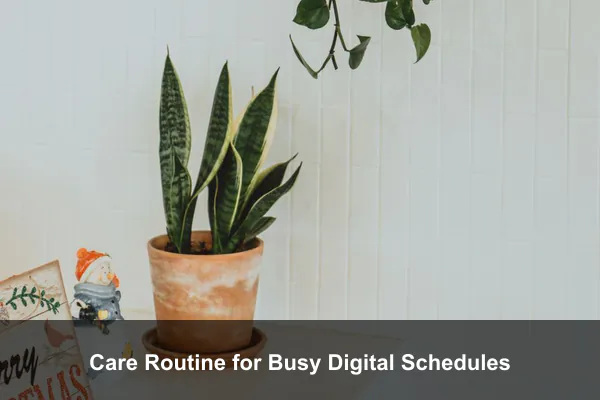
A snake plant care routine should be simple enough to repeat. People often damage this plant by caring too much, especially by watering on a fixed calendar even when the soil is still damp. The better approach is to connect care to observation: check the soil, check the leaves, then decide.
Watering the Right Way
Water only when the potting mix has dried thoroughly. In bright rooms this may be every two to three weeks, while in lower light it may be much less often. Insert a finger into the soil or use a moisture meter if you prefer a tool. If the top few inches are still damp, wait. When it is time to water, soak the soil evenly until water drains from the bottom, then empty the saucer.
Overwatering is the most common snake plant problem. Soft leaves, mushy bases, and a sour smell from the soil can indicate root rot. Underwatering is usually easier to fix because the plant stores moisture in its leaves. Wrinkled or curling leaves may mean the plant has gone too dry for too long, but always check the soil before watering.
Soil and Pot Choice
Use a fast-draining mix. A cactus or succulent mix often works well, especially when blended with perlite, pumice, or coarse material to improve airflow around the roots. The pot should have a drainage hole. Decorative cachepots are fine if the inner nursery pot can be removed for watering and allowed to drain fully.
Terracotta is useful because it helps moisture evaporate, which reduces the risk of soggy soil. Plastic pots hold moisture longer and can work in very bright, warm rooms, but they require more restraint with watering. For tall plants, choose a pot heavy enough to balance the upright leaves.
Cleaning Leaves in Work Areas
Dust builds up quickly in offices and screen-heavy rooms. Wipe snake plant leaves with a soft damp cloth every few weeks. This keeps the plant looking clean and helps leaves receive available light. Avoid heavy leaf shine products because they can leave residue. A simple wipe is usually enough.
Feeding and Growth Expectations
Snake plant is not a heavy feeder. During spring and summer, a diluted balanced houseplant fertilizer once or twice can support growth. Skip fertilizer in winter or when the plant is stressed, recently repotted, or sitting in low light. Expect slow growth indoors. Slow growth is not failure; it is one reason this plant remains easy to place.
Benefits for Focus, Comfort, and Daily Habits
The connection between plants and indoor comfort is partly practical and partly behavioral. A snake plant will not solve burnout or replace breaks, but it can support better habits by making a room feel more cared for. In a workspace, that matters. People tend to treat a room differently when it contains something living, even if the care routine is minimal.
A Visual Cue to Pause
Place the plant where you naturally look between tasks. The purpose is not to stare at it for long periods, but to create a brief change in visual texture. Looking away from a screen toward a plant, window, or distant object can remind you to relax your eyes and posture. The plant becomes a quiet cue for a healthier rhythm.
A Cleaner-Looking Desk Without Extra Decor
Many workspaces become visually noisy because people add too many small decorative objects. Snake plant gives a strong design effect with one item. A single upright plant can replace several small accessories, making the area look calmer and easier to clean. This is especially useful for renters, students, remote workers, and anyone who shares a room with equipment.
Care as a Simple Weekly Reset
Checking a snake plant once a week can become part of a room reset. Wipe the desk, coil cables, open the blinds, check the soil, rotate the pot slightly, and remove dust from the leaves. This routine takes minutes and keeps the plant connected to the way the room is used. The benefit is less about plant perfection and more about making the space feel intentional.
Safety and Responsible Use Indoors
Snake plant is common, attractive, and useful, but it should be handled responsibly. Like many ornamental houseplants, it is not meant to be eaten. Its leaves contain compounds that can cause discomfort if chewed or swallowed by pets or people. This does not mean every home must avoid it, but placement matters.
Pet and Child Safety
If you have cats, dogs, or young children, place snake plant out of reach or choose a room where unsupervised chewing is unlikely. Symptoms after ingestion may include drooling, nausea, vomiting, or stomach upset. If a pet or child eats part of the plant, contact a veterinarian, pediatrician, or poison control resource for guidance. Do not use snake plant as an edible or medicinal plant.
Handling Leaves and Soil
Most people can handle snake plants without issue, but wearing gloves during repotting is sensible if you have sensitive skin. Wash hands after working with soil. Keep fallen leaves and cuttings away from pets. If you propagate the plant, label cuttings clearly so no one mistakes them for edible herbs.
Allergy and Sensitivity Notes
Because snake plant is grown mainly for foliage, it is often a comfortable choice for people who dislike strong plant fragrance. Still, dust on leaves or mold in wet soil can bother sensitive individuals. Good care helps: avoid overwatering, provide drainage, remove dead material, and clean leaves regularly.
Common Problems and Simple Fixes
Snake plant problems usually come from water, light changes, or poor drainage. The plant is tough, but it still responds to its environment. Learning the signals helps you fix issues early without overreacting.
Soft or Mushy Leaves
Soft leaves often point to overwatering or cold damage. Check the soil and roots. If the pot smells sour or the base feels mushy, remove the plant, cut away rotted parts with clean tools, and repot healthy sections in dry, fast-draining mix. Reduce watering afterward, especially in low light.
Brown Tips
Brown tips may come from inconsistent watering, very dry air, physical damage, fertilizer buildup, or mineral-heavy water. Trim only the dry part if it bothers you, leaving a thin brown edge rather than cutting into green tissue. Review the watering routine and avoid overfertilizing.
Leaning Leaves
Leaning can happen when the plant stretches toward light, the pot is too small, or the soil no longer supports the roots. Rotate the plant occasionally, move it to brighter indirect light, or repot if the root mass is crowded. Very tall leaves may need a heavier pot rather than a larger one.
No New Growth
No growth is not always a problem. Snake plants grow slowly, especially in low light or cool rooms. If the leaves are firm and the color is stable, the plant may simply be maintaining itself. For more growth, increase light gradually and feed lightly during the warm growing season.
Low-Waste Styling and Long-Term Value
A snake plant can last for years, which makes it a strong choice for low-waste indoor gardening. Instead of replacing short-lived decor, you can maintain one plant, refresh the potting mix occasionally, and divide it when it becomes crowded. This long-term value is one of the most practical snake plant benefits.
Choose a Pot You Will Keep
Pick a simple pot that suits more than one room. Neutral ceramic, terracotta, matte black, or muted green containers often work well with snake plant leaves. Avoid pots that are too trendy if you want the plant to move between rooms over time. The best container supports drainage, stability, and the overall look of your home.
Use One Strong Plant Instead of Many Small Items
For a calmer room, use snake plant as a single strong design element. One healthy plant in a good pot often looks better than several struggling plants in mismatched containers. This approach is easier to clean, easier to maintain, and better suited to workspaces where clutter affects focus.
Propagate With Purpose
Snake plant can be propagated by division or leaf cuttings, though cuttings from variegated types may not keep the same edge pattern. Division is usually the easiest and most reliable method. When the plant fills its pot, separate a healthy cluster with roots and place it in a new container. Share divisions with friends or use them to green another room rather than buying more plants unnecessarily.
Buying Checklist for the Right Snake Plant
Choosing a healthy plant at the beginning saves effort later. Do not buy only by height or leaf pattern. Look at the entire plant, pot, and soil condition. A smaller healthy snake plant is usually a better purchase than a large one with wet soil and damaged leaf bases.
- Choose firm leaves with clear color and no mushy areas at the base.
- Check that the pot has drainage or that the nursery pot can be removed from the cover pot.
- Avoid plants sitting in water or soil that smells sour.
- Look for pests around leaf bases and soil surfaces.
- Match the variety to your light conditions, especially for pale or strongly variegated types.
- Buy a size that fits your actual room, not just the store display.
After bringing the plant home, give it time to adjust. Place it in bright indirect light if possible and avoid watering immediately unless the soil is fully dry. Many new owners damage snake plants by repotting and watering too soon. Let the plant settle, observe it for a week or two, then make changes if needed.
Conclusion
Snake plant is popular for good reason, but its best value is more practical than dramatic. It offers resilient indoor greenery, strong visual structure, flexible placement, and a simple care routine that works well in screen-heavy homes and focused workspaces. When you understand realistic Snake Plant plant benefits and information, you can enjoy the plant without expecting it to do more than a houseplant can truly do.
Use snake plant as a calm, low-effort partner in better room design. Give it draining soil, careful watering, suitable light, occasional cleaning, and safe placement away from curious pets or children. With those basics in place, this architectural houseplant can support a cleaner-looking desk, a more restful corner, and a long-lasting connection to everyday plant benefits.
