
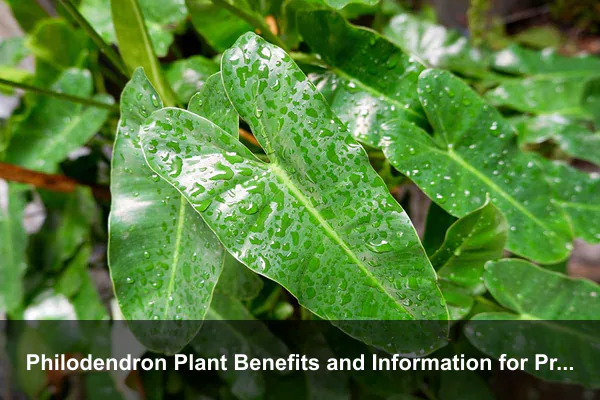
Philodendrons are among the most adaptable houseplants for people who want indoor greenery that feels generous, practical, and easy to share. When people search for Philodendron plant benefits and information, they often expect a simple care guide, but this plant group also offers something more specific: a low-waste way to grow, multiply, refresh, and exchange living plants without constantly buying new ones.
This guide looks at philodendrons through the lens of propagation, plant swaps, and sustainable indoor plant habits. That angle matters because many philodendrons naturally grow from nodes, trail, climb, and recover well from pruning when cared for correctly. For homes, apartments, offices, and small indoor corners, that makes them useful not only as ornamental plants but also as living resources that can be renewed over time.
Philodendrons are not perfect for every household. They contain calcium oxalate crystals and should be kept away from pets and children who may chew leaves or stems. They also need thoughtful watering, clean tools, and realistic expectations. Still, with basic knowledge, a single healthy philodendron can become a long-term source of greenery, cuttings, gifts, learning moments, and calmer indoor spaces.
Why Philodendrons Are Ideal for Shareable Indoor Greenery

A major benefit of philodendrons is that many common types are easy to renew through pruning and propagation. Instead of treating a houseplant as a disposable decoration, you can manage it as a living collection that changes with your space. This is especially useful for people who like the idea of manfaat tanaman, or plant benefits, in a practical everyday sense: greener rooms, better plant-care habits, and a more thoughtful relationship with living decor.
Philodendrons are popular because they fit many indoor lifestyles. Trailing types can soften shelves, climbing types can add height, and compact self-heading types can create a bold leaf display without taking over a room. When maintained well, they can be divided, trimmed, trained, or propagated to match changing needs.
A Plant That Can Grow With Your Home
Unlike short-lived seasonal decor, a philodendron can adapt as your home changes. A small cutting may begin in a glass jar, move into a nursery pot, then become a shelf plant, desk plant, or climbing feature. If it gets too long, you can prune it and use the cuttings to restart fuller growth.
This long-term flexibility is one of the most practical philodendron benefits. The plant does not have to stay in one fixed form. You can use it to fill small visual gaps, create continuity between rooms, or keep a small indoor plant station active without needing a large garden.
Why Propagation Makes Philodendrons More Sustainable
Propagation reduces the pressure to replace tired-looking plants. It also encourages observation. You begin to notice nodes, roots, leaf spacing, stem firmness, and moisture levels. Those observations build better houseplant judgment over time.
For sustainable indoor greenery, propagation helps in several ways:
- Less waste: Healthy pruned stems can become new plants instead of trash.
- Lower cost: One mature plant can produce several smaller plants over time.
- Local sharing: Cuttings can be exchanged with friends, neighbors, or plant groups.
- Better learning: Root growth is visible in water propagation, making plant biology easier to understand.
- Emotional value: A plant grown from a cutting often feels more personal than a store-bought pot.
Philodendron Plant Benefits Beyond Decoration
The phrase Philodendron plant benefits and information should be handled realistically. Philodendrons are attractive and useful indoor plants, but they should not be promoted with exaggerated claims. Their value is strongest when understood as part of daily routines, interior comfort, plant education, and low-waste living.
Visual Comfort and Softer Indoor Spaces
Philodendrons add organic shape to rooms filled with hard furniture, screens, and straight lines. Their leaves create a visual pause that can make a room feel less harsh. Heartleaf philodendron, for example, has soft trailing growth, while larger types may create a more sculptural effect.
This does not mean a philodendron will solve stress or replace good lighting, rest, and ventilation. Its benefit is more modest and believable: it gives the eye something natural to rest on, encourages small care rituals, and brings living texture into indoor spaces.
Plant-Care Habits That Support Mindful Routines
Because philodendrons usually respond clearly to care, they can help people build better indoor gardening habits. Yellowing leaves, dry potting mix, soft stems, or slow growth all become signals. Over time, the plant teaches you to check conditions instead of watering on autopilot.
Helpful habits include:
- Checking the top layer of soil before watering.
- Rotating the pot so growth stays balanced.
- Cleaning dust from leaves so they can receive light efficiently.
- Pruning leggy stems to encourage fuller growth.
- Inspecting new cuttings before adding them near other plants.
Affordable Greenery for Small Homes
Philodendrons are useful for renters and small-space dwellers because many varieties grow well in containers. You do not need a yard, raised bed, or balcony to enjoy them. A bright room with indirect light, a suitable potting mix, and a careful watering routine is often enough.
The propagation advantage also makes philodendrons budget-friendly. A single healthy plant can provide cuttings for multiple rooms, which helps create a connected indoor plant style without purchasing several mature specimens.
Key Philodendron Information: Growth, Nodes, and Plant Structure
To grow and share philodendrons well, you need to understand their structure. The most important propagation detail is the node. A node is the part of the stem where roots, leaves, or new growth can emerge. A leaf without a node may look attractive in water, but it usually cannot become a complete new plant.
Trailing, Climbing, and Self-Heading Types
Philodendrons include many species and cultivars, and their growth habits are not all the same. Understanding the growth form helps you choose the right propagation and display method.
- Trailing philodendrons: These have long stems that hang or spread, making them suitable for shelves, hanging planters, and easy stem cuttings.
- Climbing philodendrons: These naturally seek support and may grow larger leaves when attached to a moss pole, plank, or trellis.
- Self-heading philodendrons: These grow more upright and compact, often with leaves emerging from a central crown or short stem.
Common trailing and climbing types are usually the easiest for beginners to propagate by stem cuttings. Self-heading types may need more care and are not always suitable for casual cutting unless the plant has clear growth points or offsets.
Why Nodes Matter
Every successful philodendron cutting should include at least one node. A cutting with one leaf and one node can often root if the stem is healthy. A cutting with multiple nodes may root faster or produce stronger early growth, but it also removes more material from the parent plant.
Before cutting, identify these parts:
- Leaf: The main photosynthetic surface.
- Petiole: The small stalk connecting the leaf blade to the stem.
- Stem: The main section that carries nodes.
- Node: The growth point needed for roots and shoots.
- Aerial root: A root-like structure that may help the cutting establish faster.
Healthy Parent Plants Produce Better Cuttings
Propagation begins before the cut is made. A thirsty, pest-stressed, or root-damaged plant may not provide strong cuttings. For the best result, choose stems that are firm, green, and actively growing. Avoid stems with mushy areas, unexplained spots, or pests.
A healthy parent plant should have stable growth, no strong sour smell from the potting mix, and leaves that are not collapsing. If the parent plant is struggling, improve its care first before taking cuttings.
How to Propagate Philodendron Cuttings Successfully
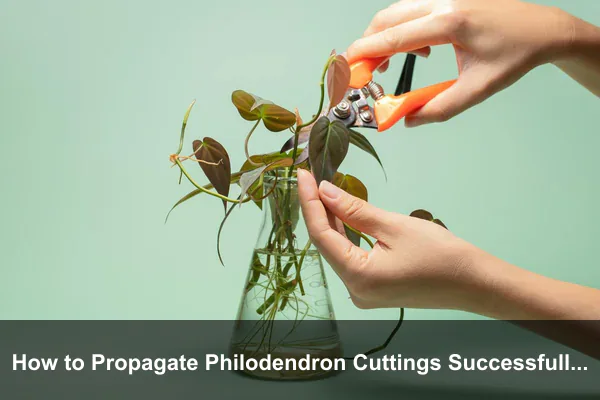
Philodendron propagation can be done in water, potting mix, or other airy propagation media. Each method has advantages. Water propagation is visually satisfying and beginner-friendly because you can watch roots form. Soil propagation reduces transplant shock for some growers because the cutting starts in a root environment closer to its final pot.
Step-by-Step Water Propagation
Water propagation is one of the easiest ways to understand philodendron growth. Use clean tools, fresh water, and a bright location away from direct hot sun.
- Choose a healthy stem with at least one node.
- Cut below the node using clean scissors or pruning shears.
- Remove any lower leaf that would sit below the water line.
- Place the node in clean water while keeping most leaves above water.
- Set the jar in bright, indirect light.
- Change the water every few days or when it looks cloudy.
- Pot the cutting once roots are several centimeters long and branching begins.
Do not rush the transition to soil too early. Fine new roots need enough length to anchor into potting mix. At the same time, do not leave cuttings in water forever if your goal is a potted plant. Water roots and soil roots behave differently, so a gradual transition is helpful.
Step-by-Step Soil Propagation
Soil propagation is simple but requires better moisture control. The mix should stay lightly moist, not soaked. A small pot with drainage holes is essential.
- Prepare a small container with airy potting mix.
- Take a cutting with at least one node.
- Insert the node into the mix while keeping leaves above the surface.
- Water lightly so the mix settles around the stem.
- Place the pot in bright, indirect light.
- Keep humidity moderate, but avoid sealing the cutting in stale wet conditions.
- Check for resistance after a few weeks, which may suggest root growth.
Soil propagation can look slower because roots are hidden. Resist pulling the cutting repeatedly. Gentle observation is better than constant disturbance.
Common Propagation Mistakes
Most propagation failures come from missing nodes, dirty tools, poor water quality, stale wet media, or cuttings taken from weak plants. Philodendrons are forgiving, but they are still living plants with limits.
- Using leaf-only cuttings: A leaf without a node may survive temporarily but will not usually grow into a new plant.
- Submerging too much foliage: Leaves under water rot quickly and foul the jar.
- Overcrowding jars: Too many cuttings in one container reduces airflow and cleanliness.
- Ignoring pests: Cuttings can carry mites, thrips, scale, or mealybugs to new spaces.
- Potting into heavy soil: Dense wet soil can suffocate tender roots.
Plant Swap Value: Sharing Philodendrons Responsibly
Philodendrons are excellent for plant swaps because many types produce cuttings that travel well for short periods. However, responsible sharing matters. A cutting is a living item, not just a decorative object. It should be healthy, correctly labeled when possible, and shared with basic care notes.
How to Prepare Cuttings for Sharing
Before giving away a philodendron cutting, inspect it carefully. Look at the underside of leaves, the stem joints, and any aerial roots. If you see pests or suspicious damage, do not share the cutting until the issue is resolved.
A good shared cutting should include:
- At least one clear node.
- One or more healthy leaves.
- A firm, clean stem.
- No visible pests or sticky residue.
- A short note about light, watering, and toxicity.
If the cutting is already rooted, wrap the roots in lightly moist paper for short transport, or keep it in a small container. Avoid sealing wet leaves in plastic for long periods because trapped moisture can encourage rot.
Labeling Matters More Than Perfection
Philodendron names can be confusing, especially with hybrids, lookalike cultivars, and trade names. If you know the plant name, label it. If you are unsure, be honest. A simple label such as Philodendron, exact variety unknown is better than guessing.
Accurate labeling helps the receiver understand likely growth habit, mature size, and care needs. It also reduces disappointment when a plant does not match an assumed identity.
Ethical Swapping and Collector Awareness
Some philodendrons are common and inexpensive, while others are rare, costly, or heavily marketed. Plant swaps should avoid pressure, inflated claims, or irresponsible collecting. Do not remove plants from wild habitats, and be cautious with sellers who cannot explain where rare plants came from.
Ethical plant sharing supports community, education, and lower-waste greenery. It should not encourage careless buying or the spread of unhealthy plant material.
Care Tips That Keep Philodendrons Ready for Propagation
A philodendron that is well cared for will usually produce better cuttings and recover faster after pruning. The goal is not extreme growth at any cost. The goal is steady, healthy growth that can be shaped, shared, and maintained over time.
Light for Strong Stems and Healthy Leaves
Most philodendrons prefer bright, indirect light. Too little light often leads to long spaces between leaves, weak stems, and slower rooting after cuttings are taken. Too much direct sun can scorch leaves, especially indoors near hot windows.
A good light position is usually near an east-facing window, a bright room with filtered light, or a spot a few feet back from a stronger window. If using grow lights, keep the plant close enough to benefit but not so close that leaves heat or bleach.
Watering for Root Health
Philodendrons generally prefer a potting mix that dries slightly between waterings. Constant wetness is one of the most common causes of root problems. Instead of watering on a strict calendar, check the soil with your finger or a moisture meter.
Water thoroughly when the upper portion of the mix has dried, then let excess water drain away. Never allow the pot to sit in a saucer of standing water for long. Healthy roots support healthy stems, and healthy stems make better propagation material.
Potting Mix and Containers
An airy mix is helpful for most philodendrons. Many growers use a houseplant mix amended with orchid bark, perlite, pumice, or coco chips. The exact recipe can vary, but the goal is the same: moisture retention without suffocation.
Choose pots with drainage holes. Decorative cachepots are fine if the nursery pot can drain fully before being returned. A pot that is too large may hold extra moisture around roots, while a pot that is too small may dry too quickly and restrict growth.
Pruning for Fuller Growth
Pruning is not only about size control. It can also help a trailing philodendron look fuller. Cutting just above a node may encourage new growth from remaining points on the stem. The removed piece can become a cutting if it includes a node.
Use clean tools and avoid removing too much at once from a stressed plant. A strong plant can usually handle moderate pruning, but a weak plant should recover before being trimmed heavily.
Safety Information: Pets, Children, and Skin Sensitivity
Any complete guide to Philodendron plant benefits and information must include safety. Philodendrons are not edible houseplants. Their tissues contain insoluble calcium oxalate crystals, which can irritate the mouth, throat, skin, and digestive tract if chewed or handled carelessly.
Pet and Child Safety
Keep philodendrons away from cats, dogs, and young children who may bite leaves or play with stems. Symptoms from chewing may include drooling, oral irritation, pawing at the mouth, vomiting, or discomfort. If ingestion is suspected, contact a veterinarian, doctor, or poison control resource promptly.
Safe placement ideas include high shelves, closed plant rooms, hanging planters that are truly out of reach, or offices where pets and children do not enter. Do not assume bitter taste alone will prevent chewing.
Handling Cuttings Safely
When pruning or propagating, wash your hands afterward. People with sensitive skin may prefer gloves, especially when handling sap or many cuttings. Keep cut stems away from food preparation surfaces, and clean tools after use.
These precautions do not make philodendrons difficult plants. They simply make plant care more responsible, especially when sharing cuttings with beginners.
Using Philodendrons in a Low-Waste Indoor Plant Routine
A sustainable philodendron routine is not about buying every new variety. It is about using what the plant naturally offers: regrowth, cuttings, adaptable placement, and long-term care. This approach fits the broader idea of plant benefits because it connects beauty with responsibility.
Create a Small Propagation Station
A propagation station does not need to be elaborate. A few clean jars, plant labels, and a bright shelf can be enough. Keep it organized so cuttings do not become forgotten stems in cloudy water.
A useful station may include:
- Small glass jars or reused bottles.
- Clean scissors or pruning shears.
- Plant labels and a waterproof marker.
- A tray to protect furniture.
- A notebook or app for tracking cutting dates.
Tracking dates helps you learn how long different philodendrons take to root in your home conditions. That knowledge is more useful than generic timelines.
Refresh Older Plants Instead of Replacing Them
Older trailing philodendrons can become sparse near the top while remaining long at the ends. Instead of discarding the plant, prune healthy vines, root the cuttings, and plant them back into the pot to create a fuller look. This method is simple, low-cost, and satisfying.
When refreshing a pot, avoid overcrowding. Too many cuttings in one pot can compete for light and moisture. Add a reasonable number and give the plant time to establish.
Reuse Containers Thoughtfully
Reusing containers supports low-waste care, but cleanliness matters. Wash old pots before reusing them, especially if the previous plant had root rot or pests. Make sure drainage is adequate. If a decorative container has no drainage hole, use it as an outer pot rather than planting directly into it.
Low-waste plant care should still protect plant health. Reuse is helpful when it supports good growing conditions, not when it traps roots in poor drainage.
Choosing the Right Philodendron for Your Purpose
Different philodendrons suit different goals. If you want easy sharing, choose a trailing or vining type that roots readily from stem cuttings. If you want a strong visual centerpiece, a larger upright type may be better. If you want a compact plant for a shelf, choose one that stays manageable.
For Beginners
Beginners should start with common, resilient philodendrons before investing in rare types. Common varieties are often more forgiving, easier to replace if mistakes happen, and easier to understand through everyday care.
Look for plants with firm stems, evenly colored leaves for that variety, no pest webbing, and no sour smell from the pot. Avoid plants that are soaked, collapsing, or heavily damaged unless you are prepared for a rescue project.
For Plant Swaps
For swaps, choose types that produce clear nodes and root reliably. Avoid sharing unstable, weak, or freshly imported plants. Rooted cuttings are often more beginner-friendly than unrooted cuttings because the receiver can pot them sooner.
For Long-Term Indoor Styling
Think about mature size before choosing a philodendron. A plant that looks small at purchase may become large with time. Climbing types may need support. Trailing types may need pruning. Upright types may need floor space as they mature.
The best plant is not always the rarest one. It is the one that fits your light, space, budget, safety needs, and care rhythm.
Frequently Asked Questions About Philodendron Benefits and Information
Are philodendrons good indoor plants?
Yes, philodendrons can be excellent indoor plants when placed in suitable light and watered correctly. Their main benefits include attractive foliage, flexible styling, easy propagation for many types, and long-term indoor value. They are not safe to eat and should be kept away from pets and small children.
Can philodendron cuttings grow in water forever?
Some cuttings can survive in water for a long time if the water is kept clean and nutrients are managed, but most people get stronger long-term growth by moving rooted cuttings into an airy potting mix. If kept in water permanently, the cutting may need occasional feeding and careful cleaning.
How many nodes should a philodendron cutting have?
At least one node is necessary. A cutting with one node and one healthy leaf is often enough for many vining philodendrons. More nodes may help, but taking overly large cuttings can weaken the parent plant or make the cutting harder to manage.
Do philodendrons purify indoor air?
Philodendrons, like many plants, interact with their environment, but it is best not to rely on them as air purifiers. Normal home air quality depends more on ventilation, moisture control, cleaning, and reducing pollutant sources. Enjoy philodendrons for greenery, routine, and visual comfort rather than exaggerated air-cleaning claims.
Why is my propagated philodendron yellowing?
Yellowing can come from stress, old leaves, too much water, too little light, root transition, or rotting stems. Check whether the node and roots are firm. If the stem is mushy or smells bad, trim back to healthy tissue if possible and restart with clean water or fresh mix.
Conclusion: A Practical Plant With Lasting Everyday Value
Philodendrons are more than attractive houseplants. When understood through propagation, sharing, and sustainable indoor care, they become practical living resources. A healthy philodendron can soften a room, support mindful routines, teach plant structure, and provide cuttings that turn one plant into many.
The most useful Philodendron plant benefits and information are grounded in realistic care. Give the plant bright indirect light, avoid overwatering, use an airy potting mix, prune with clean tools, and always include a node when propagating. Share cuttings responsibly, label them honestly, and remember that philodendrons are ornamental plants, not edible or pet-safe greenery.
With that balanced approach, philodendrons can offer long-term beauty, low-waste value, and a rewarding way to bring more living greenery into everyday indoor spaces.
