
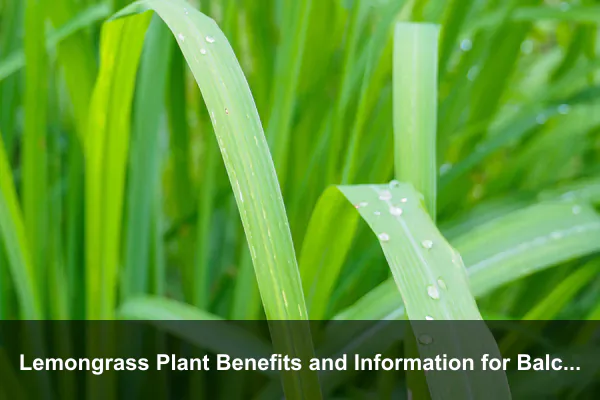
Lemongrass is often introduced as a kitchen herb, but its real value becomes even clearer when space is limited. A single healthy clump can soften a balcony corner, supply aromatic stalks for cooking, add movement to a patio, and create a practical green screen without requiring a full garden bed. This guide to Lemongrass plant benefits and information focuses on a distinct small-space angle: how to use lemongrass as a productive, attractive, container-grown herb for balconies, patios, terraces, and sunny doorways.
Known botanically as Cymbopogon citratus, lemongrass is a tropical perennial grass with long blade-like leaves and firm, citrus-scented lower stalks. In many Southeast Asian kitchens, including Indonesian cooking where it is commonly known as serai, the plant is valued for its clean lemony aroma in soups, curries, grilled dishes, teas, and broths. From a plant-benefits perspective, lemongrass is useful because it combines food value, fragrance, ornamental texture, and low-waste harvest potential in one plant.
This article does not treat lemongrass as a miracle cure or a decorative afterthought. Instead, it explains how to grow it intelligently in containers, how to harvest it without exhausting the clump, how to use it safely, and how to design with it when every square foot matters. If you want a herb that looks like a small ornamental grass but works hard in the kitchen, lemongrass deserves serious consideration.
Why Lemongrass Belongs in Balcony Pots and Patio Corners
A Grass That Looks Decorative and Stays Useful
Lemongrass has a fountain-like form that makes it visually useful even before you harvest a single stalk. The leaves rise from a tight base, arch outward, and catch light in a way that softens hard balcony surfaces such as concrete, railings, tiles, and walls. Unlike many herbs that look sparse after repeated cutting, lemongrass keeps a full grassy silhouette when harvested properly from the outer stalks.
This makes it especially valuable for small homes where plants must earn their space. A pot of lemongrass can sit beside a chair, near an outdoor cooking area, or along a railing and still look intentional. It can serve as edible landscaping in miniature: not a whole border or garden bed, but a compact living accent with real culinary purpose.
Good Output From a Small Footprint
Many herbs give you leaves. Lemongrass gives you both aromatic leaves and thicker lower stalks. The leaf blades can be steeped for light herbal infusions, while the pale lower stems are the prized kitchen part. A mature container plant may produce enough stalks for regular home cooking without taking over the balcony, provided the pot is large enough and the plant receives strong sun.
Because lemongrass grows in clumps rather than vines, it is easier to manage in a rental or small-space setting than sprawling herbs. It does not need a trellis, does not drop heavy fruit, and can be moved when the weather changes. That mobility is one of the main benefits of growing lemongrass in containers rather than planting it permanently in the ground.
Lemongrass Plant Benefits for Small-Space Homes
The benefits of lemongrass are practical, layered, and best understood in context. It is not only a flavoring plant and not only a scented grass. In a small outdoor area, it can support cooking habits, sensory comfort, layout planning, and greener daily routines.
- Culinary value: Fresh stalks add bright citrus flavor to soups, rice dishes, marinades, stir-fries, sauces, and herbal drinks.
- Aromatic value: The leaves and stems release a fresh lemony scent when cut, bruised, or brushed by hand.
- Visual value: The upright grassy form adds height and movement without needing flowers.
- Space value: One pot can act as a herb source, privacy accent, and patio softener at the same time.
- Low-waste value: Outer stalks can be harvested as needed, and trimmings can often be used for infusions or compost.
- Beginner value: In warm, sunny conditions, lemongrass is forgiving compared with many delicate leafy herbs.
Fresh Flavor Without a Large Garden
One of the strongest lemongrass plant benefits is flavor access. Store-bought stalks are useful, but they often dry out quickly and may lose aroma after transport and storage. A living plant lets you cut only what you need. This is especially helpful if you cook Asian-inspired meals, brothy soups, grilled seafood, tofu dishes, coconut milk curries, or fresh herbal teas.
The flavor is strongest in the firm lower stalk, especially the pale swollen base. The upper leaves are tougher and more fibrous, but they still carry scent and can be tied into bundles for simmering or steeping. Growing your own plant helps you understand which part works best for each use.
Sensory Comfort Without Heavy Fragrance
Lemongrass has a clean aroma, but it is not constantly perfuming the air like a strong flower. This makes it suitable for people who like fresh plant scent but do not want an overpowering fragrance near seating areas. The scent appears most when the leaves are touched, cut, or moved by a breeze. In small patios, that controlled fragrance can feel more pleasant than heavily scented ornamentals.
It is important to stay realistic, though. A potted lemongrass plant is not a guaranteed mosquito shield. The plant contains aromatic compounds, including citral, but simply placing a pot outdoors should not be treated as reliable insect control. Its stronger everyday benefit is sensory freshness, not pest-proofing.
A Movable Screen for Flexible Living
Balconies often need softness and privacy, but permanent screens can feel heavy or may be restricted by building rules. Lemongrass offers a living alternative. Several pots placed in a row can blur a railing view, frame a seating nook, or separate a cooking corner from a resting area. Since the pots can be shifted, the layout remains flexible.
This is a useful strategy for renters. Instead of installing fixed structures, you can create a green edge with containers. If light changes by season or if a storm is expected, the plants can be moved to a safer position.
Basic Lemongrass Plant Information at a Glance
Before choosing a pot or planning harvests, it helps to understand the basic nature of the plant. Lemongrass is a warm-season grass, not a woody shrub. It grows from a tight base, produces multiple stalks, and responds well to regular moisture, sunlight, and selective cutting.
- Botanical name: Cymbopogon citratus
- Plant type: Tropical perennial grass, often grown as an annual in cooler climates
- Main usable parts: Lower stalks, leaf blades, and aromatic trimmings
- Best light: Full sun or very bright direct light
- Best soil: Loose, fertile, well-draining potting mix
- Growth habit: Clumping, upright, grassy, and fast in warm weather
- Main challenge in pots: Preventing drought stress, root crowding, and cold damage
Growth Habit and Mature Size
In ideal tropical conditions, lemongrass can become a large clump. In containers, size depends on pot volume, feeding, water, sunlight, and how often you harvest. A small pot may keep the plant compact, but it also limits stalk thickness. A larger pot gives roots room to produce stronger stems and more stable top growth.
For balcony use, the goal is not necessarily to grow the biggest possible clump. The goal is balance: enough root space for healthy stalks, enough height for visual value, and a container that can still be moved if needed. This is why container choice matters so much.
Climate and Seasonal Behavior
Lemongrass loves warmth. In frost-free climates, it can behave like a perennial and continue producing for several years with division and renewal. In cooler regions, it may need to be grown as a summer container herb and protected indoors before cold nights arrive. Cold, wet soil is one of the fastest ways to weaken the plant.
If your balcony has hot reflected light from walls or pavement, lemongrass may handle it better than many soft leafy herbs, as long as the pot does not dry out completely. In windy high-rise balconies, however, leaf tips may brown from moisture loss. The plant is tough, but container roots still need consistent care.
Choosing the Right Pot, Soil, and Location
Pot Size for Productive Stalks
For a young lemongrass start, a medium pot may work temporarily, but a productive plant needs room. A container around 12 to 16 inches wide is a practical starting point for one strong clump. If you want thicker stalks and a fuller screen effect, choose a larger tub or planter. The pot should have drainage holes, a stable base, and enough weight to resist tipping when the leaves catch wind.
Avoid tiny decorative pots for long-term growth. Lemongrass may survive in them for a while, but the stalks usually stay thin, the plant dries quickly, and the roots become crowded. If the plant must be moved often, use a lightweight potting mix and place the container on a rolling plant caddy.
Soil Mix That Holds Moisture Without Staying Soggy
Lemongrass likes steady moisture, but it does not want stagnant soil. A high-quality potting mix with compost or organic matter works well. The mix should feel loose and airy, not dense like garden clay. If your potting mix stays wet for many days, improve drainage with coarse material recommended for container growing. If it dries within hours, add compost-rich mix or use a larger pot.
The best soil balance is simple: moist enough to support fast grassy growth, open enough to let oxygen reach the roots, and fertile enough to replace nutrients removed during harvest. In containers, the plant cannot search widely for food and water, so the potting environment must do more work.
Light, Heat, and Wind Placement
Place lemongrass where it receives at least six hours of direct sun when possible. Morning to afternoon sun is ideal. In very hot climates, a little late-afternoon shade can reduce stress, especially if the plant sits against heat-reflective walls. On a shaded balcony, lemongrass may stay alive but become floppy, pale, and less flavorful.
Wind is another major small-space factor. Tall balconies can be dry and gusty. Position the pot where it gets air movement but not constant harsh wind. A corner, railing cluster, or group of companion pots can create a better microclimate. If leaf edges dry repeatedly, the plant may need a larger water reservoir, more frequent watering, or a less exposed location.
Daily and Weekly Care Routine for Healthy Container Lemongrass
Lemongrass care is not complicated, but container plants depend on routine. The more sun and heat the plant receives, the faster water moves through the leaves and soil. A simple weekly rhythm prevents most problems.
- Check soil moisture: Water when the top layer feels dry but before the whole pot becomes bone dry.
- Water deeply: Apply water until excess drains from the bottom, then empty saucers so roots are not sitting in water.
- Feed during active growth: Use a balanced organic fertilizer or compost-based feeding approach during warm months.
- Remove dry leaves: Trim brown, damaged, or old blades to improve airflow and appearance.
- Rotate the pot: Turn the container every week or two so growth stays even on balconies with one-sided light.
- Watch for crowding: If water runs straight through or growth slows despite good care, the roots may need more space.
Watering Without Guesswork
The best watering schedule depends on pot size, weather, season, and wind. Instead of watering by calendar alone, use the finger test. If the top inch of mix is dry and the pot feels lighter, water thoroughly. During hot weather, container lemongrass may need water daily. During cooler or cloudy periods, it may need far less.
Underwatered lemongrass often shows curled leaves, dry tips, dull color, and slowed growth. Overwatered lemongrass may yellow, smell sour at the soil line, or feel loose at the base. Good drainage makes watering easier because you can water deeply without trapping the roots in stale moisture.
Feeding for Stalk Strength
Because lemongrass is a leafy grass harvested for growth, it appreciates nutrients during the active season. A gentle, balanced fertilizer applied according to label directions can support stronger stalks. Compost tea, worm castings, or slow-release organic fertilizer may also fit a low-waste balcony routine.
Do not overfeed in an attempt to force fast growth. Excess fertilizer can produce weak, overly lush leaves and may build up salts in containers. If you see crusty deposits on the soil surface or leaf tip burn after feeding, flush the pot with clean water and reduce fertilizer strength.
Trimming for Shape and Airflow
Regular grooming keeps container lemongrass attractive. Use clean scissors or pruners to remove dry leaves near the base. Wear gloves if the leaf edges irritate your skin, because lemongrass blades can be sharp. Do not shave the whole plant down repeatedly unless you are renewing it. Selective trimming keeps the plant productive and maintains the graceful form that makes it useful as patio greenery.
Harvesting Lemongrass for Fresh Everyday Use
When to Harvest
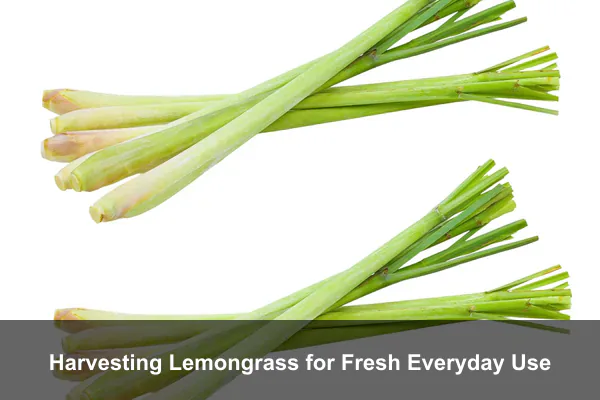
Harvest lemongrass once the plant has several mature stalks and the lower stems are thick enough to use. The best stalks are usually on the outside of the clump. They should feel firm near the base and show a pale swollen lower section. Very young shoots can be aromatic, but they are often too thin to justify cutting if the plant is still establishing.
For a container plant, harvest lightly and often rather than taking the whole clump at once. This keeps the plant balanced and gives inner shoots time to develop. If you need a larger harvest for freezing or cooking, follow it with good watering and a short recovery period.
How to Cut or Pull Stalks Cleanly
To harvest, hold an outer stalk near the base and cut it close to the soil line with a clean knife, or twist and pull gently if the plant is loose enough. Remove the tough outer layers, trim the dry top, and use the tender lower portion for cooking. The upper leaves can be saved for infusions, simmering bundles, or compost if they are too fibrous.
Clean tools matter. Since container plants grow close to living spaces and food prep areas, avoid dirty blades that may introduce rot or contamination. After cutting, keep the pot tidy by removing scraps from the soil surface.
Kitchen Uses That Fit Everyday Cooking
Fresh lemongrass is versatile, but it is fibrous. In many dishes, it is bruised, sliced, or smashed to release aroma and then removed before eating. For finer preparations, the tender inner core can be minced very thinly.
- Add bruised stalks to coconut soups, vegetable broths, chicken soup, or seafood stock.
- Slice tender cores finely for curry pastes, sambal-style blends, marinades, and stir-fry bases.
- Steep clean leaves with ginger for a simple herbal drink.
- Use stalks to perfume rice water, poaching liquids, and steaming packets.
- Blend with garlic, shallot, lime, and chili for a bright grilling marinade.
For storage, wrap fresh stalks and keep them in the refrigerator for short-term use, or freeze cleaned sections for later cooking. Freezing changes texture but preserves enough aroma for simmered dishes. This helps prevent waste when the plant produces more than you can use immediately.
Wellness Value and Safe Use: What Lemongrass Can and Cannot Do
Lemongrass is widely used in traditional food and herbal routines, and its bright aroma is associated with freshness, comfort, and digestion-friendly meals. However, a responsible article about lemongrass plant benefits and information should separate everyday plant value from medical claims. Lemongrass can be part of a healthy kitchen and calming garden routine, but it should not be promoted as a treatment for disease.
The plant contains aromatic compounds, including citral, that contribute to its lemon-like scent. Drinking mild lemongrass tea or using the stalks in food is common in many cultures. Still, concentrated extracts, supplements, and essential oils are different from normal culinary use and require more caution.
- Use food amounts first: Cooking with stalks or making mild tea is very different from taking concentrated extracts.
- Avoid essential oil ingestion: Lemongrass essential oil should not be swallowed unless supervised by a qualified professional.
- Dilute for skin use: Essential oil can irritate skin and should be properly diluted before topical application.
- Be cautious during pregnancy or breastfeeding: Ask a healthcare professional before medicinal use.
- Consider medication interactions: People managing blood pressure, blood sugar, liver conditions, or chronic illness should seek medical guidance before frequent therapeutic use.
- Watch for allergies: Stop use if irritation, rash, digestive upset, or breathing symptoms occur.
Pet and Child Awareness
If you share your home with pets or young children, place lemongrass where it will not be chewed heavily or pulled over. The leaves can have sharp edges, and large amounts of plant material may upset pets. A sturdy pot is also important because a mature clump can become top-heavy. For family spaces, choose stable containers, avoid chemical sprays, and label the plant if children help with harvesting.
Design Ideas for Balcony, Patio, and Doorway Planters
Create a Soft Privacy Line
Place three matching pots of lemongrass along a railing to create a soft, movable privacy line. This works especially well where a solid screen would feel too heavy. The leaves filter views rather than blocking them completely, which keeps the space open and airy.
Build a Fresh Cooking Corner
Position lemongrass near other sun-loving culinary plants such as basil, chili, rosemary, or compact citrus if your climate allows. Keep enough spacing for airflow and harvest access. A cooking corner like this makes fresh ingredients visible, which often encourages more frequent use.
Use Height Without Permanent Structures
Many balcony plants stay low, leaving the space visually flat. Lemongrass adds height without needing a trellis or wall attachment. Pair it with lower herbs or edible flowers in separate pots to create layers. Avoid crowding too many plants into one container, because lemongrass roots are competitive and need room.
Keep the Layout Rental-Friendly
For renters, the best plant designs are reversible. Use freestanding pots, saucers that protect flooring, and rolling caddies for large containers. Do not let water drain onto neighboring balconies. A well-managed lemongrass pot can make a rented outdoor space feel more personal without making permanent changes.
Troubleshooting Common Container Problems
Most lemongrass problems in pots come from a mismatch between sunlight, water, root space, and temperature. Reading the plant early helps you correct issues before the clump declines.
- Brown leaf tips: Often caused by dry wind, inconsistent watering, root crowding, or fertilizer salt buildup. Water deeply, check drainage, and trim damaged tips.
- Thin weak stalks: Usually linked to low light, small pots, or poor nutrition. Move the plant to brighter sun and consider repotting.
- Yellowing leaves: Can result from overwatering, poor drainage, cold stress, or nutrient deficiency. Check the soil before adding fertilizer.
- Floppy growth: Often caused by shade or one-sided light. Increase sun exposure and rotate the pot regularly.
- Slow growth after harvest: The plant may need recovery time, warmth, water, and feeding. Avoid heavy cutting until new shoots strengthen.
- Crowded clump: If the plant dries too fast or pushes against the pot edge, divide or move it to a larger container during warm weather.
Do not panic over a few dry leaves. Lemongrass naturally sheds older growth, especially in containers. The key is whether the center of the clump is producing healthy new shoots. If new growth is firm, green, and upright, the plant is usually recoverable.
Buying and Starting Lemongrass the Smart Way
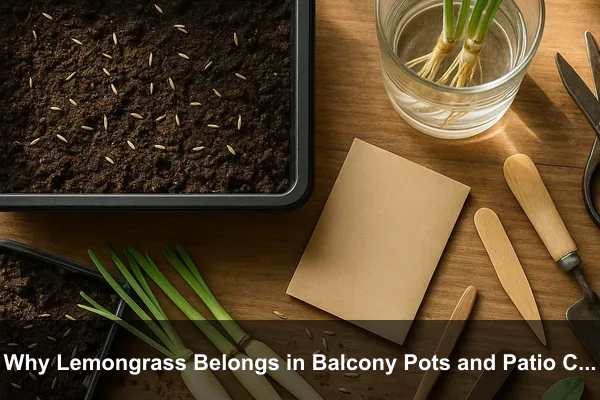
You can begin with a nursery plant, a rooted division, or sometimes fresh grocery stalks if they still have enough base tissue to root. For the fastest and most reliable balcony results, a healthy nursery start is usually easiest. Look for firm green growth, clean bases, no sour smell, and no mushy crowns.
If starting from grocery stalks, choose fresh thick stems with intact lower ends. Place them in clean water until roots begin, then pot them into a loose mix. This method can be rewarding, but not every store-bought stalk is viable. Once planted, give the young lemongrass bright light and gentle moisture while roots establish.
When buying for a small space, think beyond the plant itself. Choose the container at the same time, plan where water will drain, and decide how you will move the pot during storms or cold weather. Good setup prevents many of the problems people blame on the plant later.
Conclusion
Lemongrass is one of the most practical herbs for sunny small spaces because it offers several benefits at once. It gives fresh citrus flavor, adds graceful greenery, supports sensory comfort, and can create a soft patio screen without permanent construction. For anyone interested in plant benefits, this is a strong example of a useful herb that contributes to food, design, and daily routines.
The best results come from treating lemongrass as a vigorous container grass rather than a tiny windowsill herb. Give it a generous pot, strong sun, steady moisture, drainage, and selective harvests from the outer stalks. Use it freely in cooking, enjoy the aroma realistically, and approach wellness claims with common sense and safety in mind.
With the right setup, a balcony pot of lemongrass can become more than a plant you occasionally cut. It can be a living ingredient station, a soft green boundary, and a daily reminder that even a small home can support productive herbal growing.
