

Rose plant benefits and information often focus on flowers, fragrance, and garden beauty, but one of the most valuable angles is what happens before the first impressive bloom. A rose that is planted well, mulched correctly, watered with purpose, and supported through its first growing season becomes easier to care for, more productive, and more resilient in the long run. This guide takes a practical establishment-care approach, helping gardeners understand how roses build strong roots, balanced stems, and reliable seasonal performance.
Whether you are planting a bare-root rose, moving a young potted rose into the garden, or improving the conditions around an existing shrub, roses reward careful early decisions. Their benefits go beyond decoration: they support pollinators when chosen thoughtfully, provide cut flowers for the home, add structure to beds, and teach useful garden skills such as pruning, soil observation, irrigation timing, and disease prevention. The key is to treat the rose not as a demanding luxury plant, but as a long-lived flowering shrub with clear biological needs.
This article offers a distinct, beginner-friendly but detailed look at rose establishment: how to select a healthy plant, prepare the planting site, set the crown or graft union correctly, use mulch without causing rot, water during the first year, and guide growth without overfeeding. The result is a healthier plant that can deliver more of the classic rose plant benefits with fewer problems and less waste.
Why Establishment Care Matters for Rose Plant Benefits
The most visible benefit of a rose plant is its bloom, but the bloom is only the final result of a larger system. Roots must absorb water and nutrients, canes must mature, leaves must photosynthesize, and the plant must recover from weather changes, pruning, pests, and disease pressure. Establishment care is the period when these systems are built.
For most garden roses, the first year is less about forcing maximum flowers and more about helping the plant anchor itself. Strong establishment improves drought tolerance, reduces transplant shock, and supports steadier flowering in later seasons. It also makes maintenance easier because a vigorous rose can replace old wood, resist stress, and respond better to pruning.
Practical Benefits of a Well-Established Rose
- Better flowering potential: A strong root system supports repeat blooming and larger flower clusters over time.
- Improved garden structure: Healthy roses create dependable height, color, and seasonal rhythm in mixed beds.
- Lower stress care: Established roses usually need fewer emergency interventions than weak, shallow-rooted plants.
- More useful harvests: Gardeners who use roses for cut flowers, petals, or hips benefit from clean growth and steady production.
- Longer plant life: Correct planting depth, soil preparation, and watering reduce early decline.
Good establishment does not mean pampering the plant forever. It means giving the rose enough early support that it can become stronger and more self-sufficient as seasons pass.
Choosing the Right Rose Before Planting
Rose plant benefits and information should always begin with selection. A healthy start depends not only on your care routine, but also on choosing a rose that suits your space, climate, and maintenance style. A rose planted in the wrong location or chosen only for a flower photo may struggle even with attentive care.
Before buying, consider the mature size, disease resistance, growth habit, fragrance level, thorn density, bloom form, and local climate performance. A compact shrub rose may suit a front border, while a vigorous climber needs strong support and more room. A fragrant hybrid tea may be perfect for cutting, while a landscape shrub rose may be better for low-maintenance color.
Bare-Root Roses vs. Potted Roses
Bare-root roses are sold dormant without soil around the roots. They are often economical, easy to ship, and available in a wide range of varieties. Because they are planted while dormant, they can establish well if the roots are soaked, spread correctly, and protected from drying out.
Potted roses arrive with leaves, stems, and soil already in place. They provide an immediate visual impression and can be planted during a wider window, but they may also have circling roots, nursery soil that differs from your garden soil, or stress from being held too long in a container.
- Choose bare-root roses if you want broad variety selection and can plant during the dormant season.
- Choose potted roses if you want to see the plant’s active growth before buying or need a more flexible planting schedule.
- Avoid weak plants with shriveled canes, dry roots, blackened stems, severe leaf drop, or a sour smell from the root zone.
What a Healthy Young Rose Looks Like
A good rose plant has firm canes, a balanced shape, and a root system that appears alive rather than brittle. On bare-root roses, roots should be flexible and slightly moist. On potted roses, leaves should be reasonably clean and stems should not be crowded with dead material. A few blemishes are normal, but widespread spotting, sticky residue, or wilting should make you pause.
Preparing the Best Planting Site
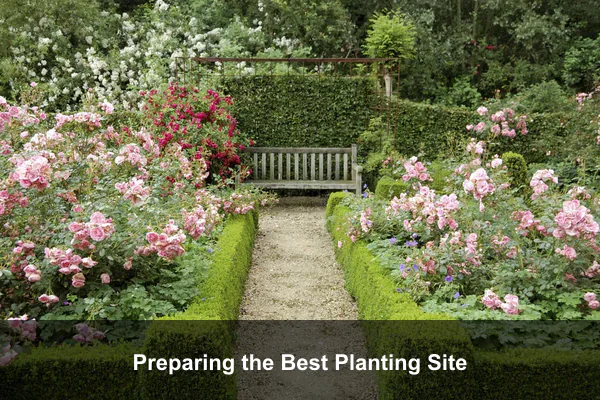
Roses perform best when planted in a site that matches their natural needs: sunlight, air movement, fertile but well-drained soil, and enough room for mature growth. The planting site determines how easily the rose can access energy and avoid disease pressure.
Most roses need at least six hours of direct sun daily. Morning sun is especially useful because it helps dry dew from leaves, reducing the damp conditions that many fungal diseases prefer. In very hot climates, light afternoon shade can protect blooms from scorching, but deep shade usually leads to weak stems and poor flowering.
Soil Texture and Drainage
Roses like soil that holds moisture without staying waterlogged. Heavy clay can suffocate roots if it drains poorly, while sandy soil may dry too quickly. The goal is not to create an artificial pocket of perfect soil, but to improve the broader planting area so roots can move outward naturally.
Before planting, loosen the soil wider than the root spread. Mix in mature compost if the soil is low in organic matter, but avoid excessive fertilizer in the planting hole. Too much concentrated nutrition can push soft top growth before the root system is ready to support it.
- Good drainage sign: Water soaks in steadily and does not remain pooled for hours.
- Compaction warning: Soil feels hard, shiny, or difficult to dig even when slightly moist.
- Organic matter benefit: Compost helps soil hold moisture, support microbial life, and improve structure.
Spacing for Airflow and Access
Spacing is a practical part of rose plant care. Crowded roses may look lush for a short time, but poor airflow encourages leaf diseases and makes pruning difficult. Leave enough space for the mature width of the variety, plus room to reach the plant for watering, inspection, and deadheading.
Good spacing also helps each rose maintain its own shape. When roses are forced to compete with nearby shrubs, walls, or aggressive perennials, they may stretch toward light or become thin at the base. A well-spaced rose looks more natural and is easier to keep healthy.
How to Plant Bare-Root and Young Potted Roses
Planting technique has a long-term effect on rose health. The most important details are root hydration, planting depth, soil contact, and early watering. Rushing this stage can cause transplant shock, dry roots, or a weak root-to-soil connection.
Planting a Bare-Root Rose Step by Step
- Soak the roots: Place the bare-root rose in water for several hours before planting so dry roots can rehydrate.
- Trim damaged roots only: Remove broken or dead root tips, but avoid unnecessary cutting of healthy roots.
- Dig a wide hole: Make the hole wide enough to spread roots outward without bending them sharply.
- Create a soil mound: Form a small mound in the center so the roots can fan down and out.
- Set the depth correctly: Position the crown or graft union according to local climate guidance. In colder regions, it is often planted slightly below soil level for winter protection. In mild regions, it may sit near or just above the soil line.
- Backfill gradually: Add soil around the roots, firming gently to remove large air pockets without compacting heavily.
- Water deeply: Soak the planting area to settle soil around the roots.
Planting a Potted Rose
For a potted rose, water the container before planting so the root ball holds together. Remove the plant carefully and inspect the roots. If roots circle tightly around the pot, loosen them gently so they can grow outward. Set the root ball at the same depth it was growing in the pot unless the plant was clearly planted too high or too low.
After planting, water thoroughly and check whether the soil has settled. Add more soil if needed, but do not bury the lower canes under a thick layer of wet soil. The aim is firm root contact and a stable plant, not a sunken basin that traps water against stems.
Mulch: A Simple Tool with Big Rose Plant Benefits
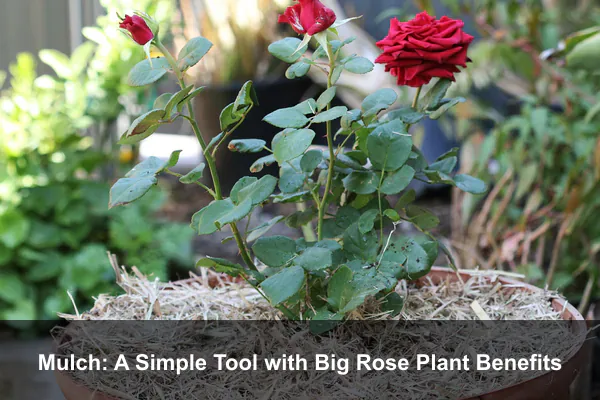
Mulch is one of the most useful tools in rose establishment because it supports moisture stability, moderates soil temperature, reduces weed competition, and protects soil structure. However, mulch must be applied correctly. Too much mulch pressed against stems can create damp conditions that encourage rot and pest hiding places.
Use organic mulch such as shredded bark, leaf mold, composted wood chips, pine straw, or well-aged compost. Apply a layer around the rose after watering, keeping a clear gap around the crown and canes. A mulch-free ring at the base helps air circulate and prevents constant wet contact.
How Mulch Helps Roses
- Moisture conservation: Mulch slows evaporation, especially during warm or windy weather.
- Weed reduction: Fewer weeds mean less competition for water and nutrients.
- Soil protection: Mulch reduces crusting and erosion from heavy rain.
- Temperature buffering: Roots experience fewer sharp changes between hot days and cool nights.
- Organic improvement: As natural mulch breaks down, it contributes to soil life and texture.
Mulch Mistakes to Avoid
The most common mistake is piling mulch like a mound against the plant base. This traps moisture around the stems and may encourage disease. Another mistake is using fresh, undecomposed material in a thick layer that temporarily ties up nitrogen near the surface. Keep mulch moderate, airy, and renewed as needed rather than applying one heavy layer and forgetting it.
Watering Roses During the First Year
New roses need consistent moisture while roots expand into the surrounding soil. This does not mean daily shallow watering. Shallow watering keeps roots near the surface, where they dry quickly and become more vulnerable to heat. Deep, less frequent watering encourages roots to grow downward and outward.
The right schedule depends on weather, soil type, plant size, and rainfall. A newly planted rose in sandy soil during hot weather may need water more often than a rose in moisture-retentive loam during cool spring conditions. Instead of following a rigid calendar, check the soil several inches down. If it is dry at root depth, water deeply.
Best Watering Practices
- Water at the base of the plant rather than spraying leaves whenever possible.
- Water early in the day so any splashed leaves can dry quickly.
- Use a slow soak to reach the root zone instead of quick surface watering.
- Increase attention during heat waves, dry winds, and the first bloom cycle.
- Reduce watering if soil stays soggy or leaves yellow from poor root oxygen.
Drip irrigation or a slow hose trickle can be very effective for roses because it delivers water directly to the soil. If using overhead watering, do it early and avoid creating long periods of wet foliage.
Signs of Water Stress
A thirsty rose may show drooping new growth, dull leaves, crispy edges, or smaller flowers. An overwatered rose may show yellowing leaves, soft growth, root decline, or a sour smell from wet soil. Because symptoms can overlap, always check the soil before deciding the plant needs more water.
Feeding Young Roses Without Overdoing It
Fertilizer can support rose growth, but it should not replace good soil preparation, proper watering, and sunlight. A newly planted rose needs root establishment first. Heavy feeding too early may produce tender stems that attract pests or suffer in heat and wind.
Once the rose begins active growth, use a balanced rose fertilizer, compost, or organic plant food according to label directions. More is not better. Overfertilizing can burn roots, increase disease-prone growth, and create nutrient imbalance.
When to Feed
In many climates, feeding begins in spring after new growth is visible. Repeat-blooming roses may benefit from light feeding after the first flush of flowers, while once-blooming roses usually need less frequent feeding. Stop feeding late in the season so new soft growth does not enter cold weather immature.
Soil Health Comes First
Healthy soil supports roses more reliably than repeated quick fixes. Compost, mulch, and careful watering encourage soil organisms and better structure. If roses repeatedly struggle despite good care, consider a soil test to identify pH issues or nutrient deficiencies before adding random amendments.
First-Year Pruning and Training
Pruning is often presented as complicated, but first-year pruning is mostly about removing damaged material and guiding balanced structure. Newly planted roses should not be heavily cut again and again. They need leaves to produce energy and roots to support future growth.
Remove dead, broken, crossing, or diseased stems with clean tools. For grafted roses, remove any shoots that arise from below the graft union because they may come from the rootstock rather than the chosen variety. For own-root roses, new basal shoots are usually valuable and should be protected.
Encouraging a Strong Shape
As the rose grows, aim for an open structure that allows light and air to reach the center. This reduces disease pressure and makes flowers easier to see. For shrub roses, maintain a natural rounded form. For climbing roses, tie main canes gently to a support and allow side shoots to produce flowers.
- Use sharp, clean pruners to avoid crushing stems.
- Cut just above an outward-facing bud when shaping is needed.
- Remove spent flowers if the rose is a repeat bloomer and you want more bloom cycles.
- Leave some flowers to form hips if wildlife value or seasonal interest is a priority.
Common Establishment Problems and Simple Fixes
Even well-planted roses may face stress during the first year. The goal is not perfection, but early recognition. Most rose problems become easier to manage when caught before they spread or weaken the plant.
Transplant Shock
Transplant shock may appear as wilting, paused growth, or leaf drop after planting. Keep soil evenly moist, protect the plant from extreme heat if possible, and avoid heavy fertilizer until growth resumes. A rose that looks quiet above ground may still be building roots below.
Black Spot and Leaf Diseases
Leaf spotting is common in humid climates. Improve airflow, avoid wetting leaves late in the day, remove fallen diseased leaves, and choose resistant varieties when possible. Healthy establishment reduces stress, but disease-resistant genetics are also important.
Aphids and Soft New Growth
Aphids often gather on tender shoots and buds. A strong spray of water, hand removal, or support for beneficial insects can reduce light infestations. Avoid excessive nitrogen, which can encourage lush soft growth that aphids prefer.
Poor Flowering
A young rose may flower lightly while establishing. Check sunlight first, then watering, pruning, and feeding. Too much shade, drought stress, or overpruning can all reduce bloom. Some roses also need maturity before showing their best performance.
Using Roses in a Plant Benefits Garden
Roses fit naturally into a plant benefits garden because they combine beauty, ecological value, practical harvests, and long-term learning. They can serve as focal plants, border shrubs, pollinator resources, teaching plants, or seasonal cut-flower sources. Their value increases when they are integrated with companion plants and thoughtful maintenance.
Pair roses with plants that enjoy similar conditions and do not crowd their roots. Lavender, catmint, salvia, alliums, yarrow, and low ornamental grasses can complement roses visually while helping create a diverse planting. Keep companions far enough away that rose airflow and access remain easy.
Design Ideas for Established Roses
- Mixed flower border: Combine roses with perennials for layered bloom and texture.
- Kitchen garden edge: Use compact roses near herbs for beauty and pollinator activity.
- Entry garden: Plant fragrant or colorful roses where visitors can enjoy them up close.
- Cut-flower corner: Grow productive repeat bloomers where harvesting is convenient.
- Wildlife-aware bed: Choose single or semi-double roses that offer easier access for pollinators.
The best rose design is not only attractive on the day of planting. It remains accessible for watering, pruning, mulching, and seasonal cleanup. Practical access is part of lasting beauty.
Seasonal Establishment Calendar
A simple seasonal rhythm helps gardeners care for roses without overreacting. Climate varies, so adjust timing to local conditions, but the following framework works for many temperate gardens.
Late Winter to Early Spring
- Plant bare-root roses while dormant and soil is workable.
- Prune established roses before strong new growth begins.
- Refresh mulch after the soil starts warming, keeping mulch away from stems.
- Check irrigation tools before dry weather arrives.
Spring to Early Summer
- Watch for new growth and water consistently as roots develop.
- Feed lightly once active growth is underway.
- Monitor aphids, leaf spots, and cane damage.
- Deadhead repeat bloomers after flowers fade.
Mid to Late Summer
- Water deeply during dry periods.
- Maintain mulch depth without piling it against the crown.
- Avoid heavy pruning during heat stress.
- Pause feeding late enough to prevent tender late-season growth.
Autumn to Early Winter
- Remove diseased fallen leaves from around roses.
- Allow some hips to form if desired.
- Protect young roses in cold climates with appropriate winter measures.
- Review what performed well and what needs adjustment next season.
Safety, Pets, and Responsible Rose Care
Roses are widely grown around homes, but responsible care still matters. Thorns can scratch skin, so gloves are useful during planting and pruning. When using fertilizers, pest controls, or disease products, follow label directions and store products safely away from children and pets.
If harvesting petals or hips for home use, only use roses that have not been treated with unsafe chemicals. Avoid using florist roses or unknown sprayed roses for food or tea. For edible use, correct identification and clean growing practices are essential.
Responsible rose care also includes avoiding unnecessary chemical use. Many minor pest issues can be managed through water sprays, pruning, airflow, sanitation, and variety selection. When intervention is needed, choose the least disruptive option that fits the problem.
Conclusion
Rose plant benefits and information become more useful when viewed through the full life of the plant, not just the bloom. A rose that is chosen well, planted at the right depth, watered deeply, mulched properly, and guided through its first year can become a durable and rewarding part of the garden. Establishment care builds the foundation for stronger roots, healthier canes, better flowers, and easier long-term maintenance.
The most successful rose growers are observant rather than hurried. They check soil before watering, feed with restraint, keep mulch away from stems, prune for health, and choose varieties suited to their conditions. With these habits, roses can offer lasting beauty, practical harvests, pollinator value, and a richer connection to seasonal gardening.
