

Snake plant is often introduced as an easy houseplant, but one of its most useful roles is less discussed: it can help organize open indoor spaces without adding bulky furniture. In studio apartments, shared family rooms, home offices, and compact living areas, the upright leaves create a clean visual boundary while keeping the room airy and low-maintenance.
This guide to Snake Plant plant benefits and information focuses on a unique angle: using snake plant as practical indoor structure. Instead of treating it only as decor, you can use it to soften corners, guide movement, separate functions, and bring the calming value of greenery into modern open-plan homes.
Why Snake Plant Works Well for Open-Plan Indoor Living
Snake plant, commonly known as Sansevieria or Dracaena trifasciata, has stiff, sword-shaped leaves that grow upward rather than spreading widely. This growth habit makes it different from trailing plants, wide palms, or leafy shrubs. It gives height without taking much floor space, which is exactly what many open-plan rooms need.
In an open layout, furniture often defines zones: a sofa marks the living area, a dining table anchors meals, and a desk signals work. Snake plant can support these zones visually. A tall pot beside a console, shelf, or room divider helps the eye understand where one area ends and another begins.
Vertical Leaves Add Structure Without Visual Weight
The leaves are narrow, upright, and architectural. This means they can create a soft divider without blocking light, airflow, or movement. For small homes, that is a major benefit because solid partitions can make rooms feel smaller.
It Fits Modern, Minimal, and Natural Interiors
Snake plant works with many interior styles. Dark green varieties feel calm and classic, variegated types add brightness, and compact cultivars suit tabletops or shelves. The plant looks intentional even when used sparingly.
Key Snake Plant Benefits for Room Zoning and Daily Comfort
The main benefits of snake plant go beyond appearance. It offers practical value for people who want indoor greenery that supports everyday routines without becoming difficult to manage.
- Space-saving greenery: Upright growth makes it useful in narrow gaps, beside furniture, or near transition areas.
- Low-water needs: Thick leaves store moisture, so the plant does not need frequent watering.
- Low-mess habit: It does not shed many leaves compared with some delicate houseplants.
- Flexible light tolerance: It can adapt to bright indirect light and moderate indoor light.
- Calming visual effect: Strong green lines can make a room feel more finished and restful.
For realistic indoor wellness, think of snake plant as a supportive element, not a miracle solution. It may contribute to a greener, more pleasant space, but it should not replace ventilation, cleaning, or an actual air purifier when those are needed.
Practical Snake Plant Information Before You Design With It
Before placing snake plant as a design feature, it helps to understand how it grows. The plant is slow to moderate growing indoors and prefers being left alone more than being constantly adjusted. This makes it suitable for people who want stable greenery in a fixed location.
Best Light Conditions
Snake plant performs best in bright, indirect light, but it can tolerate lower light better than many houseplants. In very dim rooms, growth becomes slower and variegated colors may fade. If your goal is a strong room-zoning display, give it enough light to keep the leaves upright and healthy.
Best Pot and Soil Setup
A heavy pot is useful for tall snake plants because the leaves can make the plant top-heavy. Choose a container with drainage holes and use a well-draining potting mix. A cactus or succulent-style mix often works well because it reduces the risk of soggy roots.
Growth Habit and Size
Some snake plants stay compact, while others can grow several feet tall indoors. For floor-level zoning, choose taller varieties. For shelves, counters, or desk edges, use smaller cultivars that will not overpower the surface.
How to Place Snake Plant for Visual Boundaries Without Clutter
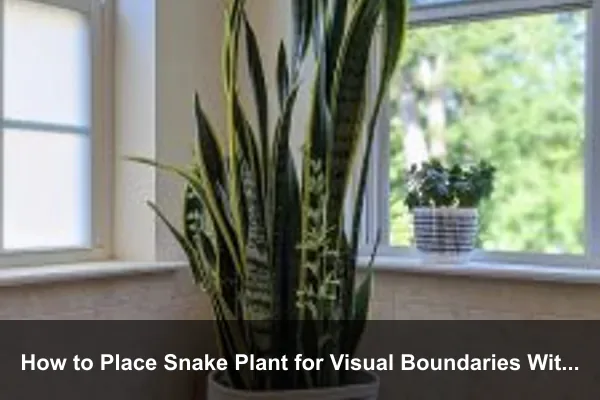
The best placement depends on what you want the plant to do in the room. Instead of scattering pots randomly, treat snake plant like a design tool. Place it where the room naturally changes function.
- Beside a desk: A tall snake plant can separate work space from living space without closing off the room.
- Near a sofa arm: It can create a soft endpoint for a seating area.
- Behind a dining chair line: A row of two or three pots can suggest a dining zone in an open room.
- Next to storage furniture: It helps shelves, cabinets, and consoles look integrated rather than heavy.
- At a blank wall edge: It can turn unused vertical space into a clean green accent.
Avoid placing snake plant in the middle of a tight walkway. The leaves are firm and can be damaged by repeated bumps. Leave enough clearance so people can move naturally around the plant.
Single Plant or Grouped Display?
A single tall snake plant works well as a quiet marker. A grouped display feels stronger and is better for wide open rooms. If grouping plants, vary pot heights slightly but keep the containers visually related so the display feels organized.
Care Routine for a Room-Zoning Snake Plant Display
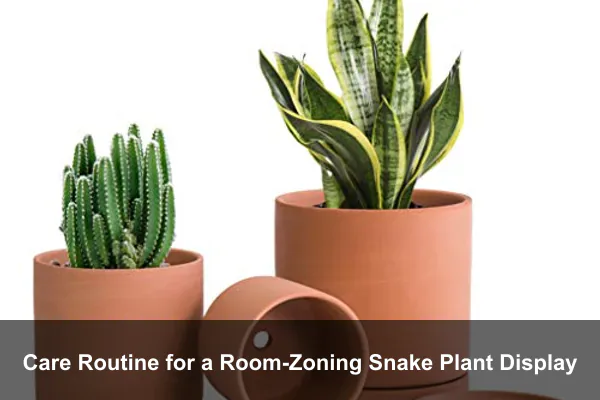
Snake plant care is simple, but room-zoning plants are often placed in visible locations, so appearance matters. A healthy plant should have firm leaves, steady color, and a stable pot.
Watering Rhythm
Water only when the soil has dried well below the surface. In many homes, this may mean every two to four weeks, depending on light, temperature, pot size, and season. The most common mistake is watering too often. Soft leaves, bad odor from soil, or a leaning base can be signs of root trouble.
Cleaning and Rotation
Dust can collect on the tall leaves, making the plant look dull. Wipe leaves gently with a soft damp cloth. Rotate the pot every few weeks so the plant receives light more evenly and does not lean strongly toward one side.
Repotting
Snake plant does not need frequent repotting. Repot when roots crowd the pot, the container cracks, or watering becomes difficult because the soil is mostly root mass. Choose a pot only slightly larger than the old one to avoid excess wet soil around the roots.
Safety, Myths, and Realistic Expectations
Snake plant is attractive and useful, but it should be placed responsibly. It is considered toxic if chewed by pets or children, so keep it out of reach in homes where nibbling is likely. The leaves are not meant for culinary or medicinal use.
It is also important to be realistic about indoor air claims. Snake plant is often associated with air quality discussions, but a few houseplants will not clean indoor air at the scale of ventilation or filtration. The stronger everyday benefits are visual comfort, low-maintenance greenery, and better use of space.
Common Misunderstandings
- Myth: Snake plant thrives anywhere. Reality: It tolerates many conditions, but it still needs suitable light and dry-down time.
- Myth: More water helps it grow faster. Reality: Overwatering is one of the fastest ways to damage it.
- Myth: It is only useful for bedrooms. Reality: Its upright form makes it valuable in living rooms, studios, offices, and shared spaces.
Buying Checklist for the Best Indoor Display
When buying snake plant for room zoning, choose for shape and stability, not only leaf color. A plant that looks balanced in the nursery will usually be easier to style at home.
- Look for firm leaves with no mushy areas at the base.
- Choose a size that matches the furniture height nearby.
- Check that the pot has drainage holes.
- Avoid plants sitting in wet, sour-smelling soil.
- Pick a heavier container for tall varieties in busy rooms.
If you want a clean visual boundary, two matching pots often look more intentional than several unrelated containers. For a softer, more natural look, mix one tall snake plant with a lower plant nearby, but keep enough space so each plant can be seen.
Conclusion: A Smart Structural Houseplant for Modern Homes
Snake plant is more than a tough houseplant. Its upright leaves, low-water needs, and strong visual lines make it especially useful for open-plan homes where people need gentle boundaries without heavy furniture. Used well, it can define a work corner, soften a living area, frame a dining space, or make an empty wall feel purposeful.
The best way to enjoy Snake Plant plant benefits and information is to stay practical. Give the plant bright to moderate light, let the soil dry between waterings, choose a stable pot, and place it where its shape can help the room function better. With those basics in place, snake plant becomes a long-lasting, low-effort part of a calmer and more organized indoor space.
