
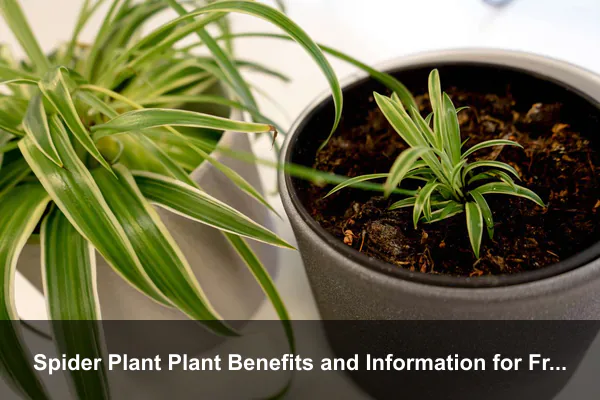
Spider Plant plant benefits and information are often discussed through easy care, baby plantlets, and basic indoor styling, but one of the most useful angles is quieter and more practical: the spider plant is a strong choice for homes that need fragrance-free, low-pollen greenery. Not every household wants scented flowers, essential oil diffusers, or high-maintenance tropical plants. Some people simply want fresh-looking foliage that fits into daily life without adding strong smells, messy blooms, or complicated routines.
The spider plant, botanically known as Chlorophytum comosum, suits that purpose well. It has arching leaves, a clean growth habit, and a forgiving nature that works for beginners, shared homes, apartments, offices, and family spaces. It can brighten a shelf, soften a work corner, or make a plain window area feel more alive without demanding constant attention. Its benefits are not magic, and they should not be overstated, but they are real when understood properly: visual comfort, approachable care, modest humidity support, space efficiency, and a gentler indoor plant option for people who dislike strong fragrance.
This guide looks at Spider Plant plant benefits and information through the lens of everyday indoor comfort. You will learn why it fits fragrance-sensitive spaces, what benefits are realistic, how to care for it without overcomplicating the routine, and how to keep it clean, healthy, and attractive over the long term.
Why Spider Plants Fit Fragrance-Free Homes
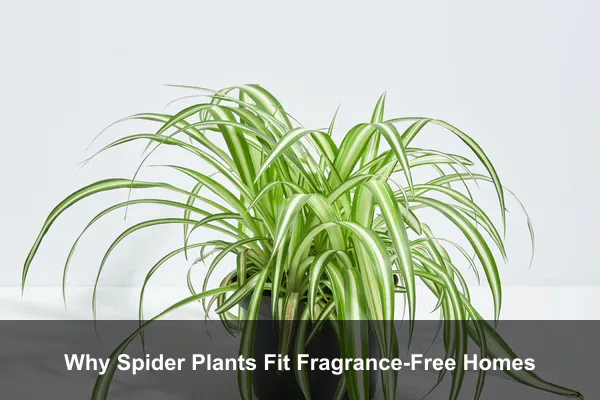
Many popular indoor plants are chosen for dramatic foliage, bold blooms, or aromatic leaves. The spider plant offers a different kind of value. It is visually fresh but not overpowering. It does not rely on scent to be attractive, and its small white flowers are usually subtle rather than showy. For households that prefer neutral indoor air, this matters.
A Gentle Plant for Scent-Sensitive Rooms
Some people find strong floral scents, scented candles, sprays, or oil diffusers uncomfortable. A spider plant gives the room a greener feeling without adding perfume. This makes it useful in bedrooms, reading areas, nurseries, home offices, therapy rooms, and shared spaces where different scent preferences can become a problem.
Because the plant’s main appeal comes from its striped leaves and flowing shape, it does not need fragrance to create atmosphere. The effect is clean, light, and calm. In the context of manfaat tanaman, or plant benefits, this is a practical benefit: it supports a more pleasant indoor environment without forcing a strong sensory experience.
Low-Pollen Appeal Without False Health Claims
Spider plants can flower, but indoors they are usually grown for foliage rather than abundant blossoms. They are not a heavy pollen feature in the way some flowering plants can be. That makes them appealing for people who prefer foliage plants over fragrant or pollen-rich indoor displays.
Still, it is important to be accurate. A spider plant is not a medical treatment for allergies, asthma, headaches, or indoor air problems. If someone has serious respiratory concerns, the main priorities are ventilation, cleaning, humidity control, and professional medical advice where needed. The spider plant’s role is supportive: it offers low-fragrance greenery that is easy to keep tidy.
Essential Spider Plant Information at a Glance
Before looking deeper at benefits, it helps to understand what the plant is and how it behaves. Spider plants are herbaceous perennials with long, narrow leaves that grow from a central crown. Many common varieties have green and white variegation, though all-green types also exist.
Basic Botanical Profile
- Common name: Spider plant, airplane plant, ribbon plant.
- Botanical name: Chlorophytum comosum.
- Plant type: Evergreen perennial commonly grown as a houseplant.
- Light preference: Bright, indirect light, with tolerance for moderate indoor light.
- Water preference: Even moisture with drying between waterings.
- Growth habit: Arching foliage with long stems that may carry small flowers and plantlets.
- Indoor value: Easy foliage, flexible placement, simple propagation, and fragrance-free greenery.
Common Looks and Leaf Patterns
Spider plants are often sold in variegated forms. Some have green leaves with white margins, while others have a white or creamy central stripe. Curly spider plants have twisting leaves that create a more compact, playful texture. All of these types share similar care needs, so choosing one is mostly a matter of space and style.
For a clean, bright look, variegated spider plants work well against wood, white walls, stone, and darker shelves. For a softer botanical look, all-green forms can blend into a larger indoor plant collection without drawing too much attention.
Realistic Spider Plant Benefits for Indoor Living
A helpful article about Spider Plant plant benefits and information should separate realistic benefits from exaggerated claims. The spider plant is valuable, but not because it single-handedly purifies a whole room or solves indoor air quality problems. Its best benefits are practical and cumulative.
Visual Freshness Without Visual Weight
The spider plant has a light, fountain-like shape. Unlike large broadleaf houseplants, it does not visually dominate a room. This makes it useful in small interiors where a tall plant might feel too heavy. The striped leaves add brightness, and the arching form introduces movement without clutter.
That visual softness can make hard indoor materials feel less severe. A spider plant on a shelf near electronics, books, tile, concrete, metal, or plain cabinetry helps break up straight lines. The result is a room that feels more balanced without needing complicated decor.
A Care Routine That Builds Confidence
One underrated benefit of spider plants is that they help beginners develop plant care confidence. They give visible feedback but are usually forgiving. If the leaves look pale, the plant may need better light. If the tips brown, water quality, dryness, fertilizer, or inconsistent care may be involved. If growth slows, the plant may need a seasonal adjustment.
This kind of feedback helps owners learn observation instead of guessing. A spider plant supports a simple rhythm: check the soil, look at the leaves, rotate the pot, remove dead tips if needed, and water only when appropriate. That routine can make indoor gardening feel manageable.
Pet-Friendly Reputation With Sensible Limits
Spider plants are widely considered a pet-safer houseplant choice compared with many toxic ornamental plants. This is one reason they remain popular in family homes. However, pet-safe does not mean snack-safe. Cats may be attracted to the long leaves, and chewing can still cause mild stomach upset or damage the plant.
For homes with curious pets, place the spider plant where it can trail attractively but not become a toy. Hanging planters, high shelves, or wall brackets can protect both the plant and the pet. Avoid chemical leaf shine products, harsh pest sprays, or decorative soil toppings that animals might disturb.
Flexible Value for Small Spaces
Spider plants do not need a large floor footprint. They can sit on a narrow ledge, hang near a bright window, or live in a compact pot on a desk. Their shape gives a generous green effect from a relatively small container. This is one of the most useful benefits for renters, students, and anyone living in a smaller home.
Where to Place a Spider Plant for Everyday Comfort
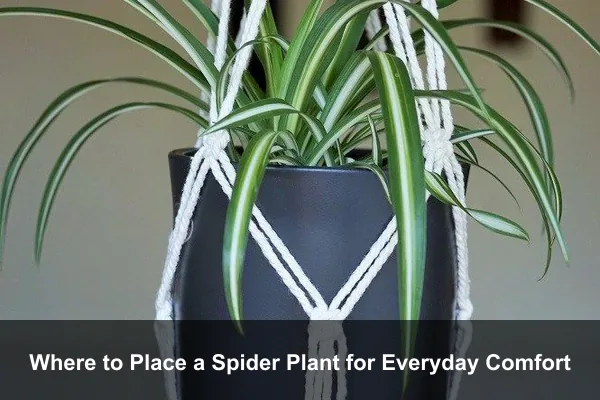
Placement affects both appearance and plant health. The goal is not to force the spider plant into the darkest available corner, but to find a spot where it can grow steadily while improving the feel of the room.
Best Light Zones
Bright, indirect light is ideal. A spider plant can handle some gentle morning sun, especially through a window that is not too hot. Harsh afternoon sun may scorch the leaves, especially the pale variegated sections. In lower light, the plant may survive but grow more slowly and produce fewer plantlets.
Good placement options include a shelf near an east-facing window, a hanging planter a short distance from a bright window, or a desk near filtered daylight. If the leaves stretch weakly or lose contrast, move the plant closer to natural light. If leaves bleach or crisp, move it back from direct sun.
Comfort-Oriented Placement Ideas
- Near a work area: Adds a living detail without strong scent or visual distraction.
- On a kitchen shelf: Brings freshness to a functional space, as long as heat and grease are avoided.
- In a reading corner: Softens the area without demanding much floor space.
- In a bathroom with light: May enjoy the extra humidity if airflow is adequate.
- In a hallway with borrowed light: Works if the area is not too dark and the pot is easy to check.
Places to Avoid
Avoid placing spider plants directly above heaters, beside air conditioners, against very cold windows, or in rooms with no natural light unless you use a grow light. Also avoid cramped spots where the leaves are constantly brushed, bent, or crushed. A spider plant looks best when its arching leaves have room to fall naturally.
Care Routine That Protects the Benefits
The benefits of a spider plant depend on keeping it healthy. A neglected plant with dusty leaves, sour soil, or dry brown edges will not create the same sense of comfort. Fortunately, spider plant care is straightforward when you follow a steady routine.
Watering Without Guesswork
Water when the top part of the potting mix has dried. Do not water by calendar alone, because drying speed changes with light, season, temperature, pot size, and soil type. In brighter months, the plant may need water more often. In cooler or darker months, it may need less.
Use room-temperature water and let excess drain away. Spider plants dislike sitting in soggy soil. If your tap water is high in salts, chlorine byproducts, or fluoride, you may notice brown tips. Filtered water, rainwater, or water left to sit overnight may help in some homes, though brown tips can also come from dry air, overfeeding, or inconsistent watering.
Soil and Pot Choice
A light, well-draining houseplant mix is usually enough. The pot should have drainage holes. Spider plants grow thick, fleshy roots that store water, so they appreciate oxygen around the root zone. Heavy, compacted soil increases the risk of root stress.
Repot when roots crowd the container, water runs straight through too quickly, or the plant dries out almost immediately after watering. Choose a pot only slightly larger than the current one. An oversized pot holds extra moisture and can create problems.
Feeding in Moderation
Feed lightly during active growth, usually spring and summer. A balanced houseplant fertilizer at reduced strength is often enough once a month or less, depending on the product and the plant’s growth. Too much fertilizer can cause tip burn and salt buildup. In fall and winter, reduce feeding or pause if growth slows.
Hygiene and Allergy-Aware Plant Habits
If your goal is fragrance-free, low-pollen indoor comfort, plant hygiene matters. Any houseplant can collect dust, develop soil mold, or attract pests if ignored. The spider plant is easy to maintain, but it still benefits from simple cleaning habits.
Keep Leaves Clean
Dusty leaves look dull and can reduce the plant’s ability to photosynthesize efficiently. Wipe leaves gently with a damp cloth or rinse the plant lightly in a sink or shower when practical. Let the foliage dry in a bright, airy spot afterward. Avoid oily leaf shine products because they can clog leaf surfaces and create unnecessary chemical residue indoors.
Prevent Musty Soil Smells
A healthy spider plant should not smell bad. If the potting mix smells sour, swampy, or musty, the soil is probably staying too wet. Check drainage, reduce watering, and consider repotting into a fresher mix if the roots are struggling.
To keep the pot clean and comfortable indoors, remove dead leaves from the soil surface, empty saucers after watering, and avoid packing decorative moss tightly over the soil. Airflow around the pot helps prevent stale conditions.
Use Gentle Pest Management
Spider plants are not usually difficult, but they can still attract pests such as spider mites, scale, or mealybugs. Inspect the undersides of leaves and the center crown when you water. If you catch pests early, a rinse, pruning of heavily affected leaves, or a gentle insecticidal soap used according to label directions may be enough.
For households avoiding strong smells, choose low-odor plant care methods first. Physical cleaning, isolation of affected plants, and improved growing conditions often solve minor problems before stronger products are needed.
Common Problems and Practical Fixes
Spider plants are forgiving, but they are not indestructible. Most problems come from water, light, soil, or indoor conditions. The key is to adjust gradually instead of changing everything at once.
Brown Leaf Tips
Brown tips are common and do not always mean the plant is dying. Possible causes include dry air, inconsistent watering, mineral-heavy water, fertilizer buildup, or old leaf age. Trim brown tips with clean scissors if appearance bothers you, following the natural angle of the leaf. Then review your routine.
- Flush the soil occasionally with clean water to reduce salt buildup.
- Use less fertilizer if tips appear after feeding.
- Check whether the plant is drying out too severely between waterings.
- Move it away from heating vents or harsh direct sun.
Pale or Faded Leaves
Pale leaves can be a sign of too much direct sun, too little light, or nutrient stress. If the white parts look scorched, reduce direct sunlight. If the whole plant looks weak and stretched, increase bright indirect light. Keep changes moderate and watch the plant for two to three weeks.
Limp Growth
Limp leaves may indicate underwatering, overwatering, root stress, or sudden temperature changes. Check the soil before watering again. If the mix is bone dry, water thoroughly and drain well. If it is wet and heavy, wait, improve airflow, and inspect the roots if the plant continues to decline.
No Plantlets
A spider plant that does not produce plantlets may simply be young, under low light, recently repotted, or receiving too much nitrogen. Plantlets are nice, but they are not required for the plant to be healthy. Prioritize strong leaves and roots first. Better light and steady care often encourage flowering stems over time.
How to Use Spider Plants in a Thoughtful Indoor Plant Collection
Spider plants combine well with many other houseplants because they are visually light and relatively undemanding. They can act as a soft connector between bolder plants, especially if your collection includes upright snake plants, broad philodendrons, or compact tabletop foliage.
Create Contrast Without Clutter
Use the spider plant’s arching shape against upright forms. A single hanging spider plant can make a plant corner feel complete without adding another large pot on the floor. In a mixed shelf, let the leaves spill down while sturdier plants provide structure.
Keep the Collection Easy to Maintain
A plant collection should not become a source of stress. Spider plants help because they are easy to divide, move, and refresh. If one becomes too large, you can repot it, divide it, or start a new plant from a plantlet. This makes it a practical choice for people who want greenery that can adapt as their home changes.
- Start with one healthy spider plant in bright indirect light.
- Observe how quickly the soil dries in your home.
- Clean the leaves monthly or whenever dust is visible.
- Rotate the pot so growth stays balanced.
- Propagate only when you have a clear place for the new plant.
Safety, Sustainability, and Buying Tips
Buying a spider plant is usually simple, but a careful choice saves trouble later. Look for firm leaves, active growth, and a pot that drains. Avoid plants with mushy crowns, sour-smelling soil, sticky residue, or widespread pest signs.
Choose Healthy Over Perfect
A few brown tips are not a serious problem, especially on older leaves. What matters more is the crown, root zone, and overall vigor. The leaves should feel flexible but not limp. The plant should sit securely in the pot, and the soil should not be waterlogged.
Think About Pot Materials
Plastic pots retain moisture longer and are lightweight for hanging planters. Terracotta breathes more and may help if you tend to overwater, but it dries faster. Ceramic cachepots look clean indoors, but the nursery pot inside still needs drainage. Never let the inner pot sit in standing water.
Keep Propagation Responsible
Spider plants are famous for making plantlets, but more plants are not always better. Propagate when you have a use for the new plant, a person to share it with, or a container ready. This keeps indoor gardening low-waste and prevents crowded windowsills filled with neglected cuttings.
Conclusion
Spider Plant plant benefits and information are most useful when presented realistically. This plant is not a miracle air purifier or a replacement for cleaning, ventilation, or proper health care. Its real strength is more practical: it offers fragrance-free foliage, a low-pollen indoor presence, beginner-friendly care, flexible placement, and a fresh visual quality that suits many homes.
For people who want indoor greenery without strong scent, heavy maintenance, or dramatic plant demands, the spider plant is a reliable choice. Give it bright indirect light, water only when the soil begins to dry, use a draining pot, clean the leaves occasionally, and avoid overfeeding. With that simple routine, the spider plant can become a long-lasting part of a calmer, cleaner-looking, and more comfortable indoor space.
