

If you are researching Snake Plant plant benefits and information, it is easy to find the same familiar claims: easy care, upright leaves, and possible indoor air support. This article takes a more specific and useful angle. Instead of treating the snake plant only as a decorative houseplant, it looks at why Dracaena trifasciata, formerly grouped with Sansevieria, is one of the best water-wise plants for people who want structure, longevity, and low-waste plant ownership.
The snake plant, also called mother-in-law’s tongue, is valued in the Manfaat Tanaman tradition because its benefits are practical. It saves space visually, tolerates dry indoor conditions, and can be propagated into new plants when it outgrows its pot. Used well, it is not just a corner filler. It becomes a durable part of a home routine, a vertical design element, and a confidence-building plant for beginners.
What Makes Snake Plant Different?
The snake plant stands apart because it combines tough leaves, slow growth, and strong architectural form. Its thick, sword-like foliage stores moisture, while its underground rhizomes help it recover from periods of neglect. This is why many people keep a snake plant for years, even when other indoor plants struggle with irregular watering or inconsistent light.
Botanical identity
Most common snake plants belong to Dracaena trifasciata, although many plant labels still use the older name Sansevieria trifasciata. Both names are widely recognized by growers, shops, and gardeners. The plant is native to parts of West Africa and has adapted to bright, dry conditions, which explains its firm leaves and patient growth pattern.
A built-in drought strategy
Snake plants use Crassulacean acid metabolism, often called CAM. This means the plant opens tiny pores mostly at night to reduce water loss. That feature does not make it a replacement for fresh air, cleaning, or ventilation, but it does explain why the plant handles dry rooms and forgetful watering better than many soft-leaved tropical houseplants.
Design Benefits: Strong Shape Without Visual Clutter

One of the most useful snake plant benefits is visual order. The leaves grow upward instead of sprawling outward, so the plant adds greenery without making a room feel crowded. This makes it especially effective in modern interiors, work corners, rental homes, and narrow entry areas where a broad plant would feel messy.
Because the foliage is upright and patterned, a snake plant can act almost like a living sculpture. The best results come from matching leaf shape and pot style rather than simply buying the largest plant available.
- For calm rooms: choose deep green varieties with subtle striping.
- For brighter interiors: use yellow-edged types such as Laurentii as a light accent.
- For minimal decor: pair a tall snake plant with a plain clay, stone, or matte ceramic pot.
- For grouped displays: place it behind softer plants to create height and contrast.
Water-Wise Benefits for Practical Homes
Snake plants are excellent for people who want indoor greenery without a heavy watering routine. Their main advantage is not that they never need care, but that they prefer restraint. Overwatering is more dangerous than underwatering, so the plant rewards a simple habit: wait until the soil is dry before watering again.
Why this matters
A water-wise houseplant lowers maintenance stress. It also reduces wasted potting mix, replacement plants, and constant troubleshooting. For beginners, this is important because success with one durable plant often builds the confidence needed to grow other plants later.
Best pot and soil combination
Use a pot with drainage holes and a fast-draining mix. A blend made for cactus or succulents usually works well, especially if it contains coarse particles such as pumice, perlite, or bark. Heavy, wet soil keeps moisture around the roots too long and can lead to rot.
Realistic Wellness Benefits Without the Hype
Snake plant benefits should be discussed honestly. A healthy plant can make a room feel calmer, greener, and more cared for, but no single plant can purify an entire home or replace good ventilation. The most reliable wellness value comes from the routine and environment it supports.
- Visual calm: upright leaves and steady green color can soften hard furniture lines.
- Routine building: checking soil moisture teaches observation without daily pressure.
- Cleaner habits: wiping leaves removes dust and keeps the plant looking fresh.
- Low-stress ownership: slow growth means less pruning, fewer emergencies, and fewer rushed decisions.
For people who enjoy plants but do not want a complicated collection, the snake plant offers a manageable way to bring nature indoors. Its benefit is steady presence, not dramatic performance.
Choosing the Right Snake Plant Type
Different snake plant varieties create different effects. The right choice depends on the mood, color, and height you want.
Popular choices
- Laurentii: tall green leaves with yellow margins, useful as a bright accent.
- Zeylanica: green patterned leaves with a softer, more natural look.
- Moonshine: pale silvery leaves that suit clean and simple interiors.
- Cylindrica: rounded spear-like leaves for a sculptural look.
- Golden Hahnii: compact rosette form for shelves, desks, or grouped planters.
When selecting a plant, inspect the base of the leaves. Choose firm foliage, dry soil, and no mushy smell. A plant with a few older marks can still be healthy, but soft, collapsing leaves usually point to root trouble.
Propagation and Long-Term Value
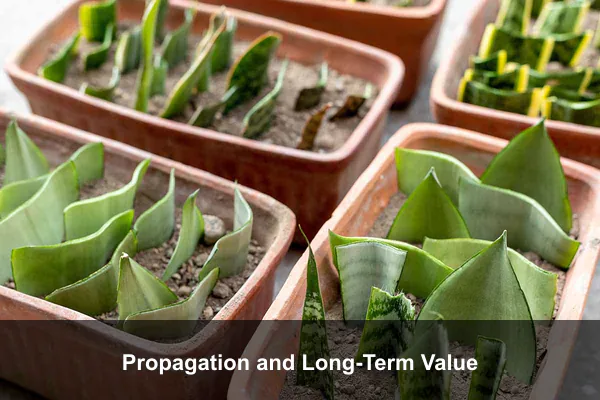
Propagation is where the snake plant becomes more than a purchase. A mature plant can be divided into several smaller plants, shared with friends, or used to refresh containers. This makes it a sustainable choice for households that want more greenery without constantly buying new plants.
Two common methods
- Division: remove the plant from the pot, separate sections with roots and rhizomes, then replant each section in fresh, well-draining soil.
- Leaf cuttings: cut a healthy leaf into sections, let the cut ends callus, then root them in soil or water.
Division is usually faster and more reliable. Leaf cuttings are satisfying, but they take longer and may not preserve yellow variegation. If you want a new plant that looks exactly like the parent, division is the better method.
Simple Care Rhythm That Protects the Plant
A snake plant does best with a light, consistent rhythm rather than frequent attention. Place it in bright indirect light if possible, though it can tolerate lower light. Water only after the soil has dried deeply. Rotate the pot occasionally so the leaves grow evenly toward the light.
Monthly care checklist
- Touch the soil before watering instead of following a fixed calendar.
- Wipe dusty leaves with a soft damp cloth.
- Check that the pot drains freely after watering.
- Look for leaning leaves, soft bases, or pests near the leaf joints.
- Repot only when the roots are crowded or the pot becomes unstable.
Fertilizer is optional and should be light. During active growth, a diluted houseplant fertilizer once or twice in the warm season is enough for most indoor snake plants.
Safety, Placement, and Common Mistakes
Snake plants contain compounds that can upset pets or children if chewed or swallowed. Keep the plant out of reach of curious cats, dogs, and young children. This does not mean the plant is dangerous to own, but placement matters.
Mistakes to avoid
- Overwatering: the most common cause of failure.
- No drainage: decorative cachepots should not hold standing water around the nursery pot.
- Oversized pots: too much soil stays wet for too long.
- Cold drafts: snake plants prefer stable indoor warmth.
- Constant rearranging: give the plant time to adjust before judging its growth.
If leaves wrinkle, the plant may be too dry. If leaves turn soft or yellow near the base, check for rot. Learning these signs is part of the value of growing snake plants: they teach patience and observation.
Conclusion
Snake Plant plant benefits and information are most useful when they move beyond generic claims. This plant is valuable because it is water-wise, long-lived, sculptural, and easy to multiply. It suits people who want a practical houseplant that supports a calmer home without demanding constant care.
Choose the right variety, use a draining pot, water with restraint, and treat propagation as part of the plant’s long-term value. With that approach, the snake plant becomes more than a low-maintenance decoration. It becomes a resilient living feature that can stay with you for years.
