
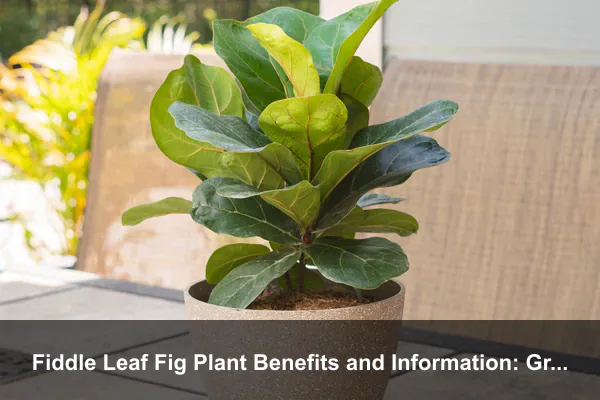
The Fiddle Leaf Fig has become one of the most recognizable indoor plants because it does more than fill an empty corner. With broad violin-shaped leaves, upright growth, and a tree-like presence, it can make a room feel calmer, taller, and more intentionally designed. For many plant lovers, it is not just a decorative houseplant but a living feature that changes the atmosphere of a home.
This guide focuses on Fiddle Leaf Fig plant benefits and information from a practical angle: how this plant adds value indoors, how to choose the right form, how to train its shape, and how to care for it without turning it into a stressful project. Instead of repeating general houseplant advice, the goal is to help you understand whether Ficus lyrata truly fits your space, routine, and long-term home style.
Why the Fiddle Leaf Fig Still Earns Its Space
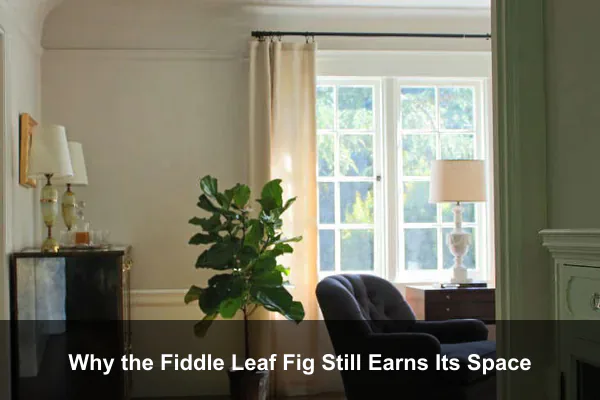
The Fiddle Leaf Fig, botanically known as Ficus lyrata, is native to tropical regions of western Africa. Indoors, it is usually grown as a potted tree or bush-form houseplant. Its popularity comes from a rare combination: bold foliage, vertical structure, and a clean silhouette that works in modern, tropical, minimalist, and transitional interiors.
A Living Architectural Feature
Many houseplants soften a shelf or add texture to a table, but a mature Fiddle Leaf Fig can function almost like furniture. Its upright trunk and large leaves create height, which is useful in rooms with blank walls, tall ceilings, or empty corners. It can visually connect the floor to artwork, curtains, shelving, or windows without needing extra decor.
This is one of its most practical benefits. A single healthy plant can reduce the need for multiple decorative objects, making a room feel less cluttered while still adding warmth. In small homes, that matters. In larger spaces, it can help anchor seating areas and make open rooms feel more complete.
Biophilic Comfort Without Overstated Claims
Indoor plants are often promoted as miracle air purifiers, but the real-world effect of one houseplant on indoor air quality is modest. The Fiddle Leaf Fig should not be treated as a replacement for ventilation, cleaning, or humidity management. Its stronger wellness value is visual and psychological: greenery can make indoor rooms feel more natural, restful, and lived-in.
For people who spend long hours indoors, a large-leaf plant can create a small connection to nature. The leaves reflect changing light, the plant responds to seasons, and care routines encourage observation. These simple qualities are part of the broader idea of manfaat tanaman, or plant benefits, where plants support the home environment through beauty, routine, and a sense of calm.
Essential Fiddle Leaf Fig Information Before You Buy
Before buying a Fiddle Leaf Fig, it helps to understand what kind of plant it is. It is beautiful, but it is not the easiest choice for every room. Its success depends on steady bright light, consistent watering habits, and a location where it is not constantly bumped, chilled, or moved.
Quick Plant Profile
- Botanical name: Ficus lyrata.
- Common name: Fiddle Leaf Fig.
- Plant type: Tropical evergreen houseplant.
- Indoor height: Commonly 3 to 10 feet, depending on pot size, light, pruning, and age.
- Best light: Bright indirect light, with gentle direct morning sun if acclimated.
- Watering style: Deep watering after the top portion of soil has dried.
- Pet safety: Toxic if chewed by cats, dogs, or people due to irritating sap.
- Main indoor value: Statement foliage, vertical design, natural atmosphere, and long-term ornamental appeal.
Tree Form vs. Bush Form
Fiddle Leaf Figs are often sold in two main shapes. The tree form has one or more visible trunks with foliage at the top, giving it a sculptural look. The bush form is fuller from the base and can feel softer and more casual. Neither is better in every situation.
Choose a tree form if you want a refined focal point beside a sofa, console, reading chair, or window. Choose a bush form if you want fuller greenery near the floor, a more relaxed look, or a plant that can eventually be trained upward. The right choice depends on the room, not just the price tag.
Small Plant or Mature Specimen?
A small Fiddle Leaf Fig is cheaper and easier to carry home, but it requires patience. A mature plant gives instant impact, yet it is more expensive and may be more sensitive to moving stress. If you are a beginner, a medium-sized plant is often the best compromise. It is large enough to offer visual benefit but not so costly that every leaf drop feels like a crisis.
Benefits Beyond Decoration: Practical Home Uses
The Fiddle Leaf Fig is often described as a stylish plant, but its usefulness is more specific than style alone. When placed thoughtfully, it can solve common interior problems while adding natural beauty.
It Helps Define Space
In open-plan homes, apartments, and studios, a tall Fiddle Leaf Fig can mark a transition between areas. It can separate a dining corner from a living area, soften the edge of a desk zone, or make an entryway feel more welcoming. Unlike a screen or cabinet, it keeps the room open while still giving the eye a clear point of reference.
It Adds Scale to Plain Rooms
Rooms with low furniture sometimes feel visually flat. A Fiddle Leaf Fig brings height and shape without adding heavy furniture. This is especially helpful in rental homes where wall treatments, built-ins, or major design changes may not be possible.
It Supports a Slower Decorating Approach
One underrated benefit is that a large houseplant can reduce impulse decor buying. Instead of filling corners with extra baskets, lamps, or trend-based accessories, you can use one living plant as a long-term feature. This makes the home feel fresher and can support a lower-waste approach to decorating.
- For living rooms: Use it as a vertical anchor near natural light.
- For workspaces: Place it where it can be seen from the desk without blocking movement.
- For bedrooms: Use only if the room has enough light and the plant is away from pets.
- For entryways: Choose this only when the area is bright and protected from cold drafts.
Care Planning That Protects the Investment
A Fiddle Leaf Fig is not difficult because it needs constant attention. It becomes difficult when its environment changes repeatedly. The best care strategy is to create stable conditions and avoid overreacting to every small change.
Light Planning Comes First
Bright indirect light is the foundation of healthy growth. Place the plant near an east-facing window, a bright south or west window with filtered light, or a very bright room where it receives strong ambient light for much of the day. If direct afternoon sun hits the leaves, introduce it gradually or filter it with a sheer curtain.
A Fiddle Leaf Fig in weak light may survive for a while, but it will usually grow slowly, lean toward the window, and become more vulnerable to overwatering. If your space is dim, consider a quality grow light before buying a large specimen.
Water Deeply, Then Wait
The goal is not to water on a perfect calendar. The goal is to water when the plant is ready. Check the soil with your finger, a wooden skewer, or a moisture meter. When the upper layer has dried and the pot feels lighter, water thoroughly until excess drains out. Empty the saucer so the roots do not sit in water.
Overwatering is more common than underwatering, especially in low light or oversized pots. A regular routine helps, but observation matters more than a fixed day of the week.
Soil and Potting Matter More Than Fancy Products
Use a well-draining indoor potting mix. Many growers improve drainage by adding perlite, orchid bark, pumice, or coarse material to a standard houseplant mix. The pot should have drainage holes. Decorative cachepots are fine as outer covers, but the nursery pot inside must be able to drain freely.
Repot only when needed, usually when roots are crowded, water runs through too quickly, or growth has stalled despite good light and care. Move up by one pot size rather than placing a small root system into a much larger container.
A Simple Weekly Routine
- Check the plant from all sides for leaning, dust, pests, or dry soil.
- Feel the soil before watering instead of guessing.
- Rotate the pot slightly if growth is pulling toward the light.
- Wipe a few leaves with a damp cloth so they can receive light efficiently.
- Remove fallen leaves from the soil surface to reduce pest and fungus issues.
Growth Training and Shape Management
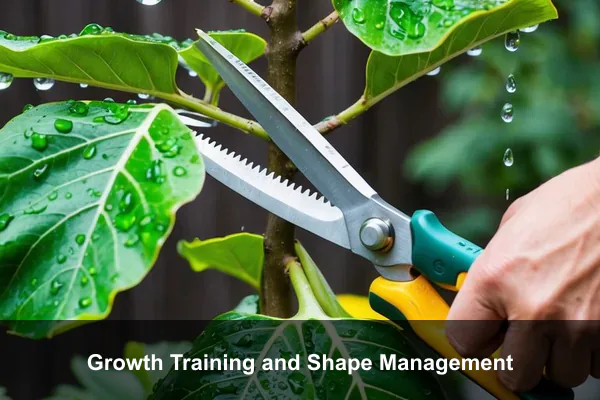
One unique advantage of the Fiddle Leaf Fig is that it can be shaped over time. With patience, pruning, rotation, and support, you can encourage a plant that fits your room instead of letting it become awkward, one-sided, or too tall.
Encouraging a Strong Trunk
Young Fiddle Leaf Figs sometimes need support because indoor conditions are calmer than outdoor wind. A stake can help, but avoid tying the trunk too tightly. Gentle movement is useful because it encourages strength. Some plant owners lightly wiggle the trunk during routine care to mimic natural movement, but this should be done carefully and only with healthy plants.
Pruning for Branching
Pruning can encourage new growth points and help control height. The best time is usually during active growth in spring or early summer. Use clean, sharp pruners and cut above a node. Wear gloves or wash your hands afterward because the milky sap can irritate skin and surfaces.
Do not remove too much foliage at once. Large leaves are the plant’s energy source. A conservative trim is safer than a dramatic cut, especially if the plant is already stressed.
Rotating Without Shock
Because the plant grows toward light, rotation helps maintain balance. Instead of moving it to a new room, rotate the pot a small amount every week or two. This keeps the overall environment stable while preventing one-sided growth.
Common Problems Without Turning the Plant Into a Project
Fiddle Leaf Fig problems are often caused by sudden changes: a new home, colder air, less light, irregular watering, or repotting stress. Some leaf loss after purchase can happen because the plant is adjusting. The key is to respond calmly and look for patterns.
When Leaves Drop
Leaf drop can happen after relocation, underwatering, overwatering, cold drafts, or low light. Check the basics before making major changes. Is the soil staying wet for too long? Is the plant near an air conditioner, heater, or drafty door? Did it recently move from a bright nursery to a dim corner?
When Brown Spots Appear
Brown spots may come from inconsistent moisture, root stress, sunburn, fungal issues, or physical damage. Remove severely damaged leaves only if they are mostly dead. If the plant is still producing healthy new growth, avoid making several changes at once. Adjust one condition, then observe.
When Growth Slows
Slow growth is normal in cooler months. During active seasons, weak growth usually points to insufficient light, depleted soil, or a root-bound plant. Fertilizer can help during spring and summer, but it cannot compensate for poor light or soggy soil.
Where It Fits Best in Different Homes
The best Fiddle Leaf Fig location is not simply the prettiest corner. It is the place where design value and plant health meet. A good location has enough light, stable temperature, and room for the leaves to spread without being brushed constantly.
For Apartments
Choose a medium plant and place it near the brightest window that does not expose it to harsh, sudden heat. Use a saucer, plant caddy, or waterproof mat to protect flooring. If space is tight, a tree-form plant can provide height without taking up as much visual width as a bushy plant.
For Family Homes
Place the plant outside busy pathways. Large leaves can tear if people brush past them every day. Because the sap is irritating and the plant is not pet-safe, keep it away from curious children and animals. A raised planter is attractive, but make sure the pot is stable and not top-heavy.
For Home Offices
A Fiddle Leaf Fig can make a workspace feel less sterile, especially when paired with natural light and simple furniture. Keep it visible but not in the way of chair movement, cables, or vents. The plant should support focus, not become another obstacle in a tight work area.
Fiddle Leaf Fig Benefits and Information at a Glance
If you are deciding whether this plant belongs in your home, consider both the benefits and the responsibilities. It is a high-impact houseplant, but it rewards consistency more than enthusiasm.
- Best for: Bright rooms, design-focused interiors, plant owners who enjoy routine observation, and homes with enough floor space.
- Main benefits: Strong visual presence, natural warmth, vertical structure, room definition, and a calming connection to greenery.
- Care difficulty: Moderate. It is manageable when light, watering, and placement are stable.
- Not ideal for: Dark rooms, drafty entryways, frequent movers, or homes where pets chew plants.
- Most important care habit: Check soil and light conditions before watering or relocating the plant.
- Long-term value: With pruning and steady care, it can become a personalized indoor tree that grows with the home.
Think of the Fiddle Leaf Fig as a long-term design and care commitment. It is not a disposable accent. The more thoughtfully you choose its size, pot, and location, the more benefits it can provide over time.
Conclusion
The Fiddle Leaf Fig remains popular because it offers a rare mix of beauty, height, structure, and emotional warmth. Its benefits are not limited to decoration; it can define a room, support a calmer indoor atmosphere, and encourage a more intentional approach to home styling.
At the same time, good results depend on realistic expectations. This plant needs bright light, careful watering, drainage, safety awareness, and stable placement. When those basics are respected, Fiddle Leaf Fig plant benefits and information become more than search terms. They become a practical guide to growing a healthier-looking, more meaningful indoor space with one of the most distinctive houseplants available.
