

Calathea plants are best known for their painted-looking leaves, but their value in the home is not only decorative. When used thoughtfully, a Calathea can become a gentle cue for slower indoor routines: a plant to check during a screen break, a safe foliage choice for many pet households, and a living object that makes light, humidity, and daily care easier to notice.
This guide takes a unique angle on Calathea plant benefits and information by focusing on sensory comfort, observation, and practical household use. Instead of treating Calathea as just another pretty houseplant, we will look at how it can support calmer rooms, mindful breaks, family plant learning, and realistic indoor care without exaggerated wellness claims.
Calathea is not the easiest plant in every home, but it is also not impossible. Once you understand its preferences for filtered light, steady moisture, warm rooms, and clean leaves, it becomes much easier to enjoy the benefits of its patterned foliage without constant troubleshooting.
Why Calathea Fits Screen-Break Corners and Quiet Rooms
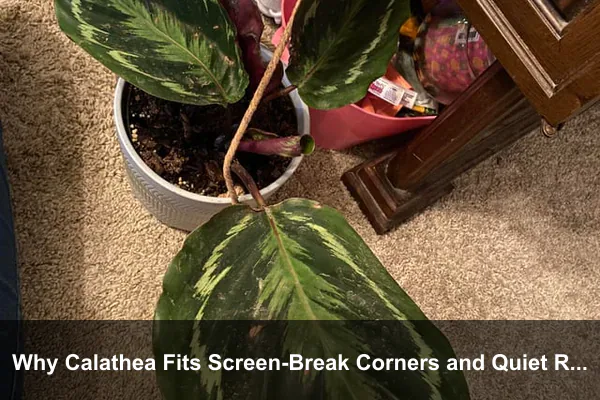
One of the most useful Calathea plant benefits is its ability to create a visual pause in modern indoor spaces. Many homes and work areas are built around screens, straight lines, hard surfaces, and repeated digital focus. Calathea leaves offer the opposite: soft movement, curved shapes, layered patterns, and subtle daily changes.
This does not mean the plant magically reduces stress. A more realistic benefit is that it gives your eyes and attention a natural place to rest. Placing a Calathea near a reading chair, side table, meditation mat, or low-traffic desk corner can help turn that spot into a more intentional break area.
A living cue to look away from screens
Calathea is especially useful as a screen-break plant because its leaves reward close observation. Some varieties have stripes, brush-like markings, feathered patterns, or purple undersides. A short pause to check whether the leaves are open, lifted, dusty, curled, or freshly unfurled can become a simple routine that interrupts long periods of digital attention.
For this purpose, the best location is not directly beside a hot laptop, monitor vent, or bright window. Place the plant where you can see it from your usual seat, but keep it away from harsh sun, air-conditioning blasts, and heater drafts.
Visual interest without strong fragrance
Some beneficial plants depend on scent, flowers, or edible leaves for their appeal. Calathea is different. Its value comes mainly from foliage. That makes it a good choice for people who want an indoor plant with strong visual character but do not want a perfume-like aroma in the room.
This is helpful in bedrooms, shared apartments, reading rooms, and quiet corners where strong scent could feel distracting. Calathea contributes color and texture while keeping the sensory experience soft and low-key.
Calathea Plant Benefits and Information at a Glance
Calathea is a tropical foliage houseplant commonly sold under the Calathea name, although many plants in this group are now botanically placed in the genus Goeppertia. Garden centers, plant shops, and care labels still usually use Calathea because it is the familiar houseplant name.
In practical terms, Calathea belongs to the prayer plant family, Marantaceae. These plants are admired for leaves that may shift position between day and night. The movement is one reason Calathea feels more interactive than many static foliage plants.
Quick facts for indoor growers
- Plant type: Tropical ornamental foliage houseplant.
- Main appeal: Patterned leaves, soft movement, and compact indoor style.
- Light preference: Bright indirect light or gentle filtered light.
- Water preference: Evenly moist soil, not soggy soil.
- Humidity preference: Moderate to high humidity, especially in dry rooms.
- Pet safety: Generally considered non-toxic to cats and dogs, though chewing should still be discouraged.
- Best use: Quiet indoor corners, shelves, plant stands, bathrooms with light, and desk-adjacent break areas.
What Calathea should not be expected to do
A good article on Calathea plant benefits and information should also be honest about limits. Calathea should not be promoted as a medical treatment, a guaranteed air purifier, or a cure for poor indoor habits. Like other houseplants, it may support a more pleasant room atmosphere, but normal home conditions do not turn one plant into a replacement for ventilation, cleaning, sleep, or healthcare.
The real value is more practical: Calathea helps soften a room visually, offers a non-fragrant foliage option, gives plant lovers an engaging care routine, and encourages attention to indoor conditions such as light, humidity, and drafts.
How Calathea Supports a More Observant Home Routine
Many people want plant benefits that feel useful every day. Calathea is well suited to this because it gives feedback quickly. Leaves may curl when the air is dry, fade when light is too intense, droop when watering is inconsistent, or develop brown edges when conditions are harsh. These signals can be frustrating at first, but they also teach better observation.
Instead of treating every change as a crisis, use Calathea as a routine-building plant. Check it briefly at the same time each day or every few days. Look at the leaf posture, soil surface, pot weight, and room conditions. This turns care into a small habit rather than a random emergency.
A simple weekly observation routine
- Look at leaf posture: Notice whether the leaves are open, lifted, curled, or limp.
- Touch the soil surface: Water when the upper layer begins to dry but the pot is not bone dry.
- Check the leaf edges: Brown, crispy margins often point to dry air, inconsistent watering, mineral-heavy water, or excess fertilizer.
- Rotate the pot slightly: This helps the plant grow evenly toward available light.
- Wipe dusty leaves: Clean leaves look better and can receive light more effectively.
This routine is especially useful for beginners who want to learn plant care through observation. Calathea is expressive enough to teach cause and effect, but it rewards patience more than overreaction.
Family-friendly plant learning
Calathea can also be a useful plant for homes with children because it offers clear visual features to discuss: patterns, colors, leaf backs, new rolled leaves, and day-to-night movement. It is not a plant for rough handling, but it can be a good observation plant when children are taught to look closely rather than pull or fold leaves.
A simple family activity is to observe the plant in the morning and evening for several days. Children can note whether the leaves look more open or upright. This introduces natural rhythms, plant response, and gentle responsibility without needing flowers, fruit, or complicated tools.
Core Calathea Care for Long-Lasting Benefits
The best Calathea benefits appear when the plant is healthy enough to keep producing attractive foliage. Care does not need to be dramatic, but it does need to be consistent. The goal is to imitate the stable, warm, filtered environment these plants prefer.
Light: bright, soft, and indirect
Calathea usually performs best in bright indirect light. Direct midday sun can scorch or fade the leaves, while very dark corners can slow growth and weaken the pattern. A position near an east-facing window, a few feet from a bright window with a sheer curtain, or under a suitable grow light can work well.
If the colors look washed out or the leaves develop pale patches, the light may be too strong. If new growth is small, stretched, or slow for a long time, the plant may need a brighter indirect position.
Watering: steady moisture, not standing water
Calathea likes soil that stays lightly moist, but it does not want to sit in water. Water thoroughly, let extra water drain, and empty the saucer. Then wait until the top layer of potting mix begins to dry before watering again.
In warm seasons, this may mean watering more often. In cooler or darker months, the plant may use water more slowly. Pot size, soil mix, airflow, and indoor temperature all affect timing, so avoid watering by a fixed calendar alone.
Humidity and temperature
Calathea appreciates moderate to high humidity. Dry indoor air can lead to curled leaves or crispy edges, especially during heating or air-conditioning seasons. A humidifier, grouped plants, a bright bathroom, or a pebble tray can help, but the most reliable solution in very dry homes is usually a small humidifier placed nearby.
Keep the plant in a warm, stable area. Avoid cold drafts, sudden temperature drops, heater vents, and direct air-conditioning. Stability matters more than perfection.
Soil and pot choice
A good Calathea mix should hold some moisture while still draining well. A typical houseplant mix can be improved with materials such as perlite, fine bark, or coco coir, depending on what is available. The pot should have drainage holes. Decorative cachepots are fine if the nursery pot can drain fully before being returned.
Repot only when needed, usually when roots fill the pot or watering becomes difficult to manage. Moving to a slightly larger pot is better than jumping to a much bigger one, which can keep the soil wet for too long.
Reading Calathea Leaf Signals Without Panic
Calathea has a reputation for being dramatic because its leaves show stress visibly. That reputation is partly fair, but it can also make owners overcorrect. A single yellow leaf, curled edge, or brown tip does not always mean the plant is failing. The key is to look for patterns.
Curled leaves
Curled leaves often mean the plant is trying to reduce moisture loss. Check whether the soil is too dry, the room is too dry, or the plant is exposed to strong sun or moving air. If the soil is dry, water thoroughly. If the soil is moist, focus on humidity, light, and drafts before adding more water.
Brown tips or crispy edges
Brown edges are common in Calathea. They may result from low humidity, inconsistent watering, fertilizer buildup, mineral-heavy tap water, or old leaf tissue. Trim damaged edges only for appearance, using clean scissors. Then improve the growing conditions gradually.
If the damage appears mostly on older leaves and new leaves look healthy, the plant may be adjusting. If new leaves are damaged quickly, review water quality, humidity, fertilizer strength, and sun exposure.
Yellow leaves
Yellowing can mean overwatering, poor drainage, natural aging, low light, or root stress. Before watering again, check the soil deeper than the surface. If the mix is wet for many days, improve drainage and reduce watering frequency. If only one older lower leaf yellows while the rest of the plant looks healthy, it may simply be natural turnover.
Faded patterns
Faded leaf markings can happen when light is too strong or when the plant is not growing vigorously. Move it away from direct sun and give it time. Calathea leaves do not repair faded tissue, but future leaves can look better when conditions improve.
Choosing Calathea Types by Mood, Space, and Skill Level
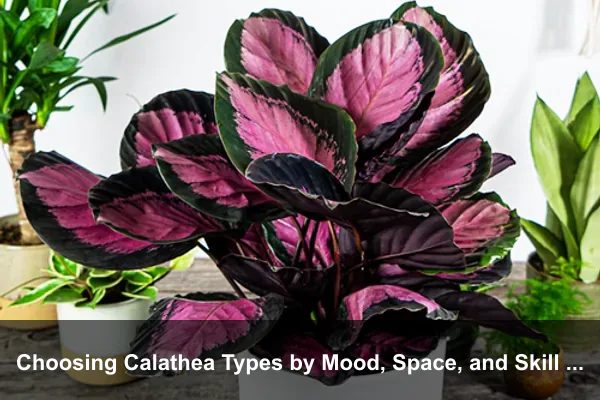
There are many Calathea types, and the best choice depends on the room, the look you want, and your tolerance for care details. Rather than choosing only by name, think about the effect the plant will create in your space.
For soft, calm rooms
Calathea orbifolia is popular for broad, round leaves with silver-green striping. It looks peaceful and architectural without being sharp or spiky. It works well in simple rooms where one large foliage shape can become a focal point. It may need stable humidity to keep edges neat.
For playful pattern and movement
Calathea lancifolia, often sold as rattlesnake plant, has long wavy leaves with lively markings and purple undersides. It is a good choice for shelves, plant stands, and rooms where you want visible personality without needing flowers.
For classic patterned foliage
Calathea makoyana, often called peacock plant, has delicate markings that resemble layered leaf drawings. It is excellent for people who enjoy detailed foliage and want a plant that invites close viewing.
For bold color contrast
Calathea roseopicta types often have darker leaves, pinkish markings, or dramatic centers. These can make a strong visual statement in a neutral room. They are attractive, but they still need the same steady care as other Calatheas.
Highly variegated types can be beautiful but less forgiving. If you are new to Calathea, choose a healthy, established plant with firm leaves and active growth before trying rare or delicate cultivars.
Where to Place Calathea for Practical Everyday Benefits
Placement should match both plant health and household use. A Calathea hidden in a dark corner will not deliver much visual benefit and may decline. A plant placed in direct sun may look beautiful for a few days and then develop damage. Aim for a location where the plant is visible, protected, and easy to check.
Best rooms for Calathea
- Reading corner: Use Calathea as a soft focal point beside a chair, lamp, or small table.
- Home office: Place it off to the side as a visual reset, not beside hot electronics.
- Bedroom: Choose a bright indirect spot where the plant adds quiet texture without fragrance.
- Bathroom: Use only if the room has enough natural or grow light; humidity alone is not enough.
- Family room: Place it where it can be seen but not brushed against constantly.
Places to avoid
Avoid cold windowsills in winter, direct afternoon sun, entryways with drafts, heater vents, air-conditioning streams, and spots where pets may repeatedly chew the leaves. Calathea is generally pet-safe, but safe does not mean it should be eaten. Chewing can damage the plant and may still upset a pet stomach.
Buying a Healthy Calathea: What to Check First
Buying well is part of successful Calathea care. A stressed plant can recover, but a healthy plant gives you a much better start. Inspect the plant carefully before bringing it home, especially if it has been sitting in a crowded shop or exposed to outdoor heat or cold.
Pre-purchase checklist
- Leaf condition: Choose firm leaves with strong color and only minor cosmetic marks.
- New growth: Look for rolled new leaves or fresh shoots if possible.
- Soil condition: Avoid plants sitting in foul-smelling, waterlogged soil.
- Pests: Check the undersides of leaves and where stems meet the soil for webbing, sticky residue, or tiny moving insects.
- Root health: If visible through drainage holes, roots should look light or tan rather than black and mushy.
After purchase, give the plant a calm first month. Do not repot, fertilize, relocate, prune heavily, and change watering style all at once unless there is a serious problem. Let it adapt to your home, then adjust slowly.
Safety, Sustainability, and Responsible Use
Calathea is often chosen by people who want attractive indoor greenery without the same toxicity concerns as many common houseplants. It is generally listed as non-toxic to cats and dogs, making it a strong candidate for pet-aware homes. Still, the plant should be placed where pets and children are not tempted to shred the leaves.
For a more sustainable routine, avoid treating Calathea as disposable decor. Choose a plant that fits your actual room conditions, use a pot with drainage, water carefully, and avoid unnecessary chemical sprays. If pests appear, start with isolation, leaf cleaning, and targeted treatment rather than spraying every plant in the room.
Low-waste care habits
- Reuse nursery pots inside decorative containers when drainage works well.
- Propagate by division only when the plant is large and healthy enough.
- Refresh the top layer of potting mix before deciding a full repot is needed.
- Use measured fertilizer at a diluted strength during active growth rather than overfeeding.
- Clean leaves with a damp cloth instead of relying on shine products.
These habits keep the plant attractive while reducing waste, stress, and unnecessary inputs. In this sense, the best Calathea plant benefits and information are not only about what the plant gives you, but also about how you care for it responsibly.
Common Mistakes That Reduce Calathea Benefits
Most Calathea problems come from unstable conditions or quick reactions. The plant prefers consistency. Once you find a good place and a good watering rhythm, avoid changing everything because of one imperfect leaf.
- Too much direct sun: This can fade or scorch the foliage.
- Letting the pot dry completely: Severe dryness can cause curling and crispy edges.
- Keeping soil constantly soggy: Wet roots can lead to yellowing and decline.
- Ignoring drafts: Cold or dry moving air can stress leaves quickly.
- Over-fertilizing: Excess salts can damage sensitive roots and leaf tips.
- Repotting too often: Frequent disturbance can slow recovery and growth.
A better strategy is to change one factor at a time. If the plant is curling, check water and humidity first. If leaves are fading, review light. If the soil stays wet, improve drainage and reduce watering. Calm troubleshooting usually works better than dramatic rescue attempts.
Conclusion
Calathea is a distinctive houseplant because its benefits are quiet, visual, and routine-based. It brings patterned foliage into the home, supports fragrance-free greenery, offers a pet-aware option for many households, and encourages closer observation of indoor conditions. Its moving leaves and detailed patterns make it especially useful in screen-break corners, reading spaces, family observation routines, and calm rooms where texture matters more than flowers.
The key is realistic care. Give Calathea bright indirect light, steady moisture, suitable humidity, warmth, drainage, and gentle attention. When treated as a living plant rather than a perfect decoration, it can become one of the most engaging foliage plants for people who value both beauty and daily indoor connection.
